


Why Floors Need Different Care by Wood Type

Hardwood floor care is defined by two factors above all others: wood species hardness and finish type. Treating every floor the same way is the single most common mistake homeowners make, and it shortens floor life faster than almost any other error. Whether you have soft walnut planks in your living room or dense hickory in a high-traffic hallway, the right maintenance by wood species determines how long your floors look their best. This guide breaks down why floors need different care by wood type, what that means for your daily routine, and how to avoid the mistakes that lead to premature refinishing.
Why does wood species hardness change how you care for floors?
Wood hardness directly controls how vulnerable your floor is to scratches, dents, and finish wear. Harder species like hickory and maple resist surface damage better than softer species like walnut or pine. That difference changes everything from how often you clean to what protective measures you put in place.
Softer species like walnut need extra vigilance with furniture pads and area rugs because even light foot traffic can leave marks. Lighter woods like maple show dust and grit more quickly, which means they demand more frequent dust mopping to stay looking clean. Harder woods tolerate more wear, but they are not immune to damage from neglect.
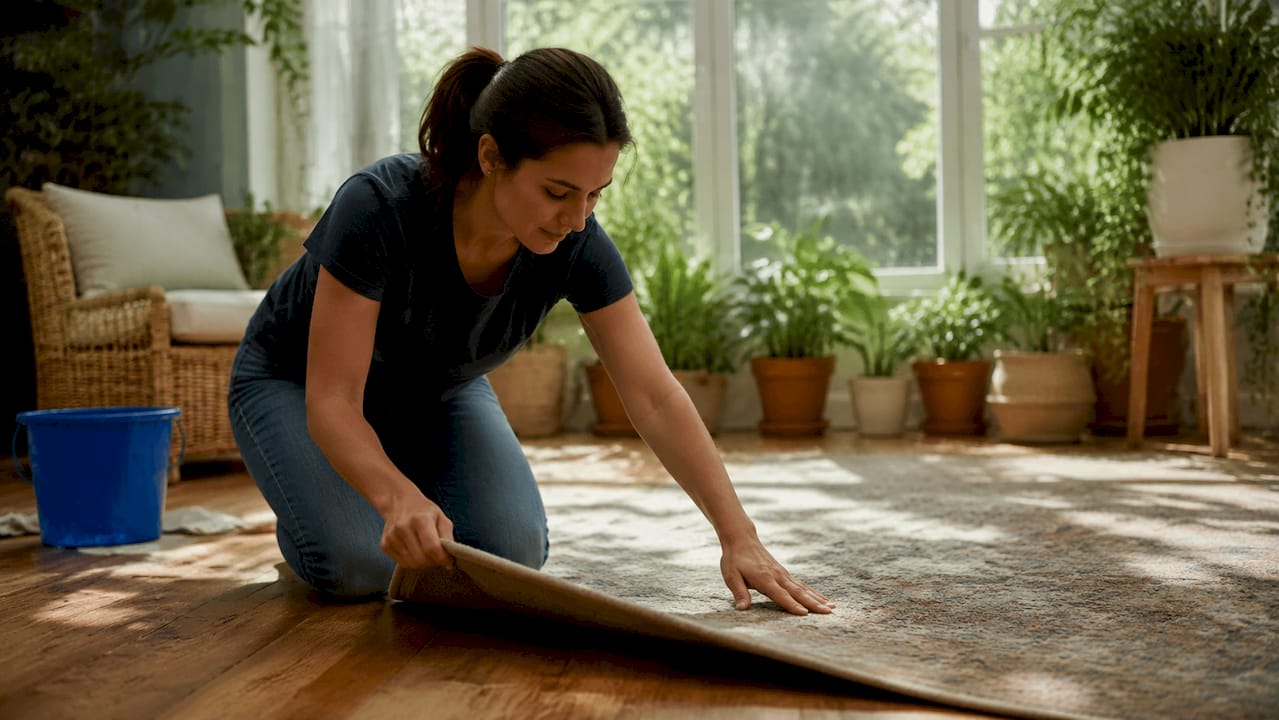
Dirt and grit act like sandpaper on any wood finish, regardless of species hardness. That abrasive action grinds into the protective coating every time someone walks across the floor. No wood is hard enough to skip daily particle removal.
Humidity causes expansion and contraction, gaps, and warping in wood floors, and UV exposure causes long-term color fading. These environmental forces affect every species, but denser woods handle the stress slightly better than softer ones. Controlling indoor humidity between 35% and 55% protects all wood types.
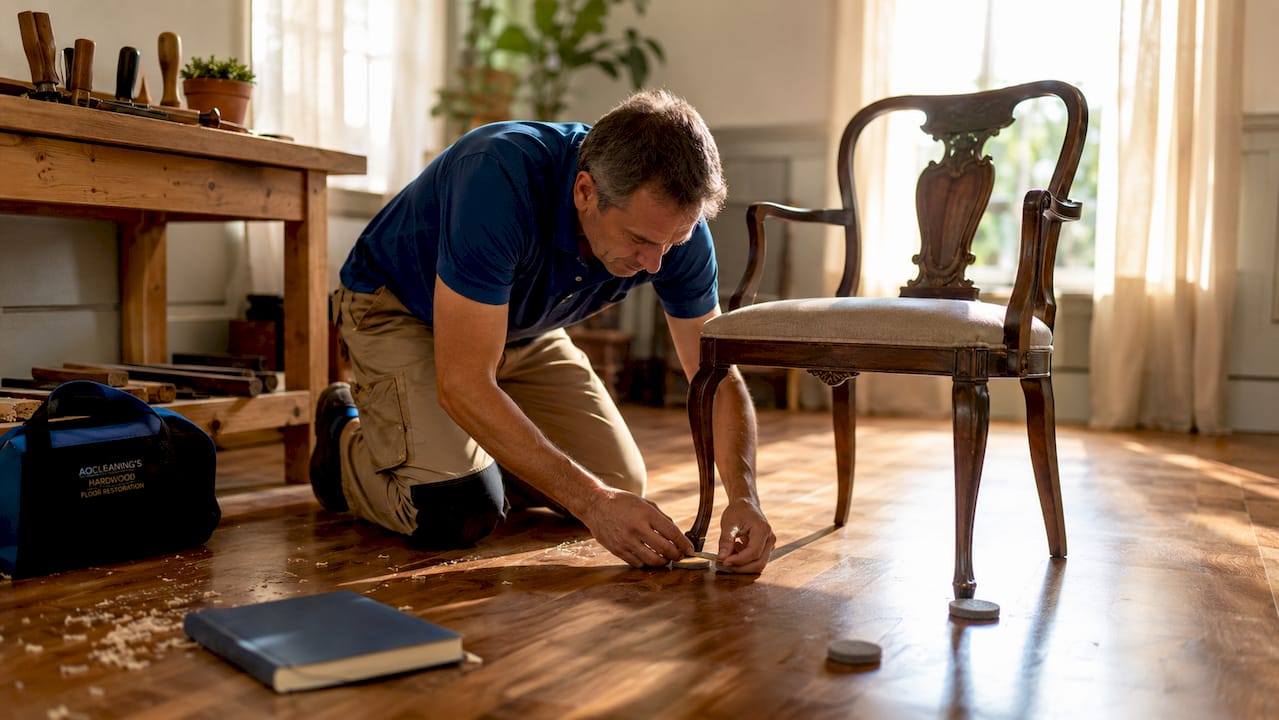
Walnut and pine: Use felt furniture pads on every leg. Place area rugs at entryways and in front of sofas. Dust mop daily.
Maple and ash: Dust mop frequently because light coloring shows grit fast. Avoid dark-soled shoes that scuff the surface.
Hickory and oak: More forgiving of daily wear, but still require regular cleaning and humidity control.
Pro Tip: Buy furniture pads in bulk and check them every few months. A pad that has worn through offers zero protection and can actually scratch the floor worse than bare wood.
How does floor finish type determine your cleaning routine?
Care requirements for hardwood floors depend primarily on finish type, not just wood species. This is the distinction most homeowners miss entirely. You can have the same oak floor in two rooms with two different finishes, and the correct cleaner for one will damage the other.
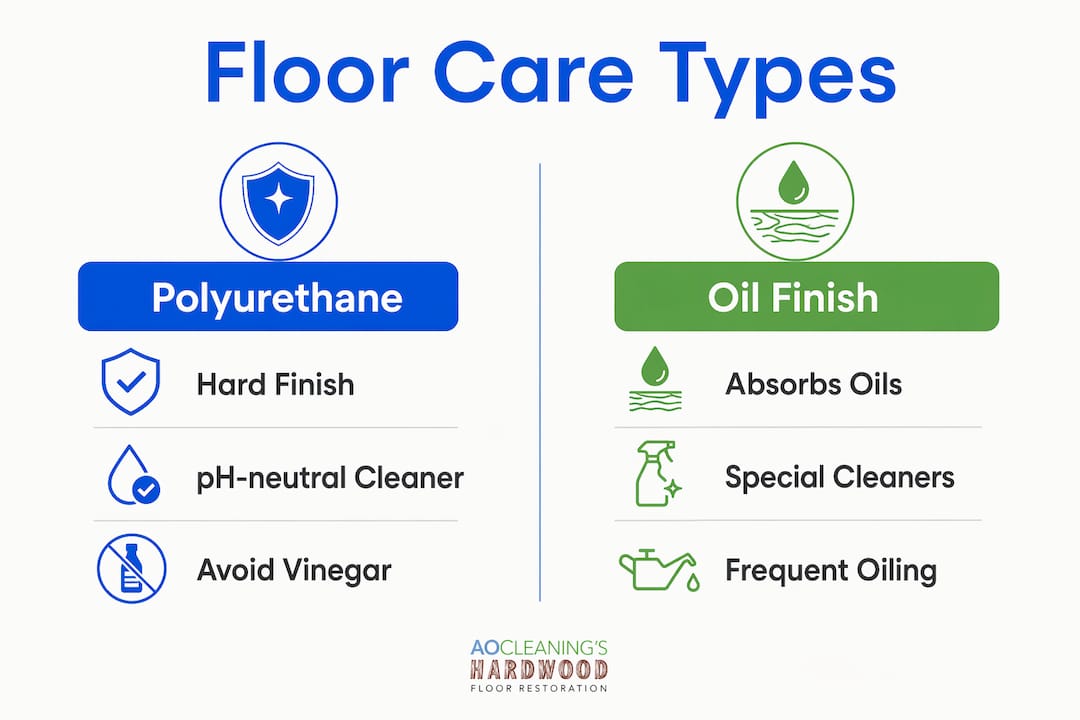
The industry recognizes two dominant finish categories for residential hardwood: polyurethane and oil-finished. Each one requires a completely different approach to cleaning products, moisture management, and long-term upkeep.
Polyurethane-finished floors
Polyurethane creates a hard surface film on top of the wood. That film is what you are actually cleaning, not the wood itself. The right product is a pH-neutral spray cleaner applied with a barely damp microfiber mop. Excess water sits on the film and can work its way into seams, causing swelling and edge cupping over time.
Never use vinegar, ammonia-based cleaners, or oil soaps on polyurethane floors. These products dull the finish and leave a hazy residue that builds up with repeated use. A types of hardwood floor finishes guide can help you confirm which finish you have before buying any cleaner.
Oil-finished floors
Oil-finished floors absorb oils into wood fibers, which means spills are more urgent and product choice is more critical. The oil penetrates the grain rather than sitting on top, so the wrong cleaner strips the protective oil out of the wood entirely. Use only manufacturer-specific soaps designed for oil-finished surfaces. Re-oiling every 6–12 months in high-traffic areas keeps the wood protected and looking rich.
Using incorrect products on oil-finished floors causes cloudy residue that is difficult to remove without professional help. Standard polish, wax, or water-based spray cleaners all fall into the “wrong product” category for oil-finished wood.
Feature | Polyurethane finish | Oil finish |
Cleaning product | pH-neutral spray cleaner | Manufacturer-specific soap |
Moisture tolerance | Low. Damp mop only | Very low. Wipe spills immediately |
Re-treatment schedule | Screen and recoat every 3–5 years | Re-oil every 6–12 months in high-traffic areas |
Common mistake | Vinegar or oil soap dulls the film | Standard polish causes hazing |
Spill urgency | Moderate | High |
Pro Tip: If you are unsure which finish you have, put a drop of water on an inconspicuous spot. If it beads up, you likely have polyurethane. If it soaks in quickly, you probably have an oil finish.
What does an effective maintenance routine look like by wood type?
Consistent routines customized by wood species and finish produce the best long-term results. A one-size-fits-all schedule leads to either over-cleaning with the wrong products or under-cleaning until damage appears. The right floor maintenance routine follows a clear daily, monthly, and seasonal structure.
Daily tasks for all wood types:
Dust mop with an 18- to 24-inch microfiber head to capture abrasive particles before they grind into the finish.
Wipe up spills immediately with a dry or barely damp cloth. Never let liquid sit on any wood floor.
Check entryway mats and shake them out. Grit tracked in from outside is the leading cause of finish wear.
Monthly tasks adjusted by species and finish:
Polyurethane floors: spot clean with a pH-neutral hardwood cleaner. Inspect for dull patches that signal finish wear.
Oil-finished floors: apply manufacturer-approved soap with a well-wrung mop. Check high-traffic zones for dry or gray-looking wood that needs re-oiling.
Softer species like walnut: inspect furniture pad condition and replace any that have compressed or shifted.
Seasonal and annual tasks:
Run a humidifier in winter and a dehumidifier in summer to keep indoor humidity stable. Wood expands and contracts with seasonal shifts, and that movement stresses joints and finishes over time.
Place UV-blocking window film or use curtains during peak sun hours to slow color fading, especially on lighter species like maple and ash.
Floor polish must be stripped and reapplied yearly to prevent dirt buildup and loss of luster. Polish buildup traps grit against the finish, which accelerates wear.
Solid hardwood floors need professional refinishing every 5–10 years based on wear. High-traffic areas and softer species typically fall on the shorter end of that range.
Scheduling a professional refinishing frequency check every few years keeps you ahead of serious wear before it reaches the wood itself.
What mistakes damage hardwood floors most by wood type?
The most damaging mistakes in hardwood floor care are predictable and avoidable. Knowing which errors apply to your specific floor type lets you protect your investment without guesswork.
Excessive moisture is the most common mistake damaging wood floors regardless of species. Water penetrates wood grain and causes warping and discoloration that no amount of buffing will fix. Steam mops are particularly destructive because they force moisture directly into seams and grain.
Vinegar and harsh chemicals: These strip polyurethane finishes and leave a dull, hazy surface. Many homeowners use vinegar because it feels natural, but it is acidic enough to break down finish coatings over time.
Wax or water-based polish on oil-finished floors: These products sit on top of the oil layer and create a cloudy buildup. They also prevent the floor from absorbing re-oiling treatments properly.
Ignoring early wear signs: Dull patches, light scratches, and gray-looking wood are all signals that the finish is thinning. Catching these signs floors need refinishing early costs far less than a full sand and refinish.
Inconsistent humidity: Gaps between boards in winter and cupping in summer are both caused by humidity swings. This problem is more pronounced in softer, more porous species.
Pro Tip: Never use a wet mop on any hardwood floor. Wring your mop until it feels almost dry to the touch. If you can see water on the floor after mopping, you used too much.
Key Takeaways
Different wood floors require different care because species hardness and finish type each demand specific products, cleaning schedules, and protective measures to preserve appearance and longevity.
Point | Details |
Finish type drives cleaning choices | Polyurethane needs pH-neutral spray; oil-finished floors need manufacturer-specific soap. |
Species hardness shapes prevention | Softer woods like walnut need furniture pads and daily dusting; harder woods like hickory still need regular grit removal. |
Moisture is the top threat | Excessive water warps and discolors all wood types regardless of finish or species. |
Seasonal care matters | Stable indoor humidity between 35% and 55% prevents expansion, contraction, and gap formation. |
Professional refinishing extends floor life | Solid hardwood needs refinishing every 5–10 years; catching early wear signs reduces the cost. |
What 20 years of floor care taught me about wood type differences
Most homeowners treat their floors the way they treat their countertops: wipe it down, hope for the best. That approach works fine on granite. On hardwood, it quietly destroys the finish over years.
The most consistent pattern I see is homeowners using the wrong cleaner for their finish type. They buy a popular hardwood cleaner from a big-box store, use it on an oil-finished floor, and wonder why the surface looks dull and cloudy six months later. The product was not bad. It was simply designed for a different finish. Knowing your finish type before you buy anything is the single most protective habit you can build.
The second pattern is underestimating grit. A floor that looks clean to the eye can still be covered in fine abrasive particles from shoes and outdoor air. Daily microfiber dusting feels like overkill until you see how much a finish degrades in a year without it. The floors that age best are almost always in homes where someone dusts them every single day.
Softer species like walnut are genuinely beautiful, but they require a level of attention that harder species do not. If you have walnut floors and you are not using furniture pads on every single leg in the room, you will have visible scratches within a year. That is not a flaw in the wood. It is just the reality of its hardness rating.
The homeowners who get the most life out of their floors are the ones who treat care as species-specific and finish-specific from day one. They do not apply a universal routine. They learn what their floor actually needs and build a habit around that.
— Jim
Your floors deserve care that fits the wood they are made from
Every wood species and finish type responds differently to cleaning, moisture, and wear. Getting the right service for your specific floor makes a real difference in how long it stays beautiful.
Aosaveswoodfloors has been helping homeowners across St. Louis, Monroe, and Madison Counties protect their hardwood floors since 2003. Whether your floors need a clean and buff service to restore their shine, a screen and recoat to renew the protective layer, or a full sand and refinish for seriously worn wood, every service is matched to your floor’s species and finish. Most jobs finish in a single day, with floors ready to walk on in about three hours. Before you replace them, let Aosaveswoodfloors restore them.
FAQ
Does wood species or finish type matter more for floor care?
Finish type is the primary driver of cleaning product choice and maintenance routine. Wood species hardness shapes how much preventive protection your floor needs, such as furniture pads and dusting frequency.
How often should oil-finished hardwood floors be re-oiled?
Oil-finished floors in high-traffic areas need re-oiling every 6–12 months. Lower-traffic rooms may go longer between treatments, but the wood should never look dry or gray.
Can I use vinegar to clean hardwood floors?
Vinegar damages polyurethane finishes over time because its acidity breaks down the protective coating. Use a pH-neutral cleaner designed specifically for hardwood floors instead.
How do I know when my hardwood floors need refinishing?
Dull patches that do not respond to cleaning, visible scratches that reach the wood, and gray or dry-looking boards all signal that the finish is worn through. Solid hardwood typically needs refinishing every 5–10 years.
Why do softer wood floors scratch more easily than harder ones?
Softer species like walnut have a lower density, which means the wood fibers compress and mark more easily under pressure. Furniture legs, pet nails, and even high heels can leave visible dents or scratches on soft wood that harder species like hickory would resist.
Recommended

Comments