


Luxury Home Hardwood Floor Maintenance Guide 2026

Luxury home hardwood floor maintenance is the practice of preserving a floor’s appearance and structural integrity through precise cleaning techniques, controlled humidity, and scheduled professional care. Done right, it protects one of the most valuable features in your home. Done wrong, it causes cupping, finish erosion, and repairs that cost far more than the original floor. This guide covers the daily habits, environmental controls, and professional services that keep polyurethane-finished hardwood looking new for decades. The industry standard humidity range is 35–55%, and the right pH-neutral cleaner matters as much as how often you mop.
What daily and weekly cleaning routines best protect luxury hardwood floors?
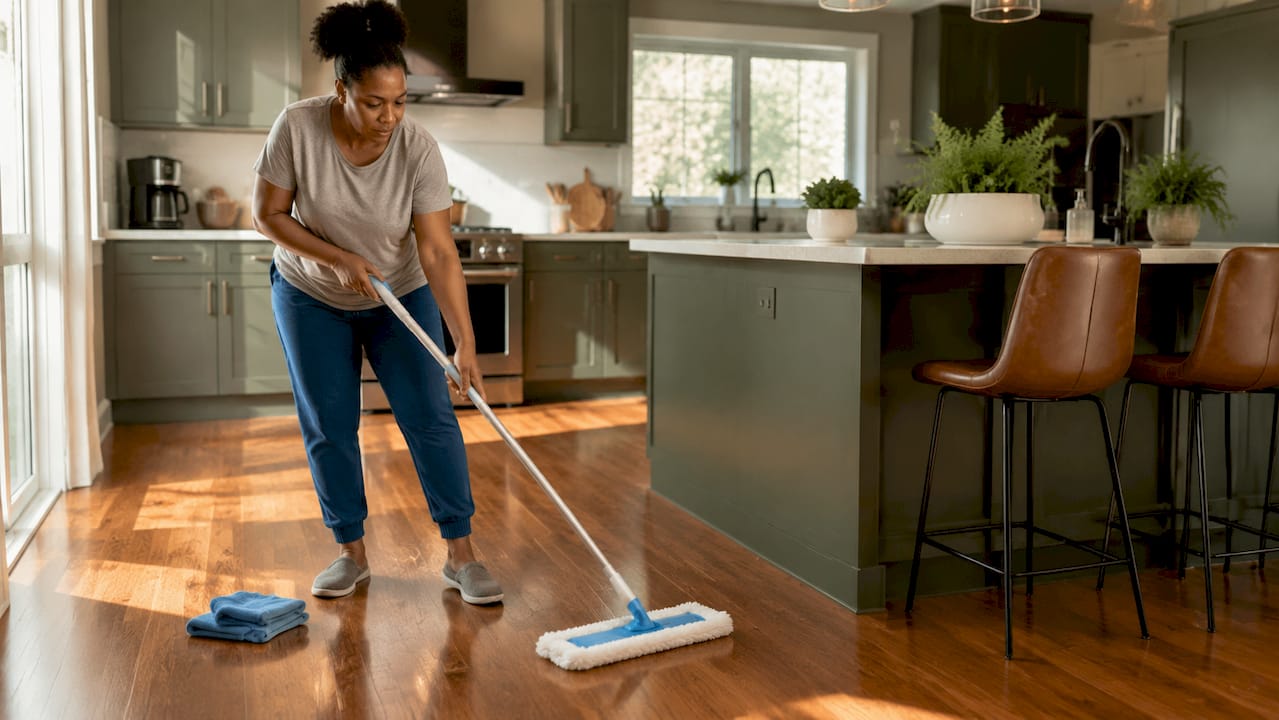
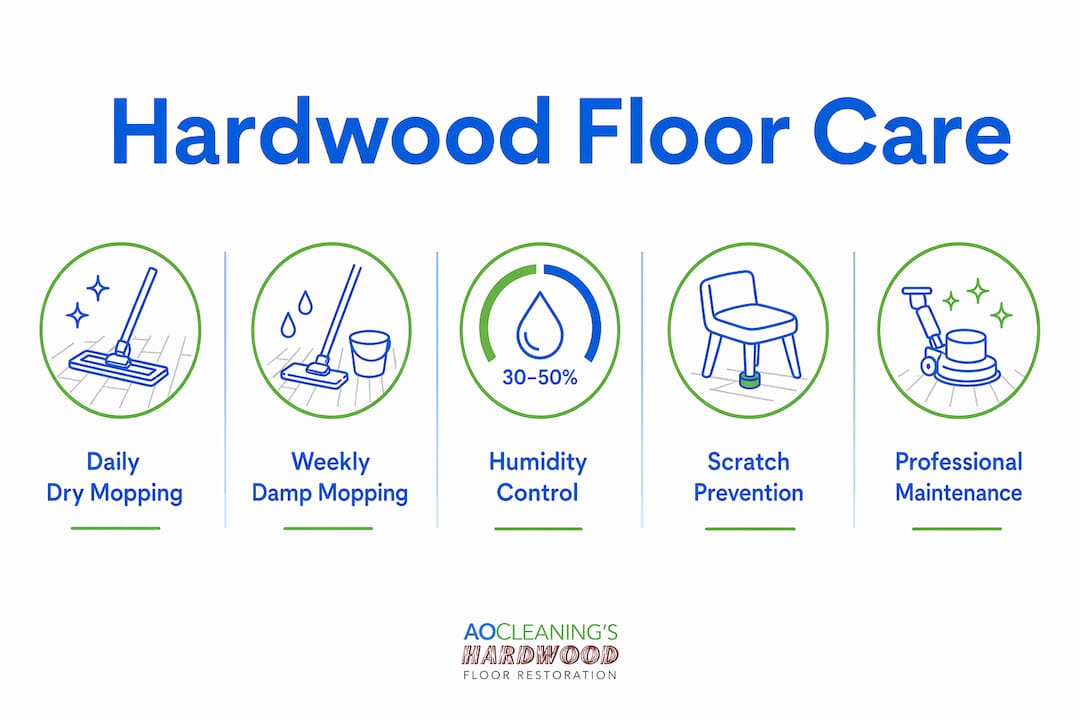
Daily dry mopping is the single most effective habit in any hardwood floor care routine. Daily dry dust mopping prevents the majority of surface scratching on hardwood floors. That matters because fine grit tracked in from outside acts like sandpaper under every footstep.
A microfiber flat mop is the right tool for this job. Microfiber traps particles instead of pushing them around, and it works on both bare wood and finished surfaces without leaving residue. Five minutes each morning is enough to clear the abrasive debris that causes finish wear over time.
Weekly damp mopping requires more care. The optimal pH range for polyurethane-finished hardwood is 6.5–8.0, and cleaners below pH 6.5 etch the finish with repeated use. Mix your cleaner at a 1:20 dilution ratio, roughly one ounce of cleaner to 20 ounces of water. Alkaline cleaners and excess soap cause dullness and streaking. Streaks signal too much water or cleaner, not a dirty floor.
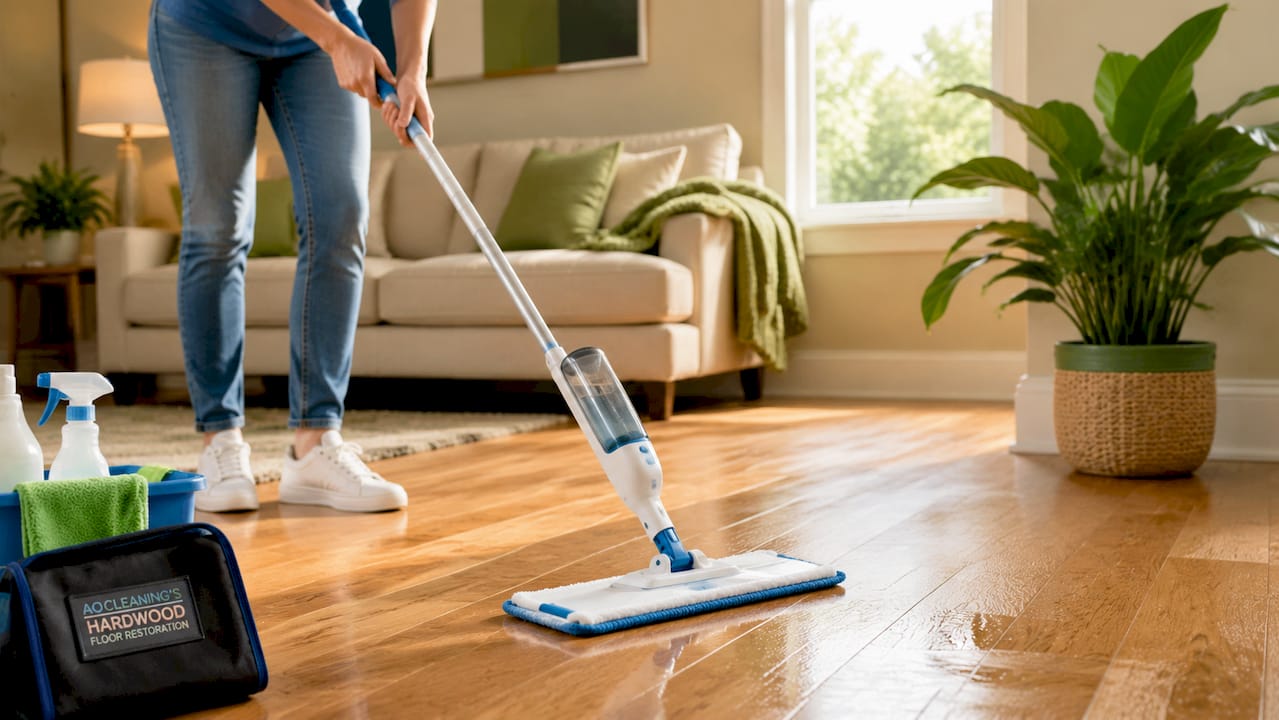
Moisture is the real enemy. A correctly wrung mop leaves the floor visibly dry within 60 seconds. If it takes longer, you are using too much water.
Common mistakes to avoid:
Steam mops and vinegar both damage hardwood sealants. Steam and vinegar degrade finishes through moisture and acid exposure.
Bucket soaking a mop before use deposits far more water than the floor can safely handle.
Cleaning against the grain creates streaks and traps debris in the wood’s natural channels.
Using the same mop head for months without washing it redeposits grime on the surface.
Pro Tip: Use a spray mop instead of a bucket. It delivers a measured mist directly to the floor, giving you precise moisture control without the risk of overwetting.
How to control indoor humidity for hardwood floor longevity
Humidity management is as important as your choice of cleaning products. Keeping relative humidity between 35–55% year-round prevents cupping, gapping, and warping in hardwood floors. Wood expands when humidity rises and contracts when it drops. Both extremes stress the floor’s structure over time.
High humidity causes boards to absorb moisture and press against each other, creating cupped edges. Low humidity pulls moisture out of the wood, opening gaps between boards. Neither condition reverses quickly, and both can require professional repair if left unchecked.
The most practical starting point is a digital hygrometer, which costs roughly $15–$30. Mount it in the room where your floors get the most use and check it weekly. That one habit catches problems before they become structural.
Seasonal tools to maintain the target range:
Winter: Central heating drops indoor humidity fast. A whole-home humidifier connected to your HVAC system holds humidity steady without daily attention.
Summer: Air conditioning removes moisture, but humid summers in the St. Louis metro area can push indoor humidity well above 55%. A dehumidifier or a well-sized central AC unit corrects this.
Spring and fall: These transition months create the widest swings. Check your hygrometer more frequently during these periods.
Pro Tip: Place your hygrometer at floor level, not at eye level. Humidity readings near the floor surface are more relevant to your wood than readings taken higher up in the room.
What preventive measures reduce scratches and finish wear?
Scratch prevention starts at the front door. Removing footwear at the door stops abrasive grit from reaching your floors entirely. Sand and small stones tracked in on shoes are the leading cause of micro-scratches that dull a finish over months of foot traffic.
Felt furniture pads are the second line of defense. Attach them to every chair leg, table base, and furniture foot that contacts the floor. Replace them every six months because worn pads collect grit and become abrasive themselves. Area rugs in high-traffic zones, hallways, and under dining tables act as protective layers that absorb the wear that would otherwise hit the wood directly.
Vacuuming requires one specific rule. Beater bar attachments cause micro-abrasions and dull luxury floor finishes over time, regardless of vacuum brand or suction setting. Use a hardwood-specific floor attachment or a soft-bristle brush head instead.
Sticky spots need a targeted approach before you reach for a mop. Gentle scraping with a plastic putty knife removes dried-on buildup without scratching the finish. Follow with a small amount of pH-neutral cleaner applied to a cloth, not directly to the floor. Always clean in the direction of the wood grain. Cleaning across the grain pushes debris into the seams and creates visible streaks.
Pro Tip: Check under area rugs every few months. Rugs trap moisture and grit against the floor surface, which can cause localized finish damage if left unattended.
When should you schedule professional maintenance for hardwood floors?
Professional maintenance follows a predictable cycle, and knowing where your floors fall in that cycle saves you money. Screen-and-coat service every 3–5 years costs $1–2 per square foot and extends floor life more cost-effectively than waiting for full refinishing. Full sanding and refinishing runs $4–8 per square foot. Catching wear early keeps you in the screen-and-coat range instead of the full refinish range.
How to read your floor’s condition
Walk your floors in raking light, meaning light that hits the surface at a low angle. This reveals finish wear patterns, scratches, and dull zones that flat overhead lighting hides. Pay attention to high-traffic paths between rooms, in front of kitchen sinks, and near exterior doors. These areas wear first.
The professional maintenance timeline
Year 1–2: Daily and weekly home care routines are sufficient. No professional service needed if the floor was properly finished at installation.
Year 3–5: Schedule a screen and recoat. This process lightly abrades the existing finish and applies a fresh topcoat without removing wood. It restores sheen and seals minor surface scratches.
Year 7–10: Inspect for finish failure, deep scratches, or staining that screen-and-coat cannot address. At this stage, full sanding and refinishing may be the right call.
Year 10+: A well-maintained floor can go through multiple full refinishing cycles. Solid hardwood typically supports 5–7 full sand-and-refinish cycles over its lifetime.
What to look for before calling a professional
Sign | What it means |
Dull patches that don’t respond to cleaning | Finish has worn through; screen-and-coat needed |
Visible scratches through the color layer | Surface damage; professional assessment required |
Boards cupping or gapping | Moisture or humidity issue; address environment first |
Gray or black staining near seams | Water damage; may require board replacement |
Finish peeling or flaking | Adhesion failure; full refinishing likely needed |
Pro Tip: Ask your professional to use dustless sanding equipment. Aosaveswoodfloors uses dustless techniques on every job, which means no fine wood dust settling into your HVAC system or on your furniture.
Key takeaways
Consistent daily habits, controlled indoor humidity, and timely professional care are the three pillars that protect luxury hardwood floors from premature wear and costly repairs.
Point | Details |
Daily dry mopping | Microfiber dry mopping each day removes abrasive grit before it scratches the finish. |
pH-neutral cleaners only | Use cleaners in the pH 6.5–8.0 range at a 1:20 dilution to protect polyurethane finishes. |
Humidity control | Keep indoor relative humidity between 35–55% year-round to prevent cupping and gapping. |
Screen-and-coat timing | Schedule professional screen-and-coat service every 3–5 years at $1–2 per square foot. |
Scratch prevention | Remove shoes at the door, use felt pads, and avoid beater bar vacuums on hardwood. |
What 20 years of floor care taught me about luxury hardwood
Most homeowners focus on what they clean their floors with. The real variable is how much water touches the wood. I have seen floors in beautiful homes ruined not by neglect but by well-meaning owners who mopped daily with a soaking wet mop. The finish clouds, the boards swell, and by the time the damage is visible, it has been building for months.
The second thing most guides skip is the humidity conversation. Cleaning products get all the attention, but a floor in a home where humidity swings from 20% in winter to 70% in summer will fail faster than a floor cleaned with the wrong product but kept at a steady 45%. A $20 hygrometer is genuinely one of the best investments a hardwood floor owner can make.
The sticky spot trick is one I share with every homeowner I talk to. When something spills and dries on the floor, the instinct is to scrub. That instinct causes more damage than the spill. A plastic putty knife, used gently, lifts the buildup without touching the finish. Then a damp cloth with a small amount of pH-neutral cleaner finishes the job cleanly.
The homeowners who get the most life out of their floors are the ones who treat professional maintenance as a scheduled event, not a reaction to visible damage. Screen-and-coat at year three or four is a fraction of the cost of full refinishing at year eight. The math is simple. The discipline to act before the floor looks bad is what separates floors that last 50 years from floors that need replacing at 20.
— Jim
Aosaveswoodfloors: professional care for floors worth protecting
Your floors represent a real investment, and the right professional service at the right time protects that investment for decades.
Aosaveswoodfloors has served homeowners across the St. Louis metro area and central Illinois since 2003, with over 450 Google reviews backing their reputation. Their clean and buff service is the right call for routine upkeep, while their screen and recoat service adds a fresh protective topcoat without the cost of full refinishing. For floors with deep wear, staining, or finish failure, their full sand and refinishing service restores the wood to its original condition. Every job uses dustless equipment and eco-friendly products, and most services are completed in a single day with floors ready to walk on in about three hours.
FAQ
How often should I damp mop luxury hardwood floors?
Damp mop once a week using a pH-neutral cleaner diluted at a 1:20 ratio. Wring the mop thoroughly so the floor dries within 60 seconds.
What humidity level is safe for hardwood floors?
Keep indoor relative humidity between 35–55% year-round. Levels outside this range cause boards to cup, gap, or warp over time.
Can I use a steam mop on hardwood floors?
Steam mops damage hardwood finishes and should never be used on wood floors. The heat and moisture degrade the sealant and can cause permanent warping.
How do I know when my floors need professional refinishing?
Look for dull patches that don’t respond to cleaning, visible scratches through the color layer, or finish that is peeling. A screen-and-coat service every 3–5 years prevents most floors from reaching the full refinishing stage.
Are area rugs safe to use on hardwood floors?
Area rugs protect hardwood in high-traffic zones, but check underneath them every few months. Trapped moisture and grit under a rug can cause localized finish damage if left unattended.
Recommended

Comments