


What Is Wood Floor Conditioning? A Homeowner's Guide
- Kim M.

- 4 days ago
- 8 min read
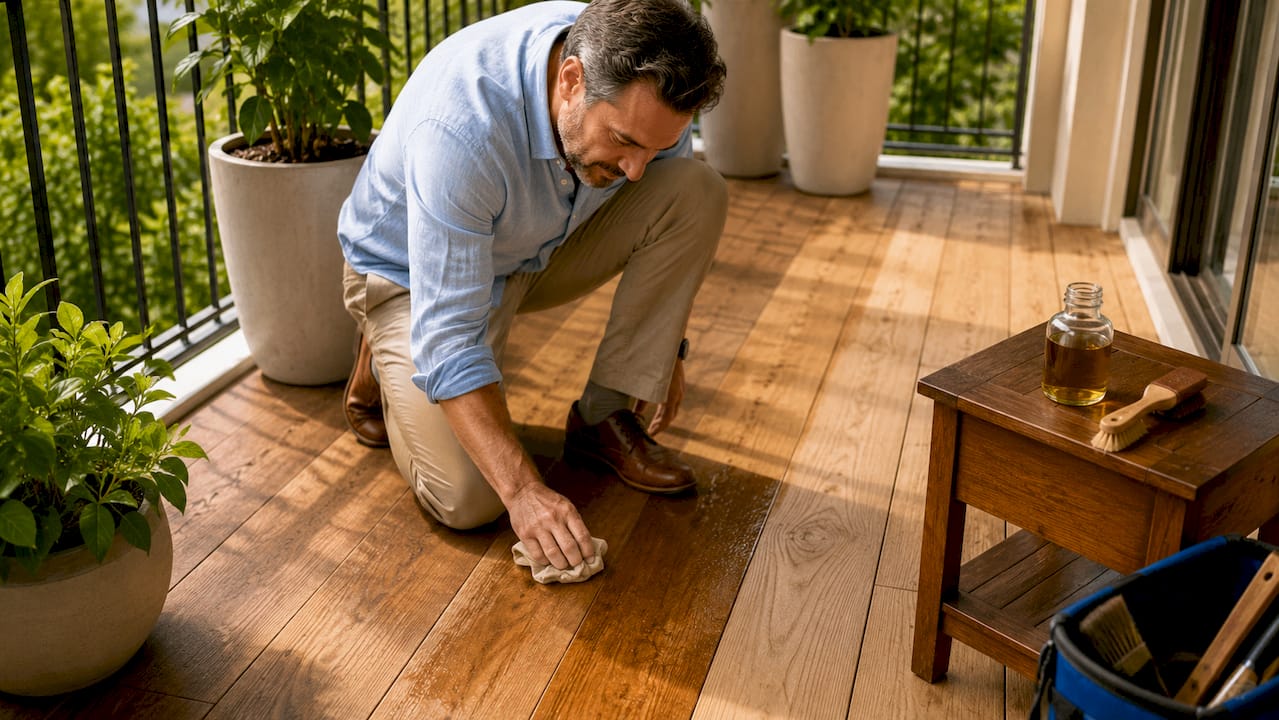
Wood floor conditioning is defined as the process of applying penetrating oils or treatment products to oil-finished hardwood floors to replenish lost moisture and restore wear resistance. This practice applies specifically to floors with a penetrating oil finish, such as those treated with Rubio Monocoat or Bona Craft Oil. It does not apply to polyurethane-finished floors, which have a sealed surface film that blocks absorption entirely. The National Wood Flooring Association (NWFA) recognizes finish-appropriate maintenance as the foundation of any sound wood floor care routine. Getting this distinction right is the single most important thing a homeowner can do before buying any product or starting any treatment.
What is wood floor conditioning and which finishes need it?
Wood floor conditioning is a maintenance treatment, not a refinishing process. It works by soaking conditioning oil deep into the wood fibers of an oil-finished floor, replacing moisture the wood loses over time through heat, foot traffic, and seasonal humidity changes. Conditioning oils replenish moisture lost in oil-finished hardwood floors by penetrating deep into the fibers, which prolongs the wood’s strength and appearance. This process is ineffective and damaging on polyurethane-finished floors that have a sealed protective layer.
The two main finish types homeowners encounter are penetrating oil finishes and surface finishes. A penetrating oil finish soaks into the wood and leaves no hard film on top. A polyurethane surface finish sits on top of the wood as a hard, clear protective layer. These two finishes look similar to the naked eye, which is why so many homeowners apply the wrong product and end up with a sticky, cloudy mess.
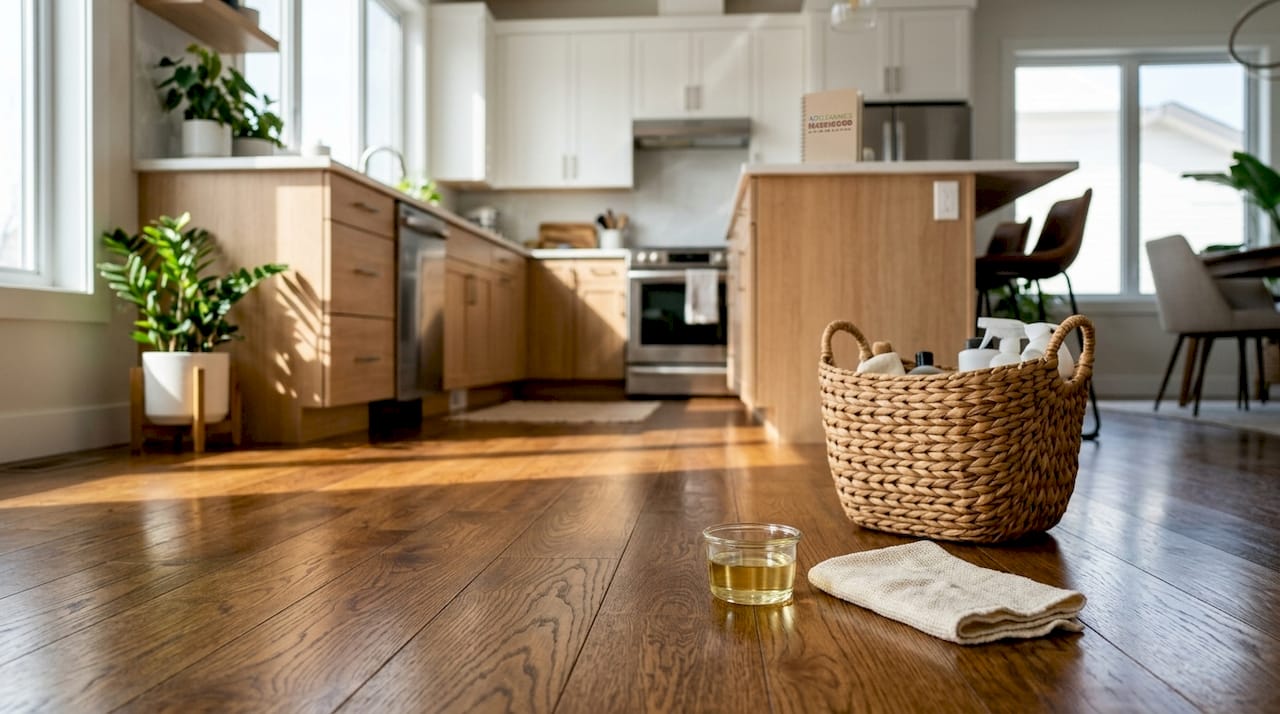
The fastest way to tell them apart is the water bead test. Drop a few water droplets onto your floor in an inconspicuous spot. Water on poly-finished floors beads up; on oil-finished floors, water absorbs quickly into the wood. That single test takes 30 seconds and saves you from a costly mistake.
Finish Type | Conditioning Needed? | Recommended Care | Frequency |
Penetrating oil finish | Yes | Manufacturer-approved conditioning oil | Every 6–12 months |
Polyurethane surface finish | No | Humidity control, pH-neutral cleaner | Ongoing |
Wax finish | Partial | Paste wax reapplication | Annually |
Hardwax oil finish | Yes | Compatible hardwax oil maintenance product | Every 6–12 months |
Understanding your finish type before buying any product is the most practical wood floor care tip you can follow.
How to condition wood floors the right way
Conditioning an oil-finished floor is straightforward when you follow the correct sequence. Skipping steps, especially the cleaning phase, is the most common reason homeowners get poor results.
Step 1: Clean the floor thoroughly. Use a manufacturer-approved soap or pH-neutral cleaner designed for oil-finished floors. Oil-finished floors must be cleaned with manufacturer-approved soaps; water-based polishes cloud and damage them. Vacuum or dust mop first to remove all grit, then damp mop with a microfiber mop. The floor must be completely dry before you apply any conditioning oil.
Step 2: Test a small area. Apply a small amount of conditioning oil to a low-traffic corner. Wait the full drying time listed on the product label. Check for even absorption, color change, and any stickiness. If the oil sits on the surface rather than soaking in, you likely have a poly-finished floor, not an oil-finished one.
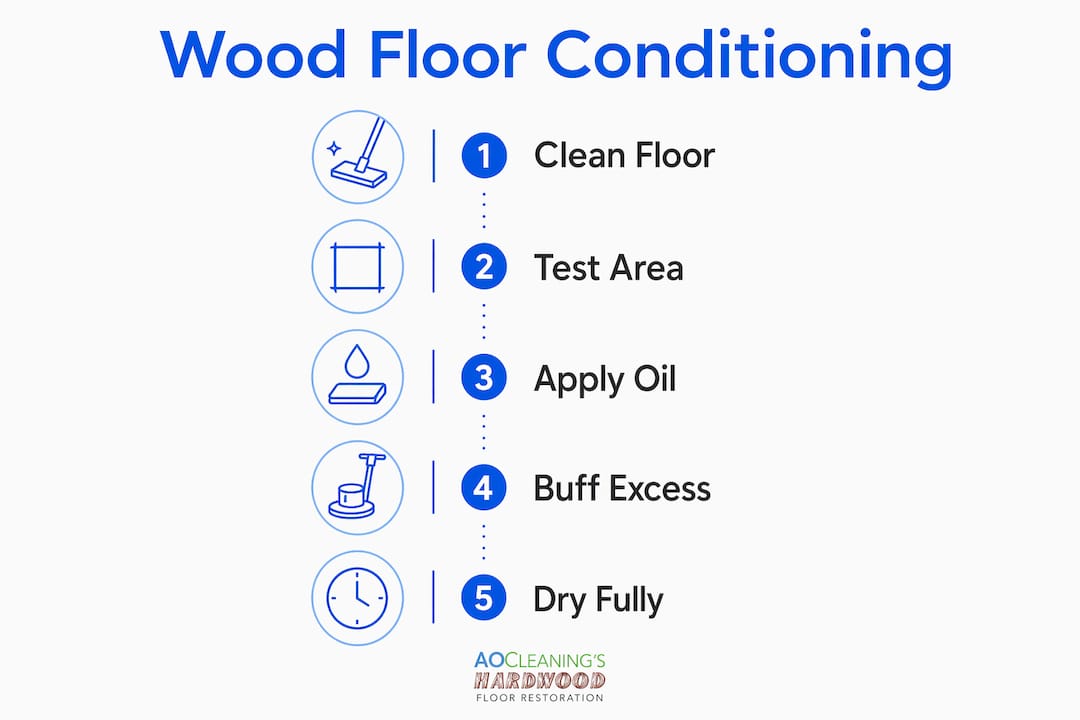
Step 3: Apply the conditioning oil. Work in small sections, following the wood grain. Apply a thin, even coat using a clean cloth, applicator pad, or the tool recommended by the product manufacturer. Thin coats absorb better than heavy ones. A heavy application leaves a greasy residue that attracts dirt and takes days to dry.
Step 4: Buff and remove excess. After the recommended wait time, buff the floor with a clean, dry cloth to remove any oil that has not absorbed. Leaving excess oil on the surface is the second most common mistake homeowners make.
Step 5: Allow full drying time. Keep foot traffic off the floor for the time specified on the product label. Industry guidance recommends periodic oiling for oil-finished floors every 6–12 months, especially in high-traffic areas. Kitchens and hallways may need treatment closer to the 6-month mark; bedrooms can often go a full year.
Pro Tip: Apply conditioning oil on a dry day when indoor humidity is moderate. High humidity slows absorption and can leave the oil sitting on the surface instead of penetrating the wood fibers.
Why polyurethane floors do not need conditioning
Polyurethane-finished floors do not absorb conditioning oils. The hard film that polyurethane creates on the wood surface is designed to block moisture, dirt, and wear from reaching the wood fibers below. Applying conditioning oils to poly floors causes residue buildup that harms the floor’s appearance and can make the surface dangerously slippery.
The correct “conditioning” for a poly floor is environmental, not topical. Maintaining indoor relative humidity between 35% and 55% is the primary method for protecting polyurethane-finished floors. Wood expands and contracts with humidity changes, and keeping that range stable prevents gaps, cupping, and squeaking. A whole-home humidifier in winter and a dehumidifier in summer are the most effective tools for this.
Proper cleaning also protects poly floors from premature wear. The right approach includes:
Dust mopping or vacuuming daily to remove abrasive grit before it scratches the finish
Damp mopping with a pH-neutral cleaner and a microfiber mop, never a wet mop
Avoiding steam mops entirely, as heat and moisture force water under the finish
Wiping up spills immediately to prevent moisture from working into seams
Pro Tip: Place a digital hygrometer in your main living area to monitor indoor humidity year-round. A $15 device can tell you whether your floors are at risk before you see any visible damage.
Homeowners who apply conditioning oils to poly floors often notice a dull, hazy film that is difficult to remove. If that has already happened, a professional screen and recoat service from a qualified floor care company is usually the most cost-effective fix.
Benefits of wood floor conditioning and a full maintenance routine
The benefits of wood floor conditioning for oil-finished floors go beyond appearance. Regular conditioning replaces moisture that heat and traffic pull from the wood fibers, which keeps the wood from drying out, cracking, or becoming brittle. A well-conditioned oil-finished floor also resists minor scratches better than a dry one, because the oil keeps the wood fibers slightly flexible rather than rigid.
The financial case for conditioning is equally strong. Conditioning an oil-finished floor costs a fraction of what a full sand and refinish costs. Preventative daily care such as dust mopping and felt pads extends floor finish lifespan and delays conditioning or refinishing needs. Protecting your investment with a consistent routine is far cheaper than repairing damage after the fact.
A complete wood floor maintenance guide for all hardwood floors looks like this:
Daily: Dust mop or vacuum to remove grit and debris
Weekly: Damp mop with a finish-appropriate, pH-neutral cleaner
Monthly: Inspect high-traffic areas for dullness, scratches, or dry spots
Every 6–12 months (oil-finished floors only): Apply a manufacturer-approved conditioning oil
Annually: Check furniture pads and replace worn ones; assess whether a screen and recoat is needed
Excess moisture is the primary enemy of all wood floors and causes warping, swelling, and finish damage. Microfiber mops used damp, never wet, are the standard tool for safe floor cleaning. Floors should dry within 60 seconds of mopping. If they stay wet longer, you are using too much water.
The best maintenance routines combine regular dust mopping, prevention strategies like furniture pads, and finish-appropriate cleaning rather than relying solely on conditioning products. Conditioning is one part of a system, not a substitute for the rest of it.
Key Takeaways
Wood floor conditioning is a finish-specific treatment that only benefits oil-finished hardwood floors; polyurethane floors require humidity control and proper cleaning instead.
Point | Details |
Conditioning is finish-specific | Only oil-finished floors absorb conditioning oils; poly floors do not benefit and can be damaged. |
Use the water bead test | Water beads on poly floors and soaks into oil-finished floors, identifying which treatment is needed. |
Condition every 6–12 months | High-traffic oil-finished floors need conditioning closer to every 6 months; low-traffic areas can wait 12. |
Humidity protects poly floors | Keeping indoor humidity between 35% and 55% prevents gaps, cupping, and squeaking on poly floors. |
Daily habits extend floor life | Dust mopping, felt pads, and damp mopping reduce wear and delay the need for conditioning or refinishing. |
What 20 years of floor care has taught me about conditioning myths
The most common mistake I see homeowners make is treating conditioning like a universal fix. They buy a bottle of conditioning oil at a hardware store, apply it to their floors without checking the finish type, and then call us wondering why their floors look worse than before. The product was not the problem. The diagnosis was.
The second misconception is that conditioning replaces refinishing. It does not. Conditioning maintains an oil-finished floor that is in good shape. If the wood has deep scratches, gray oxidation, or bare spots where the finish has worn through, conditioning oil will not fix those problems. It will just make them shinier. That is when you need a professional restoration, not a bottle of oil.
What I have found actually works is building a habit around finish identification first. Before any product touches your floor, know what finish you have. The water bead test takes 30 seconds. Skipping it costs homeowners real money. I have seen poly floors ruined by conditioning oil that took a full professional buff and recoat to fix, a job that would have been completely unnecessary with one simple test.
Environmental control is also underrated. Homeowners spend money on conditioning products but run their heat at full blast all winter with no humidifier. The wood dries out faster than any conditioning oil can compensate. A stable indoor climate does more for your floors than any product on the shelf.
The floors that last the longest belong to homeowners who are consistent, not aggressive. Dust mop regularly, clean with the right product, and condition on schedule. That routine, done without drama, keeps hardwood floors looking great for decades.
— Jim
Professional products to support your floor care routine
Conditioning your oil-finished floors starts with the right cleaner. Before any conditioning oil goes down, the floor needs to be free of dirt, residue, and old product buildup. Using the wrong cleaner at this stage undermines everything that comes after.
Aosaveswoodfloors carries the AO Hardwood Neutral Cleaner in a 32 oz size, formulated specifically for hardwood floors and safe for use before conditioning treatments. Homeowners maintaining larger areas or multiple rooms can order the 1-gallon size for better value. Both options are available directly through the Aosaveswoodfloors website, with product guidance from a team that has been caring for hardwood floors across central Illinois and the St. Louis metro area since 2003.
FAQ
What is wood floor conditioning in simple terms?
Wood floor conditioning is the process of applying a penetrating oil to oil-finished hardwood floors to replace lost moisture and restore durability. It does not apply to polyurethane-finished floors.
Do wood floors need conditioning if they look fine?
Oil-finished floors benefit from conditioning every 6–12 months even when they look acceptable, because moisture loss happens before visible drying or dullness appears. Waiting for visible damage means the wood has already weakened.
Can I use conditioning oil on any hardwood floor?
No. Conditioning oils are not recommended for polyurethane-finished floors and may cause sticky residue or finish damage. Use the water bead test to confirm your finish type before applying any conditioning product.
How do I know when my oil-finished floor needs conditioning?
Look for dullness in high-traffic areas, a dry or chalky appearance, or wood that feels rough underfoot. These are signs the oil finish has depleted and conditioning is overdue.
What is the difference between conditioning and refinishing?
Conditioning replenishes moisture in an oil-finished floor that is structurally sound. Refinishing removes the existing finish and applies a new one, which is necessary when the floor has deep scratches, staining, or significant wear through the finish layer.
Recommended

Comments