


What Does Floor Polishing Accomplish for Your Floors?

Updated: Sep 10
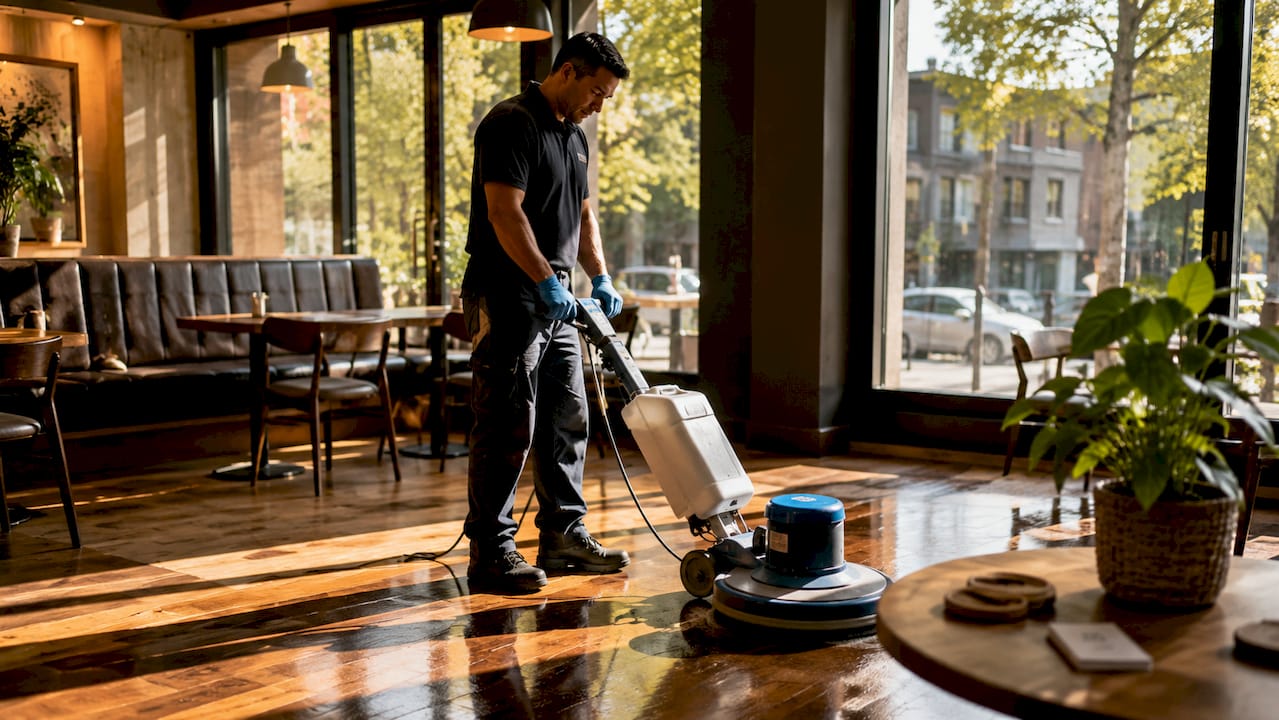
What does floor polishing actually do?
Floor polishing mechanically smooths and shines a floor’s surface to restore its appearance, seal microscopic cracks, and protect the underlying material from daily wear. It’s not the same as mopping or even a quick buff. The process uses abrasive compounds or diamond-impregnated pads to hone the surface through multiple stages, progressively refining it from coarse to ultra-fine until the floor reflects light evenly.
Here’s what polishing accomplishes in practical terms:
Restores luster and removes light scuffs. The buffing and polishing process maintains and restores the finish’s shine while clearing away surface-level dirt and marks.
Creates a protective layer. Sealing pores and micro-cracks reduces how much moisture, grit, and debris can penetrate the surface.
Extends floor life. When the protective wear layer stays intact, microscopic grit underfoot can’t grind down the flooring material. Without it, every footstep accelerates degradation.
Improves slip resistance. Properly polished floors remove uneven textures where water pools, and some finishes include anti-slip additives that maintain traction.
Enhances appearance. Professional polishing significantly increases floor gloss ratings, resulting in a visibly shinier surface from across the room.
How does polishing benefit different floor types?
Not every floor responds to polishing the same way, and the benefits vary meaningfully by material.
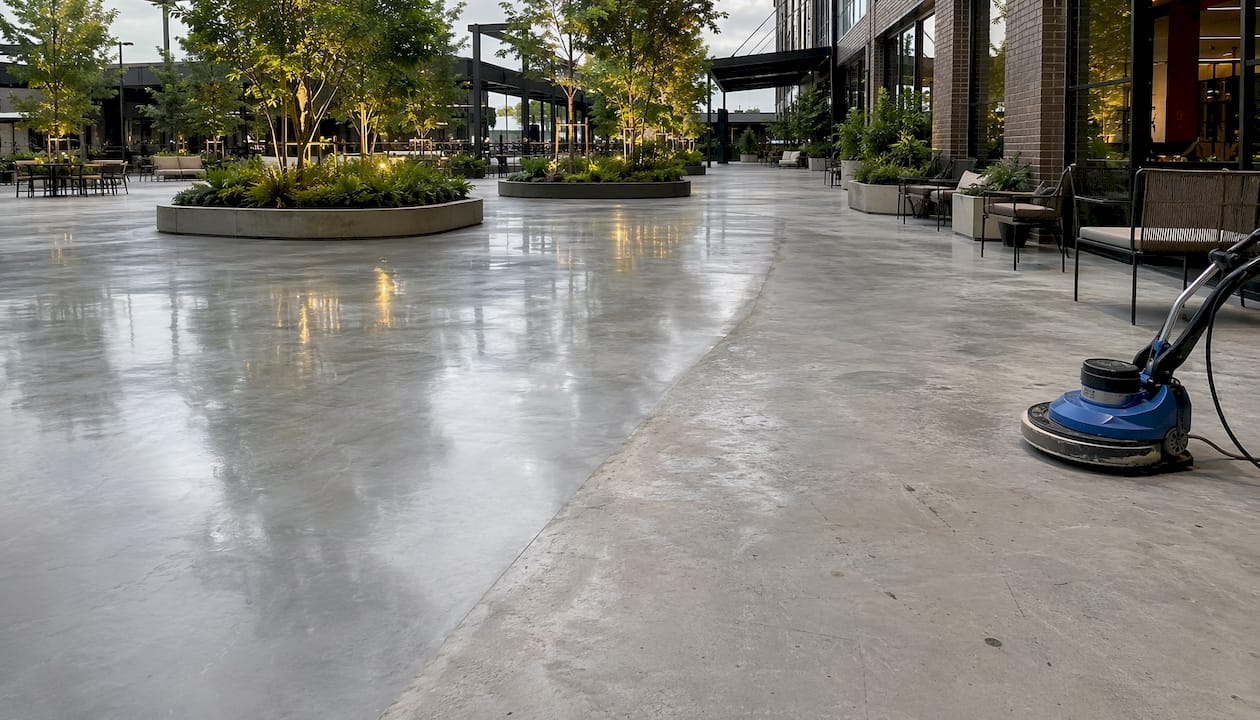
Stone and concrete gain the most from mechanical polishing. Diamond abrasive pads grind away scratches, stains, and surface etching, then chemical densifiers penetrate concrete to react with calcium hydroxide, forming a harder, denser surface that resists wear and polishes better. The result is a floor that’s tougher than it was before polishing, not just shinier.
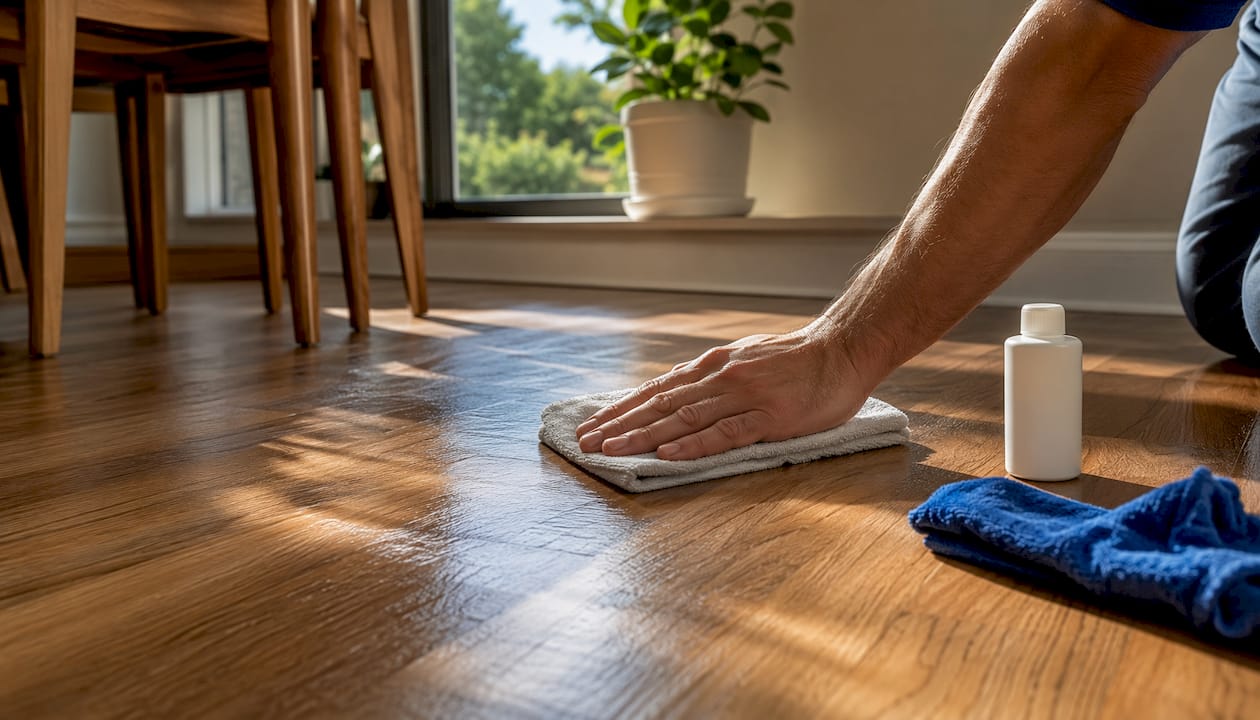
Hardwood floors are polished differently. Instead of diamond abrasives, the process uses progressively finer sandpaper followed by polishing compounds or waxes that fill pores and restore the protective finish. The goal is the same: smooth out micro-scratches, close the surface, and rebuild the layer that takes the daily punishment so the wood underneath doesn’t have to. For a deeper look at hardwood care routines, the approach matters as much as the frequency.
Vinyl and synthetic floors benefit from polishing through added gloss and a fresh wear layer that slows surface degradation. These floors are more sensitive to aggressive chemistry, so the right product selection is critical.
Across all floor types, polishing also improves indoor air quality. Unpolished, porous surfaces trap dust mites, pollen, and pet dander. Once sealed, those pores close up. Buildings that polish consistently can have noticeably less airborne dust than comparable spaces without regular floor care. For households with allergy sufferers, that’s a real functional benefit, not just a cosmetic one.
Pro Tip: If you’re polishing stone floors in a home with pets or kids, ask your professional about anti-slip finish additives. They maintain traction without sacrificing gloss, and they’re especially worth it near entryways and bathrooms.
For homeowners considering stone surfaces specifically, this homeowner’s guide to stone polishing covers the scheduling and protection benefits in detail.
How does polishing compare to buffing, waxing, and refinishing?
These four terms get used interchangeably, but they describe genuinely different processes with different outcomes. Choosing the wrong one wastes money at best and damages your floor at worst.
Process | What it does | Depth of work | Best for |
Polishing | Abrades surface to remove scratches, seals pores, restores gloss | Moderate surface removal | Dull, lightly scratched floors needing restoration |
Buffing | Enhances shine with minimal abrasion | Surface only | Maintaining gloss between polishes |
Waxing | Adds a protective coating over the existing surface | No abrasion | Adding temporary protection; can build up residue |
Refinishing | Removes old finish entirely, repairs damage, recoats | Deep, full-surface | Heavily worn or damaged floors |
The key distinctions:
Polishing removes some finish layer to achieve high gloss; buffing maintains existing shine without surface removal.
Waxing adds a coating but can accumulate over time, affecting both appearance and slip resistance if not stripped periodically.
Refinishing is the most invasive option and the right call when polishing can no longer address the damage. Understanding when cleaning becomes restoration helps you avoid over-treating a floor that just needs a polish, or under-treating one that needs a full refinish.
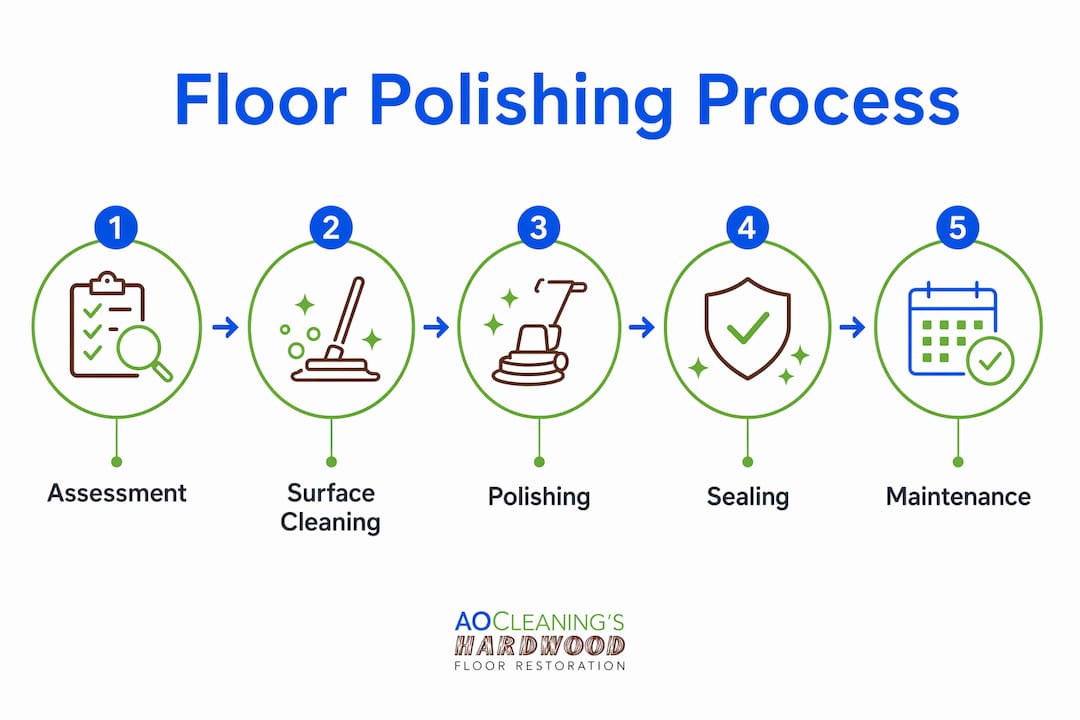
How is floor polishing actually performed?
The equipment and process vary by floor type, but the underlying logic is the same: start coarse, finish fine, then seal.
For stone and concrete:
Coarse diamond pads (50–100 grit) remove deep scratches and surface damage.
Medium pads (200–400 grit) smooth the texture.
Fine pads (800–1,500 grit) create initial shine.
Ultra-fine pads (2,000–3,000 grit) produce a mirror-like gloss finish.
Chemical densifiers are applied to concrete between stages to harden the surface.
A sealant, either acrylic, urethane, or epoxy based, is applied last to protect against moisture and stains.
For hardwood:
Progressive sanding with finer sandpaper replaces diamond abrasives.
Polishing compounds containing aluminum oxide or silicon carbide smooth the surface at a microscopic level.
A finish coat seals the wood and restores the protective layer.
Pro Tip: Machine speed and pad selection are the two variables most likely to cause damage if wrong. Too aggressive a pad on a softer stone, or too high a speed on hardwood, can create new scratches faster than you’re removing old ones. When in doubt, start with a finer grit and work back.
Maintenance polishing is typically recommended periodically depending on foot traffic and floor type, with higher-traffic areas requiring more frequent attention.
What do experts recommend for floor polishing maintenance?
Industry guidance consistently frames polishing as a safety and maintenance necessity, not a cosmetic luxury. Slip resistance degrades as protective coatings wear away, meaning a floor that was perfectly safe at installation can become a hazard after years of neglect. OSHA standards require that walking surfaces be maintained to prevent slip hazards, and polishing is a direct part of meeting that standard.
The biggest mistake in floor care is waiting for visible damage before acting. By the time you can see wear, the protective layer is already compromised and the underlying material is taking the hit. Proactive polishing, on a set schedule rather than a reactive one, is what actually preserves floor integrity over time.
Essential best practices:
Schedule polishing before wear is visible, ideally every 6–12 months based on traffic and floor type.
Inspect floors regularly for dull traffic lanes, uneven finish wear, or moisture retention, and address them before they worsen.
Use pH-neutral cleaners between polishes to avoid stripping the finish prematurely.
Keep a maintenance log. Documenting maintenance activities is often as important as the service itself for insurance purposes and slip-and-fall liability.
Match the method to the floor. Using the wrong product or technique on vinyl, hardwood, or stone can void warranties and accelerate the damage it’s meant to prevent.
For a broader look at how these practices fit into a complete care routine, the floor maintenance best practices guide covers scheduling, inspection, and cleaning methods in detail.
Key Takeaways
Floor polishing restores surface smoothness, seals pores, and rebuilds the protective layer that keeps floors safe, clean, and durable over time.
Point | Details |
Surface restoration | Polishing removes light scuffs and restores luster, significantly increasing floor gloss ratings for a visibly shinier surface. |
Protection from wear | Sealing microscopic cracks prevents grit from abrading the floor material, directly extending floor lifespan. |
Air quality benefit | Consistent polishing reduces airborne dust by 25% by closing porous surfaces that trap allergens. |
Safety maintenance | Slip resistance degrades as coatings wear away; regular polishing keeps traction at a safe, compliant level. |
Proactive scheduling | Experts recommend polishing every 6–12 months before visible wear occurs to preserve finish integrity. |
Why floor polishing deserves more credit than it gets
Most homeowners think about polishing only when their floors look bad. That’s the wrong trigger. By the time dullness or scratches are obvious, the protective finish has already been compromised, and the floor itself is absorbing damage it shouldn’t be.
What gets overlooked is that polishing isn’t primarily about aesthetics. The shine is a byproduct. The real work is sealing the surface, restoring traction, and stopping microscopic grit from grinding down the material with every step. A floor that looks fine but hasn’t been polished in three years is quietly degrading in ways that won’t show up until the repair bill does.
There’s also a health angle that rarely comes up in these conversations. Porous, unpolished floors accumulate allergens in ways that regular mopping can’t address. Sealing those surfaces is one of the more practical things you can do for indoor air quality, especially in homes with kids or pets.
The other thing worth saying plainly: polishing is not refinishing, and it’s not a substitute for it. When a floor has deep gouges, widespread finish failure, or structural damage, polishing won’t fix it. Knowing the difference between a floor that needs a polish and one that needs a full restoration saves both money and frustration. Treating a floor that needs refinishing with a polish is like painting over rust.
Ready to restore your floors without the mess?
Aosaveswoodfloors has been restoring hardwood floors across central Illinois and the St. Louis metro area since 2003, with over 450 Google reviews and a reputation built on dustless techniques and eco-friendly products. Most jobs are done in a single day, with floors ready to walk on in about three hours.
Whether your floors need a quick polish or a complete overhaul, Aosaveswoodfloors has the right service for the situation, including countertop cleaning, polishing, and sealing for a full-home refresh. Before you refloor it, let them restore it.
Recommended

Comments