


Condo Hardwood Refinishing: Dustless Work, Walkable in 3 Hours

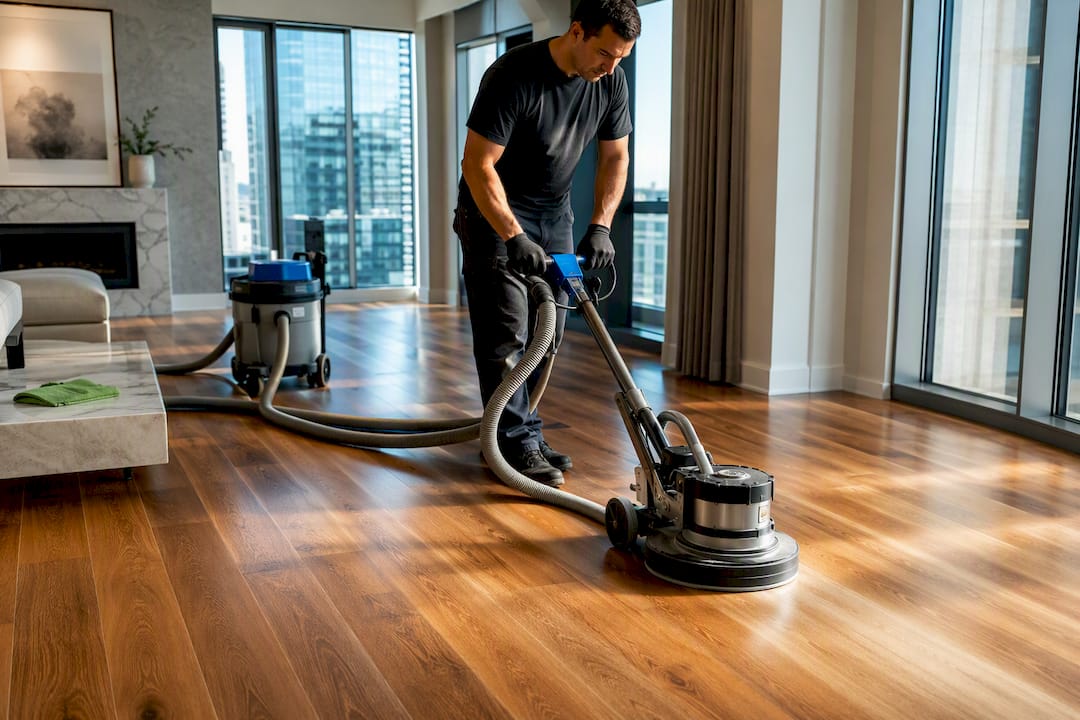
Most condo hardwood floors can be refinished, but the method depends on what’s under the finish, not just how the surface looks. Screen-and-recoat handles light wear in a day with minimal mess. Full dustless sanding fixes deep gouges and color changes but takes longer and needs building approval. Before anything else, pull a floor vent to check the wear layer thickness, then confirm your HOA’s renovation rules.
TL;DR:
Engineered hardwood with a wear layer under 2 to 3 millimeters typically cannot be safely sanded, limiting options to recoating or replacing rather than full refinishing.
HOA approval processes for refinishing include submitting paperwork, scheduling elevator use, and implementing dust containment systems, often requiring dustless sanding methods.
Full sanding is suitable for deep gouges and color changes but involves longer timelines and higher costs, while screen-and-recoat addresses surface wear with minimal disruption.
Floors with water damage, mold, severe cupping, or broken joints must be replaced entirely, as sanding or recoating cannot restore structural integrity.
Budgeting ranges from $3 to $12 per square foot depending on the scope, with full restoration costing more and taking several days for completion.
Table of Contents
Can Condo Hardwood Floors Be Refinished?
The honest answer depends on two things: what kind of wood you have, and how much of it is left to work with. Solid hardwood, typically 3/4 inch thick, can usually withstand several rounds of sanding over its lifetime. Engineered hardwood is a different story. It has a thin veneer layer glued over plywood, and once that veneer is gone, there’s no more wood to sand.
Pop a floor vent cover or check where the flooring meets a threshold. If you can see the plank’s cross section, measure the top wear layer with a small ruler or a contractor’s judgment call. A layer under roughly 2 to 3 millimeters usually rules out drum sanding on engineered planks. Below that thickness, sanding risks cutting straight through to the plywood core.
A few conditions mean refinishing isn’t the answer at all, and pushing forward anyway wastes money:
Standing water damage or active rot in the subfloor
Mold growth beneath or around the planks
Severe cupping or crowning that hasn’t flattened after drying out
Missing or broken tongue-and-groove joints that keep boards from sitting flush
Any of those point toward board replacement or a full restoration job rather than a simple refinish. If you’re unsure which category your floor falls into, signs that hardwood floors need refinishing versus outright replacement are worth reviewing before you call anyone.
Navigating HOA Rules, Elevators, and Dust Control
Refinishing a single-family home is mostly a scheduling problem. Refinishing a condo unit is a scheduling problem wrapped in a paperwork problem. Most associations require a renovation request form, proof of contractor insurance, and sometimes a security deposit before a crew ever touches the floor.
Work hours are the next hurdle. Many buildings restrict noisy renovation work to weekday daytime windows, and local nuisance ordinances back that up. Municipal noise codes routinely limit construction hours in multifamily zones, so check both the HOA handbook and your city’s rules before booking a date.
Here’s what typically needs to happen before the crew shows up:
Submit the renovation request and certificate of insurance to the property manager.
Reserve the freight elevator and confirm the building’s protective padding requirements.
Post a notice for adjacent neighbors about work dates and expected noise.
Schedule delivery of equipment during an approved access window.
Dust containment matters more here than almost anywhere else. In a single-family home, stray dust settles in one household. In a condo, it can drift into hallways, shared HVAC returns, and a neighbor’s unit through gaps under the door. Buildings increasingly require dustless sanding systems as a condition of approval, not just a nice-to-have.
Pro Tip: Email your property manager a one-page work summary (dates, hours, containment method, contractor insurance) at least two weeks out. Buildings approve faster when they don’t have to chase you for details.
Screen-and-Recoat vs Full Sanding: Picking the Right Method
Screen-and-recoat is the lighter touch. A technician abrades the existing finish just enough for a new topcoat to bond, without removing wood. It works when the floor has surface scuffs and dulling but the color and stain underneath are still intact. Because no wood comes off, dust output stays low and the whole job often wraps in a single day, which is why it’s the go-to for condos with tight access windows.
Full sanding is the heavier procedure. A drum or orbital sander strips the old finish down through the top layer of wood, which means you can change stain color, erase deep scratches, and fix pet stains that have soaked into the grain. It also means more dust unless the crew runs true dustless containment, and a longer timeline overall since staining and multiple topcoats each need dry time between passes.
The trade-offs come down to a few practical factors:
Cost: screen-and-recoat runs cheaper per square foot than full sanding, since less labor and material go into it.
Disruption: recoating is nearly a one-day event; full sanding can stretch several days.
Depth of damage: recoating can’t fix gouges, warping, or dark pet stains that have penetrated the wood.
Color changes: only full sanding lets you shift to a different stain shade.
A general trade guideline is that screen-and-recoat suits surface wear while full sanding suits deeper damage, and recoating over a finish that’s already failing or peeling usually doesn’t hold, since the new coat has nothing solid to grip.
Engineered vs Solid Hardwood: What’s Realistic for Condos
Condo buildings lean heavily on engineered hardwood because it’s more stable across concrete subfloors and radiant heat systems, but that stability comes at the cost of how many times it can be refinished. A thick veneer, generally 3 to 4 millimeters or more, can often handle one or two light sandings over its life. Anything thinner limits you to recoating almost exclusively.
If your veneer measures too thin for sanding, you still have options:
Screen-and-recoat, which never removes wood and works regardless of veneer depth
Bonding agents that help a new finish adhere without abrasion
Replacing individual damaged planks with matching engineered stock rather than sanding the whole floor
At a certain point, the math flips. If a floor needs sanding it can’t safely take, plank replacement or a full restoration with board repair often costs less than gambling on a sander cutting through to plywood. Restoration that includes board replacement is a legitimate answer, not a downgrade, when the existing wear layer is exhausted.
What Condo Refinishing Actually Costs and How Long It Takes
Budgeting for a condo refinish comes down to square footage and which of the two methods your floor needs. Professional restoration work, which includes board replacement and subfloor repair, typically runs $5 to $12 per square foot, while straightforward refinishing with only minor repairs tends to land in the $3 to $8 range depending on the extent of prep work.
Timelines follow the same split. Screening and recoating often finishes in a single day, with some waterborne finishes allowing foot traffic within hours. Full sanding typically stretches three to seven days once you count staining and multiple topcoats, and full cure before moving heavy furniture back can take anywhere from several days to a few weeks depending on the finish chemistry and humidity in the unit.
Preparing for Refinishing Day (and What Happens After)
A little prep work upfront saves a lot of friction once the crew arrives. Here’s the practical order of operations for a condo unit:
Clear furniture, rugs, and floor items from the work area, and label any vents or thresholds you want protected.
File your HOA renovation paperwork and confirm the elevator reservation a week ahead.
Decide whether to remove shoe molding, since some finishes look cleaner with it pulled and reset.
Arrange for pets to stay elsewhere or in a sealed room away from fumes and equipment during work hours.
Keep the unit at a stable temperature and moderate humidity during the cure window, since swings in either can affect how the finish sets.
Once the crew finishes, don’t rush furniture back in. Give the floor the full walkable window the finish requires, then wait for the recommended cure period before setting down rugs or heavy pieces. A quick final walkthrough with the contractor, checking sheen consistency and edge work near baseboards, catches most issues before they become disputes. If you want a fuller pre-job walkthrough, the refinishing project checklist for homeowners covers the same ground in more detail.
Why Fast, Dustless Work Matters More in a Condo
A condo unit doesn’t exist in isolation. Dust and fumes travel through shared hallways and HVAC returns in ways a detached house never has to worry about, which is why some companies build processes around dustless equipment and low-odor waterborne finishes rather than treating them as an upsell. This approach can translate into floors that are often walkable in about three hours. When boards are damaged enough to need repair rather than just a fresh coat, that’s the moment a full restoration earns its higher cost.
— Jim
How AO Cleaning Handles Condo Refinishing Projects
This company aims to be a reliable choice for condo hardwood work. Where DIY sanding risks cutting through a thin veneer, and a generic contractor might not know building elevator and insurance requirements, a professional service may include those factors in the project quote from day one.

Their lineup covers the full range a condo floor might need: screen and recoat for surface wear, full sand, stain, and refinishing for deeper damage or a color change, and wax removal for units with old build-up under the finish. All of it runs on dustless equipment and eco-friendly products, so hallways and neighboring units stay clean during the job.
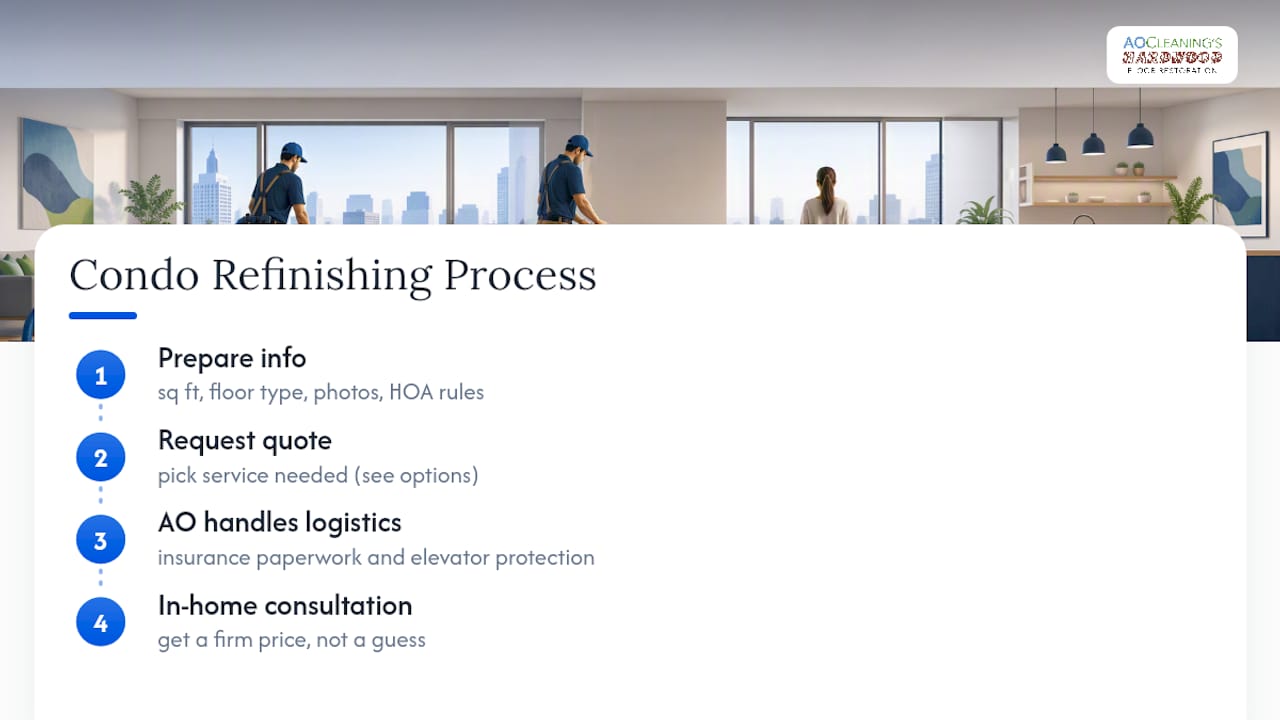
When you request a quote, have square footage, floor type (solid or engineered), a few photos of the current finish, and a copy of your HOA’s renovation requirements ready. AO Cleaning handles the insurance paperwork and elevator protection planning as part of scheduling, so you’re not stuck coordinating between the contractor and your property manager separately. Start with an in-home consultation to get a real number instead of a rough guess.
Sources
For manufacturer-level detail on finish types and recoat intervals, see Bona’s refinishing guidance. For step-by-step technique comparisons, check This Old House’s refinishing school and Lowe’s how-to guide. For cost and restoration scope breakdowns, see D & G Flooring’s restoration guide and StartWoodworkingNow’s decision guide. For general low-dust renovation practices, see One Day Doors & Closets.
FAQ
How Much Does It Cost to Refinish 1,000 Square Feet of Hardwood?
A full dustless sanding job on 1,000 square feet typically runs $5,000 to $8,000 or more, while a screen-and-recoat job on the same area often lands between $3,000 and $5,000.
How Much Should It Cost to Refinish Hardwood Overall?
Refinishing with only minor repairs generally costs $3 to $8 per square foot, while full restoration involving board or subfloor repair runs $5 to $12 per square foot.
Can I Stay in My Condo While the Floors Are Refinished?
You often can, especially with screen-and-recoat jobs using low-odor waterborne finishes, since dustless processes typically leave floors walkable in about three hours. Full sanding jobs with multiple coats may call for staying elsewhere during the peak fume and cure period.
When Can Hardwood Floors Not Be Refinished?
Floors can’t be safely refinished when the wear layer measures under roughly 2 to 3 millimeters, or when there’s water damage, mold, severe cupping, or broken tongue-and-groove joints. In those cases, board replacement or full restoration is the right call instead.
Recommended

Comments