


Preserve St. Louis Historic Hardwood Floors Without Replacement

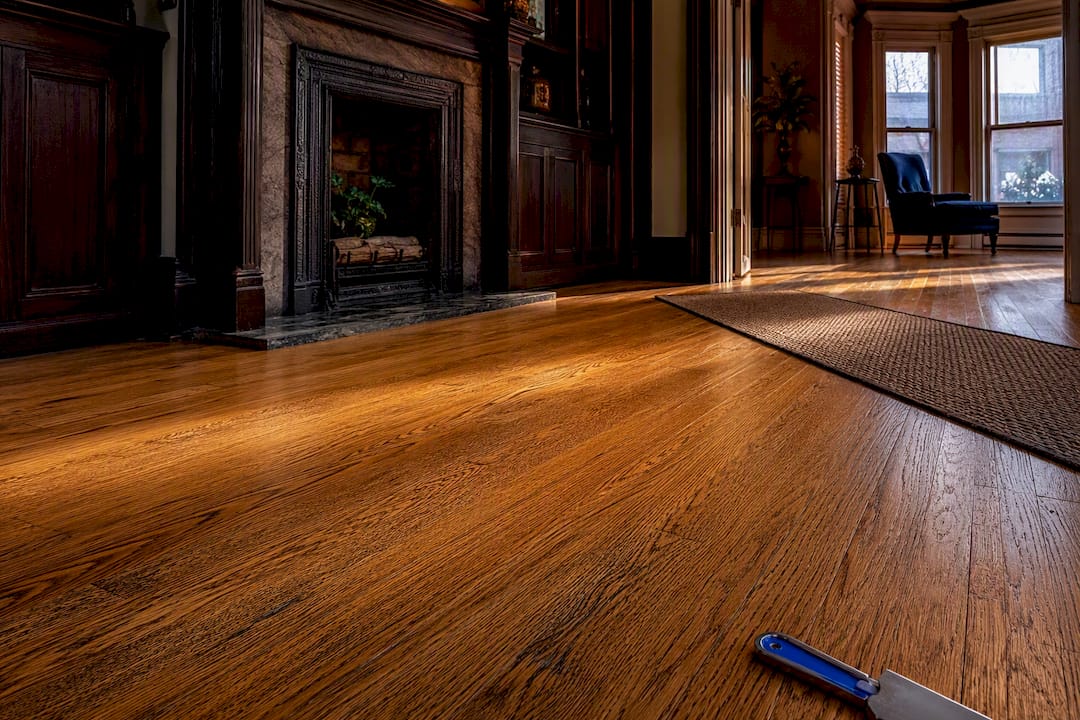
For most historic St. Louis homes, preservation-minded restoration beats replacement. Before you commit either way, get an inspection that checks wear-layer thickness, rot, and hazardous adhesives in floors installed before 1980. If the boards pass, a preservation-minded contractor can give you a written assessment and a real plan instead of a guess.
TL;DR:
Restoration is usually better than replacement when less than 30% of boards are damaged, and the wear layer is thick enough to sand safely.
A proper assessment starts with measuring the wear layer and inspecting for asbestos or moisture issues before any sanding or repair begins.
Reclaimed lumber matching the original species and patina is crucial for preserving historic integrity and value during repair.
Restoration costs generally run from $5 to $12 per square foot, influenced by the extent of board replacement and sourcing of matching materials.
Local experience matters; a contractor familiar with St. Louis historic homes will better handle climate effects and regulatory considerations.
Table of Contents
What Does a Preservation-First Restoration Actually Involve?
How Much Does Floor Restoration Cost, and How Long Does It Take?
How Do You Choose a Contractor Who Won’t Ruin a Historic Floor?
Why Local Experience Matters for St. Louis Restoration Projects
What Makes Restoration Especially Worthwhile in St. Louis’s Climate?
A Preservation-First Recommendation for Older St. Louis Homes
Should You Restore or Replace Historic Hardwood Floors?
Old-growth, quarter-sawn boards common in St. Louis’s Victorian, Craftsman, and Foursquare homes were milled from trees denser and slower-grown than anything sold today. That density is why floors installed in 1910 are often still salvageable, while a modern engineered floor rarely survives one deep sanding.
Restoration usually preserves more market value at a lower cost than a full tear-out and replacement, especially in homes where the wood floor is part of the sale pitch. It’s also just the right call for the wood itself: the goal isn’t to make a century-old floor look brand new; it’s to keep the patina and hand-scraped detail that made it worth keeping in the first place.
Replacement makes more sense when the damage runs deeper than the surface:
More than roughly 30% of boards show rot, insect damage, or warping beyond repair
The wear layer is too thin to sand again without exposing nail heads or the tongue
Subfloor damage from long-term water exposure has compromised structural soundness
What Does a Preservation-First Restoration Actually Involve?
A contractor who respects historic material starts with an inspection, not a sander. That order matters. Here’s the sequence a preservation-minded job follows:
Assessment. The contractor checks wear-layer thickness above the tongue, measures how many times the floor has already been sanded, tests fasteners, checks for moisture intrusion, and screens for asbestos-containing adhesives, which show up often in homes built before 1980.
Repair. Damaged boards get replaced board-by-board rather than as a blanket rip-out. Matching species, plank width, and patina usually means sourcing reclaimed lumber rather than buying new stock off a shelf, since new oak simply doesn’t age the same way. Subfloor issues, loose fasteners, and gaps get addressed before any finish work starts.
Surface treatment. This is where the real judgment call happens. A floor with a thin wear layer or a lot of original character gets a screen-and-recoat or chemical stripping instead of aggressive sanding, which can erase historic character and, worse, thin the boards past a safe point for future refinishing. Hand-scraping and light sanding fill in where a full strip isn’t necessary.
Missouri-based mills and reclaimed-wood suppliers, including firms like Missouri River Timber, make it easier to match century-old species and patina without waiting weeks on out-of-state shipments.
Pro Tip: Ask your contractor to show you a wear-layer measurement before they touch a sander. If they can’t measure it, they can’t tell you whether sanding is safe.
How Much Does Floor Restoration Cost, and How Long Does It Take?
Nationally, refinishing runs about $3 to $8 per square foot, while full restoration lands closer to $5 to $12 per square foot, adjusted for regional labor rates and project scope. St. Louis pricing generally tracks toward the middle of those bands, though a heavily damaged century floor with extensive board replacement can push toward the top.
What actually moves the number:
Percentage of boards being replaced. A handful of boards costs far less than a room-wide swap.
Reclaimed wood sourcing. Matching old-growth lumber costs more than standard new stock, but it’s usually worth it for visible rooms.
Finish choice. Oil-based polyurethane, water-based finishes, and traditional shellac all price differently and dry at different rates.
Access, prep, and abatement. Furniture removal, tight stairwells, and any asbestos testing or remediation add time and cost.
On timeline: a single-day clean-and-buff or screen-and-recoat is common for floors in decent shape, with rooms often walkable in about three hours after the final coat. A full sand-and-refinish on a historic floor typically takes one to two weeks depending on square footage, drying time between coats, and whether board replacement is involved. Most contractors recommend holding off on moving furniture back for at least 24 to 48 hours after the final coat, even if the floor is walkable sooner.
How Do You Choose a Contractor Who Won’t Ruin a Historic Floor?
Not every flooring company treats a century-old floor the way it deserves. Ask these questions before signing anything:
Will you inspect before quoting? A contractor who quotes a price over the phone without seeing the wear layer is guessing, not assessing.
Can I see a written scope? It should spell out which boards get replaced, what sanding depth (if any) is planned, and the finish schedule, not just a lump-sum number.
Have you restored floors this old before? Ask for photos of actual historic projects, not just standard refinishing jobs.
Where does replacement wood come from? A contractor sourcing reclaimed lumber or working with regional mills is thinking about the match, not just the fill.
Are you insured, and can I check reviews? Look up their BBB profile and local review history before you commit.
Red flags worth walking away from: a push to replace immediately without inspecting, no before-and-after photos of comparable work, no written warranty, and lowball estimates paired with vague scopes of work. Those combinations usually mean corners get cut once the crew is on-site.
Why Local Experience Matters for St. Louis Restoration Projects
A contractor who’s only worked on new-construction subdivisions doesn’t necessarily know how to handle a quarter-sawn oak floor from 1915. AO Cleaning has operated in the region since 2003, with more than 450 Google reviews from homeowners across the St. Louis metro area, Monroe County, and Madison County.
What that experience translates to on a job site: an inspection-first visit where the technician checks wear-layer thickness and board condition before quoting anything, followed by a written estimate that lays out the scope. For floors in reasonable shape, AO Cleaning offers single-day restoration options, including clean-and-buff and screen-and-recoat, using dustless equipment and eco-friendly products so you’re not living with sanding dust or chemical odor for a week afterward.
How Do You Keep a Restored Historic Floor Looking Right?
The work you put into restoring a floor gets undone fast without the right maintenance habits. A few things matter more than people expect.
Grit is the real enemy, not moisture. Sand and dirt tracked in on shoes act like sandpaper under foot traffic, wearing down finish in high-traffic paths faster than almost anything else. A stiff walk-off mat at every entrance and a weekly sweep or vacuum with a hard-floor attachment cut that wear significantly.
Skip the wet mop. Standing water and steam mops can seep into seams and cause boards to cup or gray over time, especially on older, less-sealed floors. Use a slightly damp microfiber mop with a pH-neutral hardwood cleaner instead of anything marketed as an all-purpose floor cleaner.
Felt pads under furniture legs prevent gouges, and area rugs in high-traffic zones (hallways, in front of couches) extend the life of the finish underneath. Rotate rugs occasionally so you don’t get uneven fading from sunlight.
Recoat before you need to. A screen-and-recoat every three to five years, depending on traffic, keeps the finish layer fresh without ever touching the wood itself. That’s the cheapest way to protect a historic floor long term, and it’s far less invasive than waiting until a full sand is the only option left.
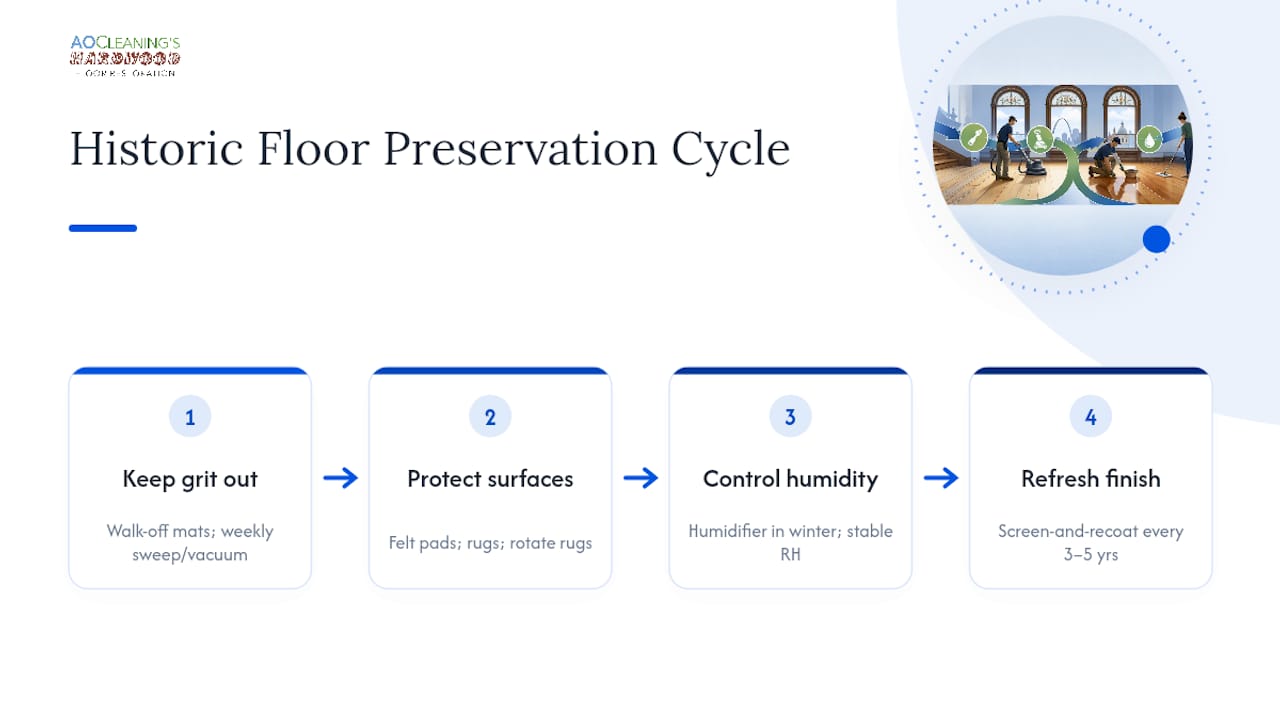
Watch humidity swings. St. Louis summers run humid and winters run dry with forced-air heat, and that swing makes century-old boards expand and contract more than newer engineered flooring. A humidifier in winter and reasonable indoor humidity control year-round reduce gapping and cupping.
Do St. Louis Preservation Rules Affect Floor Restoration?
Homes in St. Louis’s designated historic districts, such as parts of Soulard, Lafayette Square, and Central West End, may fall under local preservation review depending on exterior changes, but interior work like floor restoration typically isn’t subject to the same design-review process that governs facades and street-facing features. That said, a few practical regulatory realities still apply to almost any older St. Louis home.
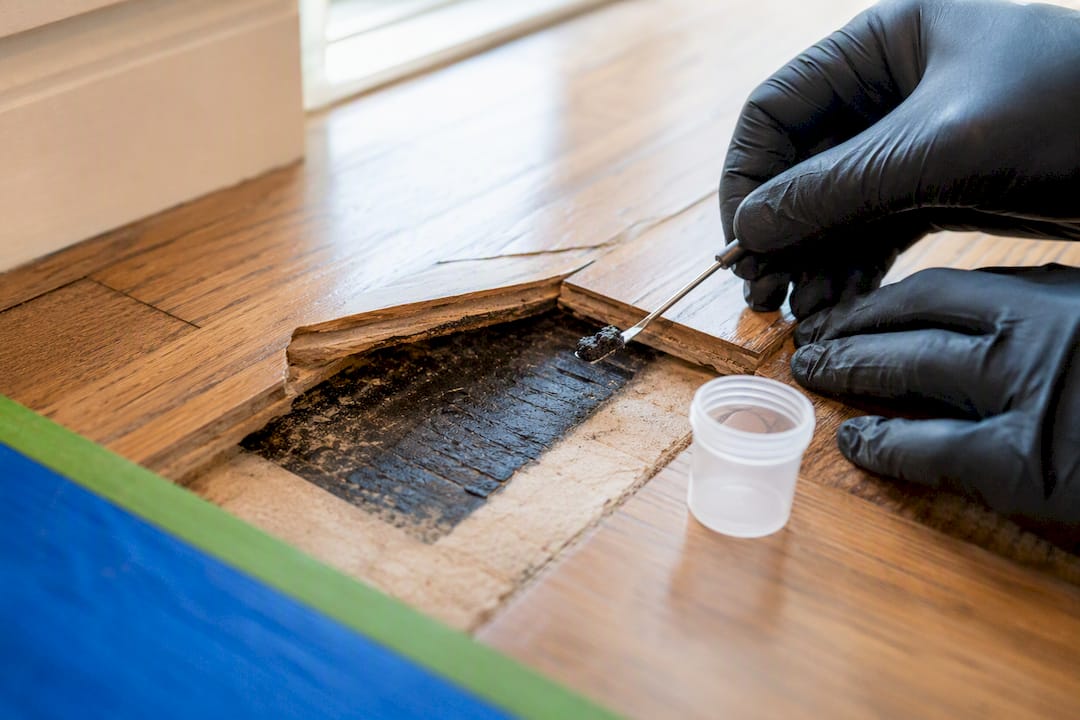
Homes built before 1980 may contain asbestos-containing adhesives or underlayment beneath older flooring, and disturbing them without proper testing and abatement runs against federal guidelines, not just a local preference. Any reputable contractor should test before removing old adhesive layers, particularly in homes where a previous owner installed floor coverings over the original hardwood decades ago.
If your property carries a local historic designation or sits in a National Register district, check with the city’s Cultural Resources Office before any major renovation that could affect the building’s documented character, even if the floor work itself is interior. It’s a quick call that avoids a headache later, especially if you’re planning to combine floor restoration with other renovation work that does touch exterior or structural elements.
Beyond that, general building permit rules apply the same way they would to any home: structural subfloor repairs may require a permit depending on scope, while cosmetic refinishing generally does not. When in doubt, ask your contractor whether the specific repair triggers a permit requirement before work starts.
What Makes Restoration Especially Worthwhile in St. Louis’s Climate?
St. Louis sits in a humidity zone that swings hard between seasons, hot and damp summers followed by cold, dry winters with forced-air heat running for months. That cycle is tough on wood floors, and it’s exactly the kind of stress old-growth lumber handles better than most modern flooring.
Original quarter-sawn boards in pre-1950s St. Louis homes were cut in a way that resists the cupping and warping that plainer-sawn modern boards are more prone to under repeated humidity swings. Restoring those original boards, rather than replacing them with newer engineered material, keeps that built-in resilience intact.
There’s also a practical seasonal timing angle. Refinishing during St. Louis’s milder shoulder seasons, spring and fall, when indoor humidity is more stable, gives finish coats a more even cure and reduces the odds of the wood expanding or contracting mid-project. A contractor familiar with the regional climate will often recommend scheduling around this window rather than mid-summer or the peak of a dry winter cold spell.
Restoring the original floor also avoids introducing a mismatched material into a house built to a different structural and moisture profile. Older homes were framed and ventilated with the flooring’s original moisture behavior in mind, and swapping in modern flooring can occasionally create friction with how the rest of the house naturally handles seasonal humidity.
A Preservation-First Recommendation for Older St. Louis Homes
If there’s one thing worth pushing back on, it’s the instinct to assume a scratched-up, dull floor is a “replace it” situation. In most cases it isn’t. Replacement earns its place only when rot, structural failure, or an unworkable wear layer leaves no other option. Get the inspection first, then decide. That single step saves more historic character than any product or technique that follows it.
— Jim
Get Your Historic Floor Assessed by AO Cleaning
This service is an alternative to guesswork demolition for St. Louis homeowners weighing restoration against replacement. Instead of a contractor who shows up ready to sand or rip out, you get an inspection-first visit that checks wear-layer thickness and board condition before anyone touches your floor.

AO Cleaning’s relevant services cover the full range a historic floor might need: a clean and buff for lighter refresh jobs, one-day restoration options, full sanding and refinishing for floors that need deeper work, and screen-and-recoat for floors with thinner wear layers that can’t handle another full sand. Every job uses dustless techniques and eco-friendly products, so you’re not stuck airing out chemical odor or vacuuming sawdust for days afterward. Book a visit, and you’ll walk away with a written estimate that spells out the scope before any work starts. If your home has multiple surfaces needing attention, AO Cleaning also handles countertop cleaning, polishing, and sealing. Check service availability in your area and get a written estimate started today.
Sources
FAQ
How Much Does It Cost to Restore Old Hardwood Floors?
Professional restoration typically runs $5 to $12 per square foot, while lighter refinishing jobs generally cost $3 to $8 per square foot, depending on board condition and how much replacement is needed.
Where Can I Get Historic Hardwood Floors Restored in St. Louis?
AO Cleaning serves the St. Louis metro area along with Monroe and Madison Counties, offering inspection-first restoration, refinishing, and screen-and-recoat services for older homes.
How Do You Restore a 100-Year-Old Hardwood Floor?
Start with an inspection of wear-layer thickness and board condition, replace only damaged boards with reclaimed or matched lumber, then choose the least invasive surface treatment, chemical stripping, screen-and-recoat, or light sanding, based on what the wear layer can safely handle.
Is It Worth Refinishing Old Hardwood Floors Instead of Replacing Them?
In most cases, yes. Restoration preserves original old-growth material that’s often denser and more durable than modern replacement wood, and it typically costs less than a full tear-out and replacement unless structural damage or an unsafe wear layer rules it out.
Do Asbestos Concerns Affect Historic Floor Restoration in St. Louis?
Homes built before 1980 may have asbestos-containing adhesives under old flooring, and any contractor disturbing those layers should test and follow proper abatement procedures before starting work.
Recommended

Comments