


What Does a Floor Recoat Include? A Homeowner's Guide

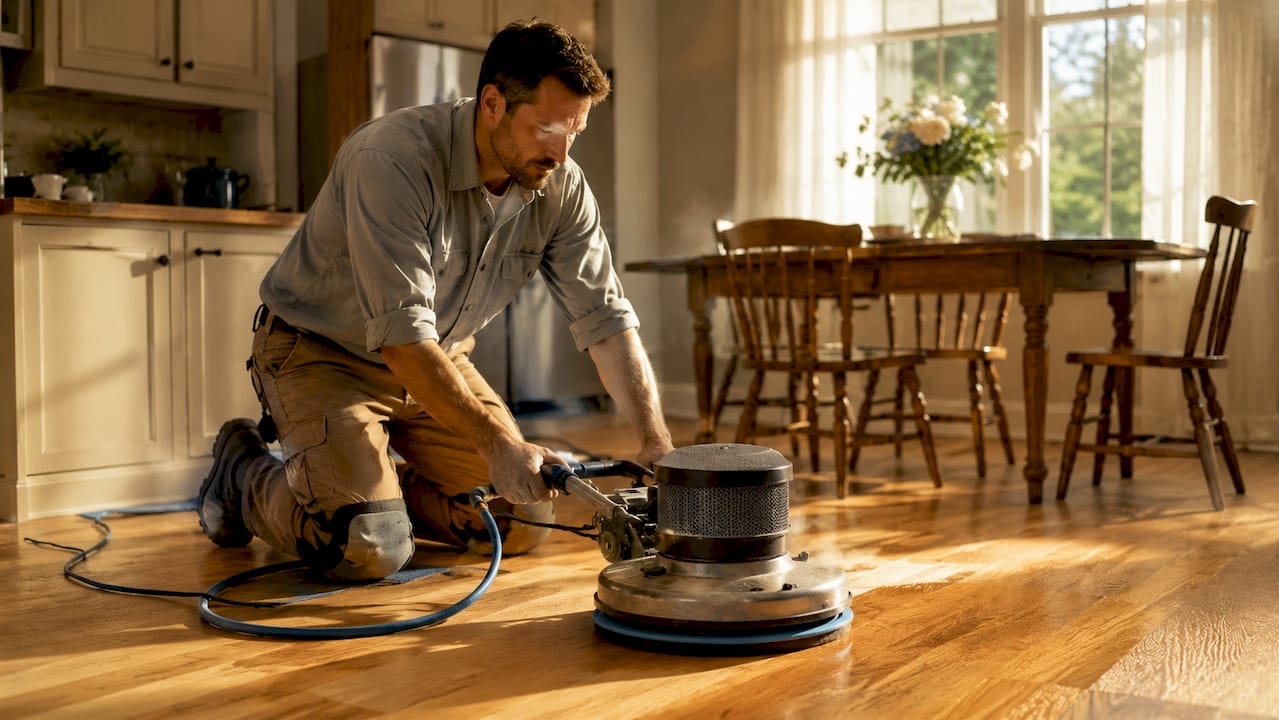
A floor recoat is a maintenance service that refreshes the protective finish on hardwood floors by lightly abrading the surface and applying one to two new coats of polyurethane, without sanding down to bare wood. The industry term for this service is “screen and recoat,” and it is the most cost-effective way to extend the life of your hardwood floors. Understanding what does a floor recoat include helps you decide whether your floors need this lighter treatment or a full refinishing job. Aosaveswoodfloors has performed this service for homeowners across central Illinois and the St. Louis metro area since 2003, and the process follows consistent professional standards every time.
What does a floor recoat include, step by step?
A screen and recoat follows a clear sequence of steps, and each one matters for the final result. Skipping or rushing any phase leads to peeling, fisheye marks, or uneven sheen.
Surface abrasion. A floor buffer fitted with a 120–150 grit mesh screen lightly scuffs the existing finish. This creates a rough surface the new finish can grip. No wood is removed during this step.
Dust and residue removal. After screening, the crew vacuums the entire floor and wipes it down with a tack cloth. Every particle of dust must be gone before the new finish goes down. Any residue left behind causes visible defects in the cured coat.
First coat of polyurethane. A professional-grade polyurethane finish is applied in a thin, even layer. Water-based polyurethane dries faster and has lower odor. Oil-based polyurethane adds a warm amber tone and is more durable in high-traffic areas.
Light rescreen between coats. Once the first coat dries, the crew lightly rescreens to knock down any raised grain or dust nibs. This step produces a smoother final surface.
Second coat of polyurethane. The final coat goes down and is left to cure. Floors are typically ready to walk on within 3–24 hours, depending on the finish type and ventilation.
The entire job is completed in a single day. Your existing stain color stays exactly as it is, because no wood is touched.
Pro Tip: Ask your contractor whether they use water-based or oil-based polyurethane before the job starts. Water-based finishes dry clear and faster; oil-based finishes add warmth but take longer to cure. The right choice depends on your floor’s current tone and how quickly you need the space back.
Why do hardwood floors need recoating over time?
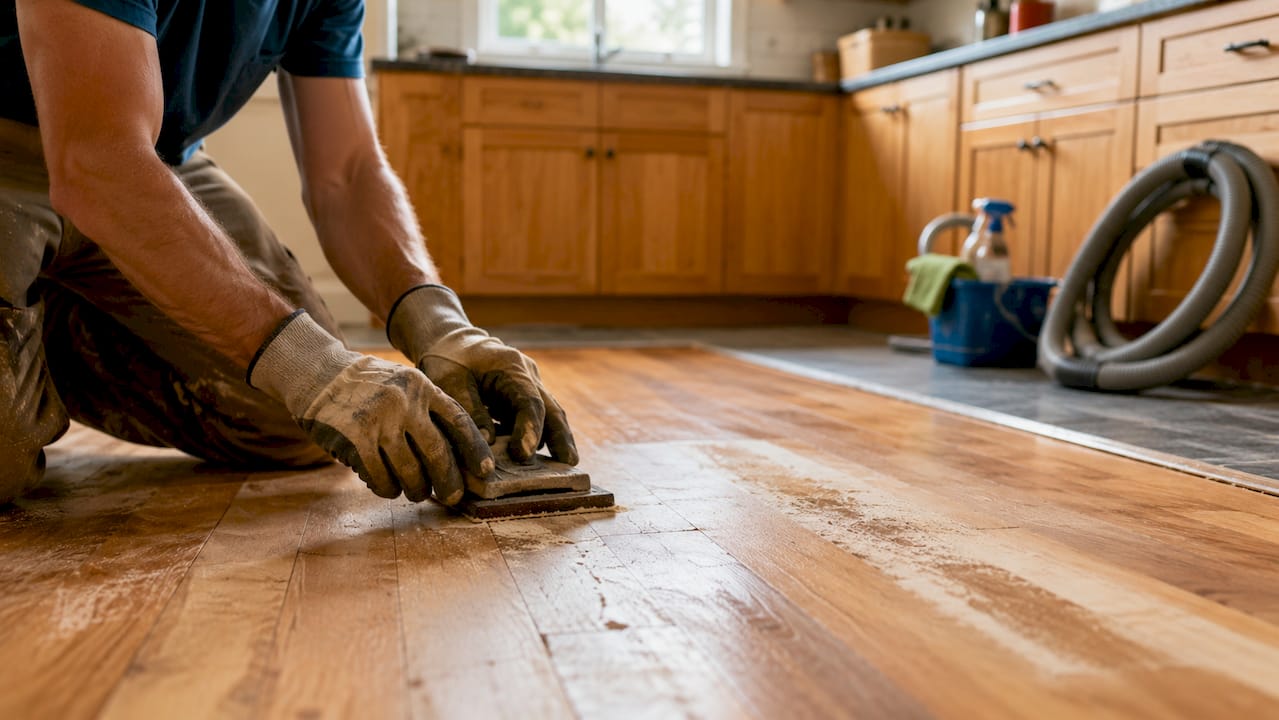
Hardwood floor finish wears down gradually from foot traffic, furniture movement, and everyday cleaning. The protective polyurethane layer thins out before the wood itself shows any damage, which is exactly when a recoat delivers the most value.
Recoating addresses several specific problems:
Dullness and loss of sheen. Foot traffic scuffs the finish microscopically over time. A fresh coat restores the original luster without any major work.
Light surface scratches and scuff marks. The abrasion step blends minor scratches into the surface before the new finish covers them.
Finish wear-through. High-traffic areas like hallways and kitchen entries wear faster than the rest of the floor. Recoating rebuilds the protective layer before bare wood is exposed.
Preventive protection. Recoating every 3–5 years for normal-traffic floors maintains the finish and prevents minor damage from becoming a major repair.
Recoating does have firm limits. Deep gouges, water damage, pet stains, and discoloration that have reached the wood cannot be fixed with a recoat. Those problems require full refinishing.
“Recoating preserves floors proactively, while refinishing reacts to damage. Homeowners who recoat on schedule often avoid the cost and disruption of a full refinish entirely.”
The timing of a recoat matters more than most homeowners realize. If scratches are felt with a fingernail or bare wood is visible, the finish has already failed and a recoat will not bond correctly. Acting before that point is the whole point of a maintenance schedule.
How does recoating compare to full refinishing?
Recoating and refinishing are two different services that solve two different problems. Choosing the wrong one wastes money and time.
Factor | Screen and recoat | Full refinishing |
Wood removal | None | Sands to bare wood |
Stain color | Unchanged | Can be changed |
Damage repaired | Light scratches, dull finish | Deep gouges, stains, discoloration |
Completion time | One day | Several days |
Cost range | $1.00–$3.00 per sq ft | Significantly higher |
Disruption level | Minimal | High |
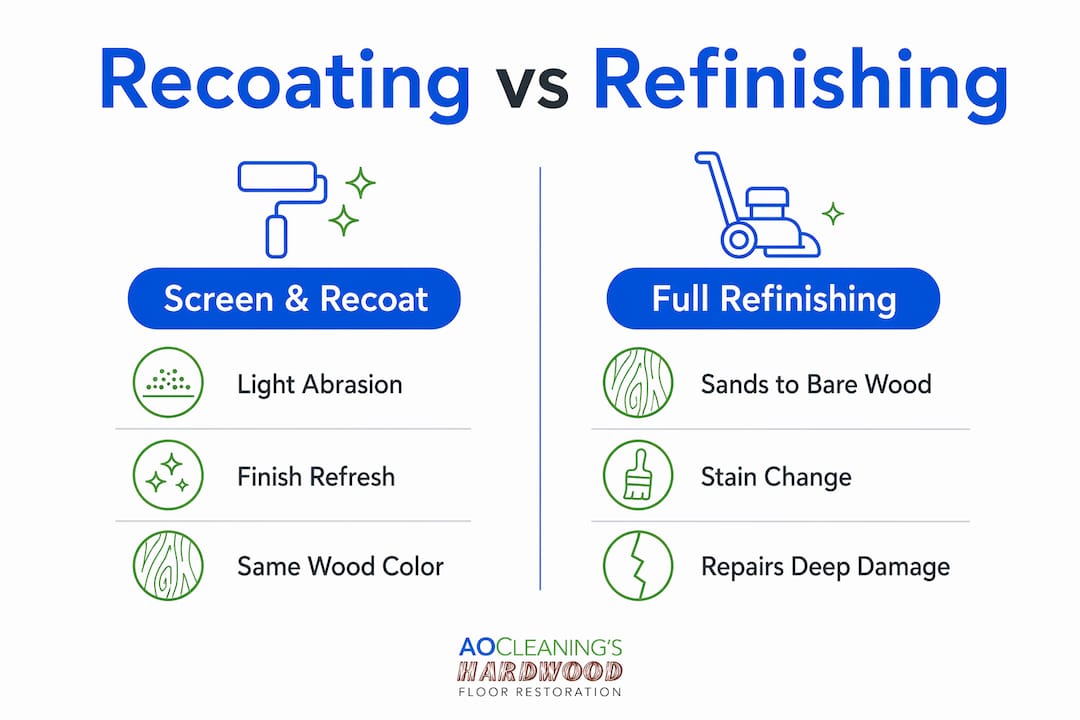
Recoating suits floors where the finish is still intact but worn. The wood looks dull, shows light scuffs, and has lost its protective sheen. Full refinishing is the right call when the wood itself is damaged, stained, or when you want to change the color entirely.
A useful way to think about it: recoating is like repainting a wall that has scuff marks. Refinishing is like stripping the wall down to drywall and starting over. Both are valid, but they serve completely different conditions. Aosaveswoodfloors offers both screen and recoat and full sand and refinishing, so the right service gets matched to your floor’s actual condition.
One more distinction worth knowing: regular recoating every 3–5 years can help homeowners avoid full refinishing during the entire lifetime of their floors. That is a significant long-term cost difference.
How should homeowners prepare for a floor recoat?
Preparation is the single biggest factor in whether a recoat lasts. A floor that looks clean to the eye can still carry residues that destroy finish adhesion.
Clean with the right products. Avoid wax-based sprays, oil soaps, and harsh detergents before the service. These leave residues that prevent the new finish from bonding. Proper cleaning before recoating is the most critical homeowner action to prevent peeling and fisheye defects.
Remove everything from the floor. Furniture, rugs, floor lamps, and any objects must be completely cleared from the area. The crew needs unobstructed access to every inch of the floor.
Check for wax or silicone residue. Wax, oil-based cleaners, and silicone residue prevent finish adhesion and cause recoating failures. If you have used a spray polish or wax product on your floors, tell your contractor before the job starts.
Verify finish compatibility. Peeling or flaking finish means the existing coat has already failed. Recoating over a failing finish adds layers without fixing the underlying problem.
Control temperature and humidity. Polyurethane needs stable conditions to cure correctly. Keep the space at normal room temperature and avoid high humidity on the day of the service.
Pro Tip: Run a water-bead test before your appointment. Drop a few water droplets on the floor. If they bead up, the surface likely has wax or silicone residue that needs to be removed before recoating. Tell your contractor what you find.
One situation that catches homeowners off guard: aluminum oxide factory finishes. Aluminum oxide floors require specialized bonding agents for recoating because standard screening does not create enough adhesion. If your floors came pre-finished from the factory, ask your contractor about this before scheduling. Skipping this step leads to delamination.
For a detailed look at how clean and buff compares to screen and recoat, Aosaveswoodfloors has a full breakdown to help you choose the right service.
Key Takeaways
A screen and recoat is the most cost-effective hardwood floor maintenance service available, delivering lasting protection when performed on schedule before finish wear reaches bare wood.
Point | Details |
Core process | Abrasion with a 120–150 grit screen, thorough cleaning, and one to two coats of polyurethane. |
Best timing | Recoat every 3–5 years for normal-traffic floors to prevent finish wear-through. |
Cost advantage | Screen and recoat runs $1.00–$3.00 per sq ft, far less than full refinishing. |
Preparation matters | Remove wax and silicone residues before the service or the new finish will not bond. |
Know the limits | Deep gouges, pet stains, and discoloration require full refinishing, not a recoat. |
What 20 years of floor recoats taught me
Most homeowners call about recoating after they notice the problem. The floor looks dull, the finish is worn through in the hallway, and they want it fixed. That is understandable, but it is also the most expensive way to approach floor maintenance.
The floors I have seen hold up the longest belong to homeowners who treat recoating like an oil change. They do not wait for something to go wrong. They schedule it every few years, keep the floors clean with the right products, and never let the finish wear down to bare wood. Those floors almost never need full refinishing.
The mistake I see most often is using the wrong cleaning products. A spray polish that smells great and makes the floor shine in the short term can ruin a recoat six months later. The new finish simply will not stick. When I walk into a job and see fisheye marks forming in the fresh coat, nine times out of ten there was a wax-based product on that floor.
My honest advice: do not wait until your floors look bad. Floor maintenance between refinishes is far cheaper than reacting to damage. Schedule a recoat before the finish fails, use a neutral cleaner, and your floors will outlast the ones in houses that get replaced every decade.
— Jim
Your floors are ready for a fresh coat
Aosaveswoodfloors has been restoring hardwood floors across St. Louis, Columbia, Belleville, and surrounding communities since 2003. The screen and recoat service is completed in a single day, with floors ready to walk on in about three hours.

Getting the floor prep right starts before the crew arrives. Aosaveswoodfloors carries a neutral hardwood floor cleaner formulated to remove residue without leaving anything behind that interferes with finish adhesion. For larger homes or homeowners who want to stock up, the one-gallon size covers more ground at a better value. Clean floors bond better, and better bonding means a finish that lasts.
FAQ
What is included in a screen and recoat service?
A screen and recoat includes lightly abrading the existing finish with a mesh screen, vacuuming and tack-cloth cleaning, and applying one to two coats of professional-grade polyurethane. The entire service is completed in one day.
How long does a floor recoat last?
A recoat typically lasts 3–5 years under normal foot traffic before another application is needed. High-traffic areas like hallways may show wear sooner.
Can a recoat fix deep scratches or pet stains?
A recoat cannot repair deep gouges, pet stains, or water damage that has reached the wood. Those conditions require full sanding and refinishing to correct.
How much does a floor recoat cost?
A screen and recoat typically costs between $1.00 and $3.00 per square foot, making it significantly more affordable than full refinishing, which requires sanding to bare wood and multiple additional steps.
Do I need to do anything before the recoat crew arrives?
Remove all furniture and rugs from the area, and stop using wax-based or oil-based floor cleaners at least two weeks before the service. Residue from those products prevents the new finish from bonding correctly.
Recommended

Comments