


Why Refinishing Beats Floor Replacement Cost

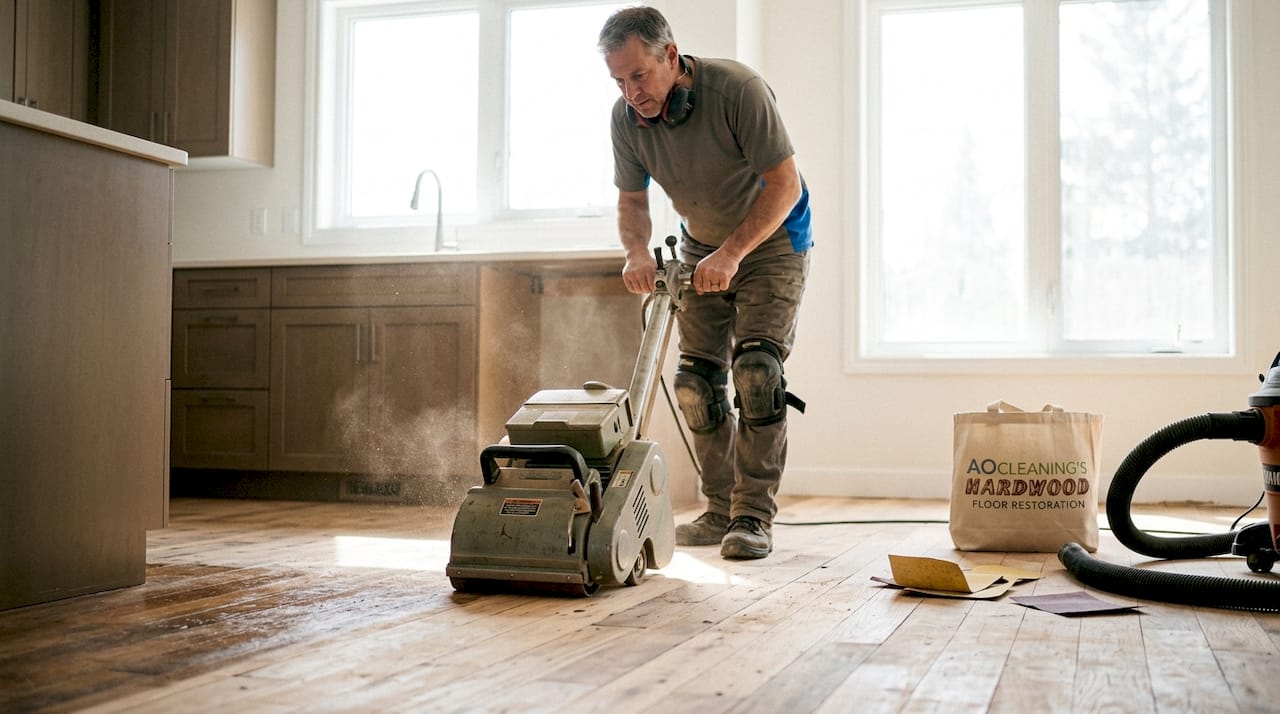
Hardwood floor refinishing is defined as the process of sanding down the existing wood surface and applying a fresh stain and finish coat, restoring the floor without removing a single board. This is why refinishing beats floor replacement cost by a wide margin: refinishing runs $3–$8 per square foot, while new hardwood replacement costs $6–$25+ per square foot once you factor in demolition, disposal, and subfloor repairs. Aosaveswoodfloors has seen this play out with homeowners across the St. Louis metro area for over 20 years. The financial case is clear, and the environmental and resale value arguments make it even stronger.
Why refinishing beats floor replacement cost
The core reason refinishing wins on cost is simple. You are working with material already in place, not buying, hauling, and installing new wood. Refinishing costs $3–$8 per sq ft compared to $6–$25+ per sq ft for full replacement. That gap represents real money, often thousands of dollars on a typical home.

Replacement carries hidden costs that homeowners rarely budget for upfront. Baseboard removal, subfloor repairs, transition adjustments, and trim replacement all add labor and material expenses that replacement often overlooks initially. A subfloor inspection alone can uncover unevenness or damage that adds days and significant cost to any replacement project.
Refinishing also gives you aesthetic flexibility without the full price tag. Changing your stain color during a refinish costs an extra $1 to $2.50 per sq ft for deeper sanding and stain application. That is a fraction of what new flooring costs, yet the visual result can be just as dramatic.
Larger projects reduce your per-square-foot cost further. A 1,500 sq ft job costs less per sq ft than a 200 sq ft room because fixed mobilization and equipment expenses spread across more area. That economy of scale does not exist with replacement, where material costs stay constant regardless of project size.
Here is what drives the biggest savings in a refinishing project:
No demolition costs. Existing boards stay in place, so there is no tear-out labor or disposal fee.
No subfloor surprises. Refinishing does not expose the subfloor, so hidden repair costs stay hidden and irrelevant.
No material markup. New hardwood lumber, underlayment, and trim carry significant material costs that refinishing skips entirely.
Stain upgrades at low cost. A color change during refinishing costs a fraction of new flooring.
Scalable pricing. Larger jobs cost less per square foot, rewarding homeowners who refinish multiple rooms at once.
Pro Tip: Schedule refinishing for multiple rooms in one visit. Combining rooms into a single project reduces your per-square-foot cost and cuts total project time.
How long does refinishing take compared to replacement?
Time is money, and refinishing wins here too. Refinishing typically takes 3–5 days while replacement requires 7–14+ days including demolition and subfloor preparation. That difference matters when you are living in the home during the project.
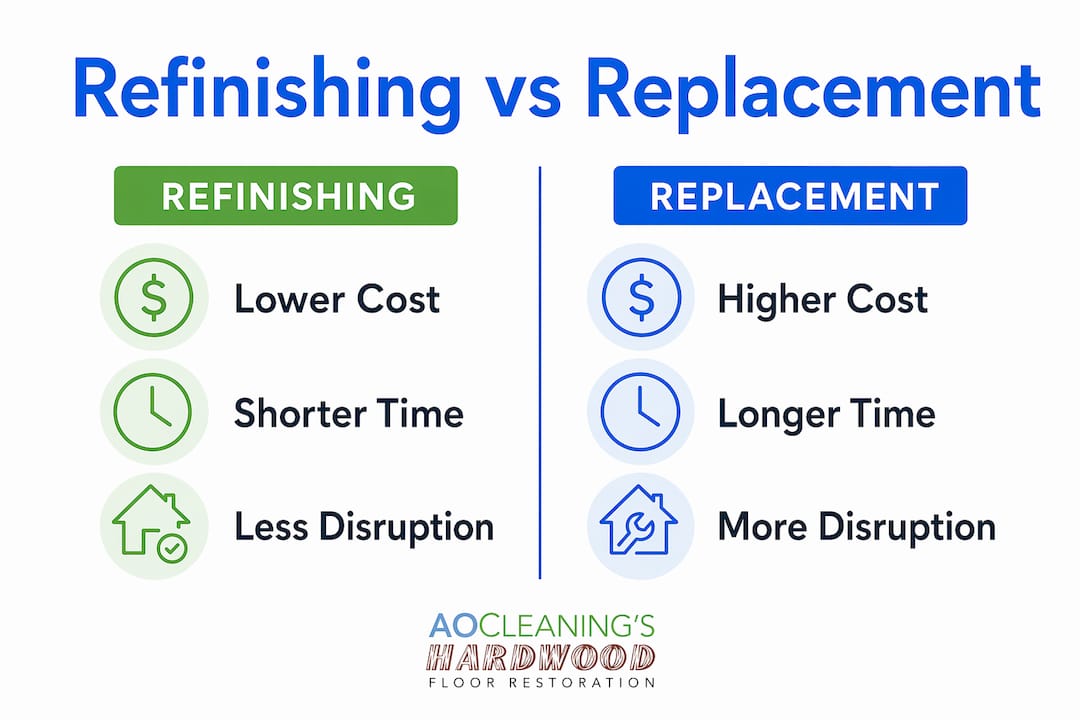
With refinishing, most homeowners stay in the house throughout the process. Work happens room by room, and modern water-based finishes reduce odors significantly compared to older oil-based products. Floors are ready to walk on 24–72 hours after the final coat dries, which means minimal disruption to your daily routine.
Replacement is a different experience entirely. Demolition creates dust, noise, and debris across the home. Subfloor work can extend the timeline unpredictably. Many homeowners end up relocating temporarily, which adds hotel or rental costs that never appear in the original contractor quote.
Phasing refinishing by room is a practical way to keep the household running. Aosaveswoodfloors completes most restoration services in a single day, with floors walkable in about three hours. That kind of schedule lets you move furniture back quickly and return to normal life without a two-week disruption.
When should you refinish, and when should you replace?
Not every floor qualifies for refinishing. The wood must be structurally sound and thick enough to withstand sanding. A floor that has been refinished multiple times may have too little material left to sand again safely.
These conditions favor refinishing:
Surface scratches and scuffs. Light wear from foot traffic, pets, or furniture does not penetrate deep into the wood.
Fading or outdated color. A stain change during refinishing transforms the look of a room without new flooring.
Minor gaps or squeaks. These are often addressable during the refinishing process without board replacement.
Dull or worn finish. When the finish fails but the wood underneath is healthy, refinishing restores the surface completely.
These conditions favor replacement:
Extensive water damage. Warped, cupped, or buckled boards cannot be sanded flat and must be replaced.
Structural rot or pest damage. Compromised wood integrity makes refinishing unsafe and ineffective.
Multiple prior refinishes. Thin boards with little material left cannot handle another sanding pass.
Desire for a completely different wood species. Refinishing changes color and sheen but not the species or plank width.
Pro Tip: Tap the floor with your knuckle in several spots. A hollow sound in isolated areas often means individual boards need replacement, not the entire floor. A professional assessment from Aosaveswoodfloors can confirm which boards are salvageable.
The financial threshold matters too. If damage repairs plus refinishing costs exceed 60% of replacement cost, replacement becomes the better long-term value. Below that threshold, refinishing wins on every financial measure.
Condition | Recommended action |
Surface scratches, fading, dull finish | Refinish |
Color change desired | Refinish with stain upgrade |
Water damage, warping, or buckling | Replace affected boards or full floor |
Multiple prior refinishes, thin wood | Replace |
Repair costs exceed 60% of replacement | Replace |
Many floors that look ready for tear-out only need a full sand and refinish if the wood underneath is structurally healthy. A professional eye catches this distinction before you spend money you do not need to spend. You can also review the signs your floor needs refinishing to assess your situation before calling anyone.
Does refinishing improve your home’s resale value?
Refinishing recovers nearly 100% of project cost at resale, while replacement typically recovers only 70–80%. That gap represents a meaningful difference in return on investment for any homeowner planning to sell.
The numbers behind that return are compelling. An investment of $2,000–$5,000 in refinishing can increase home value by $5,000–$10,000. Replacement costs more upfront and returns less proportionally, making it a weaker financial choice for most sellers.
Refinishing preserves the original hardwood, which buyers recognize as a premium feature. Restored original floors carry historical character and authenticity that new flooring cannot replicate. Homebuyers in competitive markets consistently favor refinished hardwood as a top-value feature, and sustainability-focused buyers appreciate that preserving hardwood reduces landfill waste and resource consumption.
The environmental argument reinforces the financial one. Refinishing avoids the carbon cost of manufacturing new flooring, transporting it, and disposing of the old material. For homeowners who care about their environmental footprint, eco-friendly refinishing products make the choice even cleaner. Aosaveswoodfloors uses dustless techniques and eco-friendly products on every job, so there is no mess, no lingering odors, and no unnecessary waste.
Preservation of original hardwood also maintains historical character that appeals to buyers who value authenticity. Old-growth wood species common in pre-1970s homes are no longer available at any price. Once you replace those boards, that character is gone permanently.
Key Takeaways
Refinishing hardwood floors delivers better financial returns, less disruption, and stronger resale value than replacement in most situations where the wood is structurally sound.
Point | Details |
Cost advantage is significant | Refinishing costs $3–$8 per sq ft versus $6–$25+ per sq ft for full replacement. |
Hidden replacement costs add up | Demolition, subfloor repairs, and trim work inflate replacement budgets beyond initial quotes. |
Resale return favors refinishing | Refinishing recovers nearly 100% of cost at resale; replacement recovers only 70–80%. |
Timeline is much shorter | Refinishing takes 3–5 days; replacement takes 7–14+ days with greater household disruption. |
Know when to replace | Replace when damage repairs plus refinishing exceed 60% of replacement cost, or when boards are structurally compromised. |
What 20 years of floor work taught me about the replace-or-refinish decision
The most common mistake I see homeowners make is calling a flooring installer before calling a restoration specialist. By the time they reach Aosaveswoodfloors, they have already gotten a quote for full replacement and assumed that was their only option. In most cases, it was not.
Floors that look terrible on the surface are often perfectly healthy underneath. Scratches, dullness, and outdated stain colors are finish problems, not wood problems. A full sand and refinish addresses all three for a fraction of replacement cost. The homeowner gets a floor that looks brand new without losing the original material.
The sustainability angle is becoming more important to the homeowners I talk with. They do not want to send perfectly good hardwood to a landfill. Refinishing lets them keep what they have, reduce waste, and still get the updated look they want. That combination of financial savings and environmental responsibility is hard to argue against.
My advice: get a professional assessment before you commit to anything. A qualified specialist can tell you in minutes whether your floor is a refinishing candidate or a genuine replacement case. The cost of that assessment is nothing compared to the $5,000 or more you might spend unnecessarily on new flooring.
— Jim
Protect your refinished floors for the long term
You have invested in refinishing. Now protect that investment with the right maintenance products.

Aosaveswoodfloors recommends the AO Hardwood Neutral Cleaner for regular care of refinished hardwood surfaces. This pH-neutral formula cleans effectively without stripping or dulling the finish, which is exactly what refinished floors need. For larger homes or homeowners who clean frequently, the one-gallon size offers better value per use. Regular cleaning with the right product extends the life of your finish and delays the next refinishing cycle, making your original investment go further.
FAQ
How much does floor refinishing cost per square foot?
Refinishing hardwood floors costs $3–$8 per square foot, depending on floor condition, stain complexity, and project size. Larger projects cost less per square foot because fixed equipment and mobilization expenses spread across more area.
Is refinishing worth it before selling a home?
Refinishing is worth it before selling. It recovers nearly 100% of project cost in resale value, and an investment of $2,000–$5,000 can increase home value by $5,000–$10,000.
How many times can hardwood floors be refinished?
Most solid hardwood floors can be refinished 5–10 times over their lifetime, depending on board thickness. Engineered hardwood has a thinner wear layer and supports fewer refinishing cycles.
What signs mean I need replacement instead of refinishing?
Replace your floors when boards are warped, buckled, or structurally rotted, or when combined repair and refinishing costs exceed 60% of full replacement cost. Surface scratches, fading, and dull finish almost always favor refinishing.
How long do I have to stay off refinished floors?
Floors are ready to walk on 24–72 hours after the final coat dries. Most Aosaveswoodfloors restoration services are complete in a single day, with floors walkable in about three hours.
Recommended

Comments