


Troy, IL Hardwood Floor Care Guide for Homeowners

Hardwood floor care is defined as the ongoing practice of cleaning, protecting, and maintaining wood floors to preserve their finish, structural integrity, and appearance over time. For homeowners in Troy, IL, this troy il hardwood floor care guide covers everything you need: daily cleaning routines, humidity management for the Midwest’s seasonal swings, the right products, and when to call a professional. Get these fundamentals right, and your floors can last for decades without a full replacement.
What is the ideal daily and weekly cleaning routine for hardwood floors in Troy, IL?
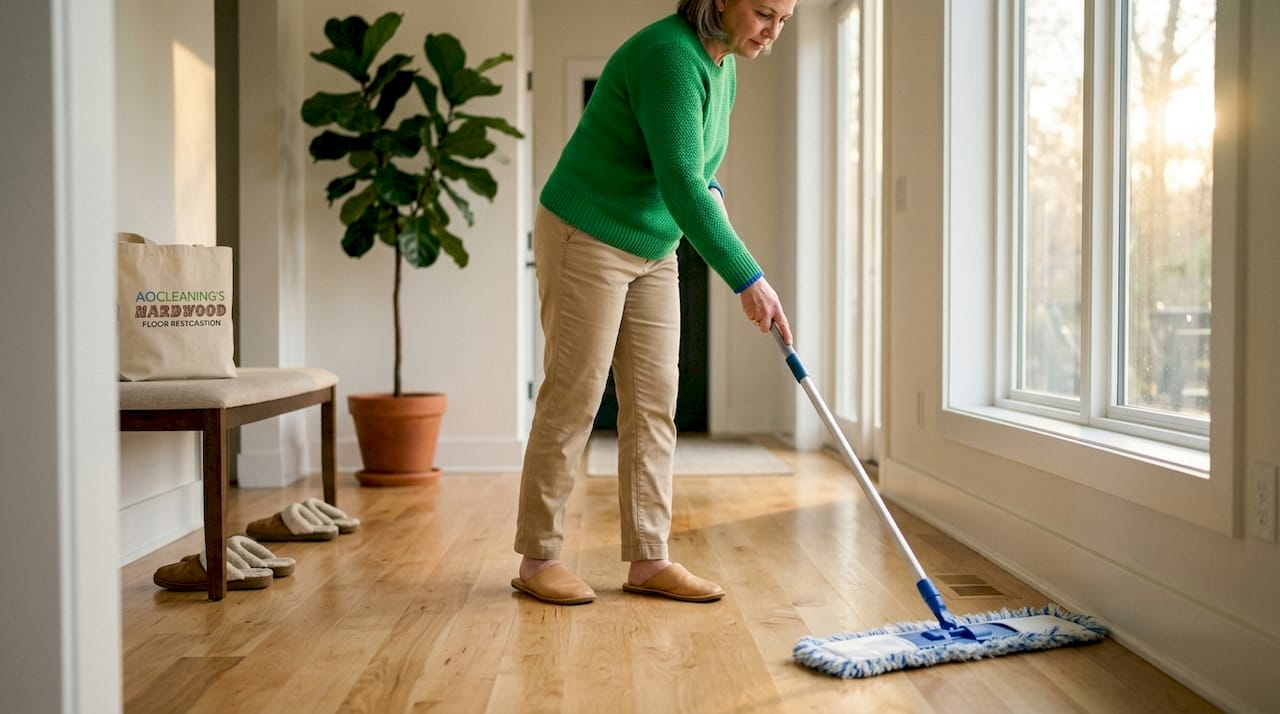
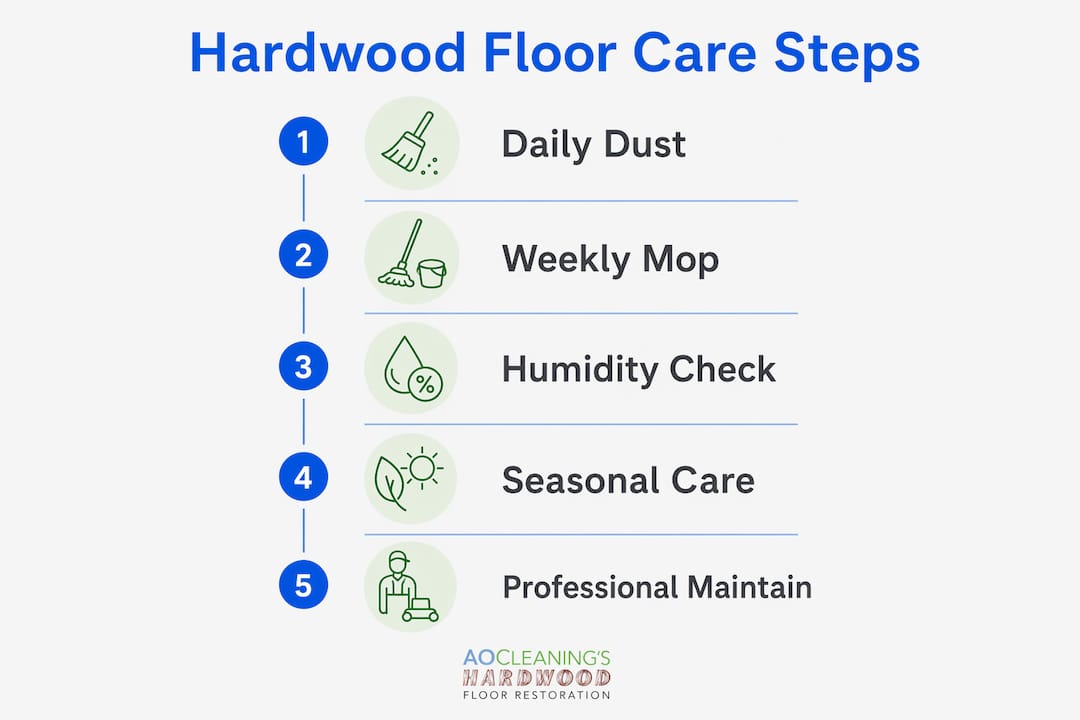
Daily dry dust mopping is the single most effective habit for protecting hardwood floors. Dirt, sand, and grit act like sandpaper underfoot, and daily cleaning prevents the majority of surface scratches that accumulate over thousands of footfalls. A five-minute pass with a microfiber dust mop each morning removes abrasive particles before they grind into the finish.
Weekly damp mopping takes the routine one step further. Use a pH-neutral hardwood cleaner mixed at a 1:20 dilution, meaning one ounce of cleaner per 20 ounces of water, applied with a barely damp microfiber flat mop. The floor should be dry within 1–2 minutes of mopping. Visible wetness lasting longer than that signals too much moisture, which risks board warping and finish delamination.
Here is a simple weekly routine that works for most Troy homeowners:
Daily: Dry dust mop all high-traffic areas with a microfiber pad. Focus on entryways, kitchens, and hallways where grit collects fastest.
Weekly: Damp mop with a pH-neutral cleaner at the 1:20 dilution. Work with the grain of the wood, not against it.
As needed: Spot clean spills immediately with a dry cloth. Never let liquid sit on the surface.
Monthly: Check for dull patches or buildup near furniture legs and doorways. These areas often need extra attention.
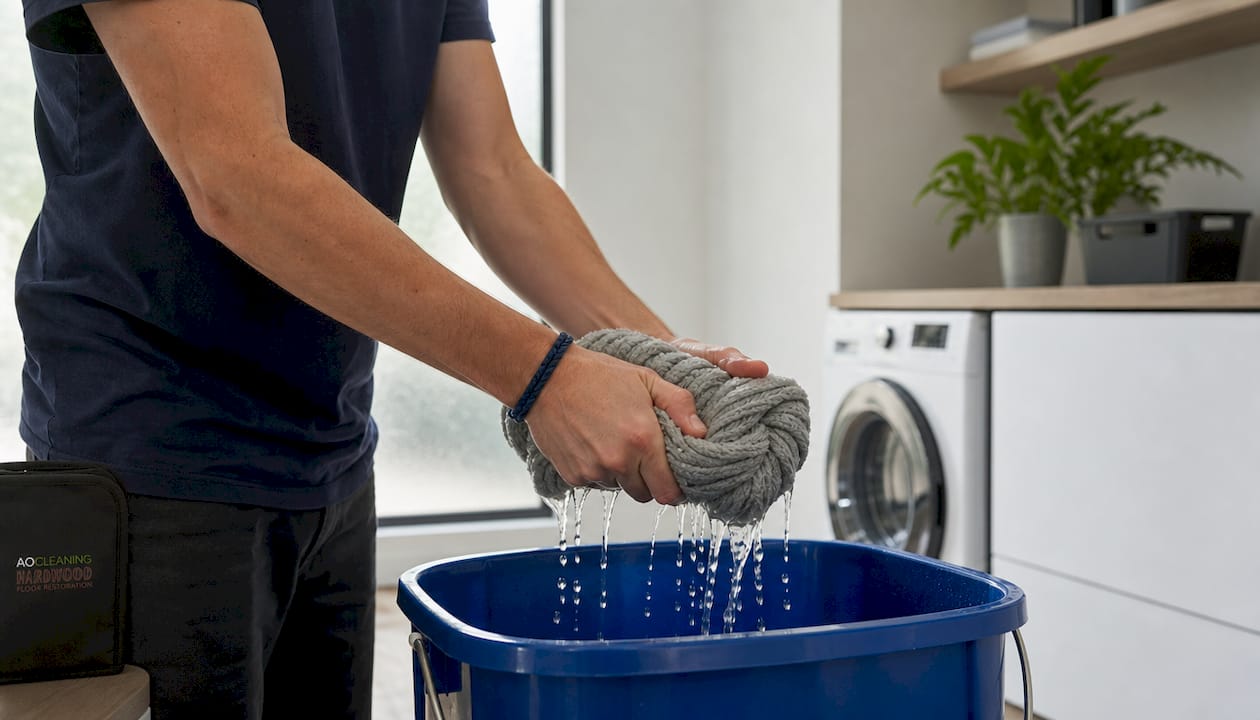
Pro Tip: Wring your microfiber mop until it feels almost dry to the touch before it contacts the floor. If you can squeeze water out of it, it is too wet.
The biggest mistake Troy homeowners make is treating hardwood like tile. Excess water causes more finish failures than any other single factor. Keep your cleaning light, frequent, and moisture-conscious.
How should homeowners manage humidity and seasonal care for hardwood floors in Troy’s climate?
Humidity control is the most overlooked part of hardwood floor maintenance, and Troy’s climate makes it non-negotiable. Wood expands when it absorbs moisture and contracts when it dries out. Both extremes damage your floors. Maintaining indoor relative humidity between 35% and 55% year-round is the standard that prevents gapping, cupping, and cracking.
Troy’s winters are cold and dry. Without active humidification, indoor humidity can drop to 15–20% inside heated homes. At that level, boards shrink and gaps open between planks. Summers bring the opposite problem: high outdoor humidity causes boards to swell and cup at the edges.
Here is a seasonal care schedule built for Troy’s climate:
Winter (december through february): Run a whole-home or room humidifier to keep humidity above 35%. Check levels weekly with a digital hygrometer.
Spring (march through may): Transition off the humidifier as outdoor humidity rises. Watch for any cupping that developed over winter.
Summer (june through august): Use air conditioning and a dehumidifier if needed to keep humidity below 55%. Avoid mopping on especially humid days.
Fall (september through november): Inspect floors before heating season begins. Address any gaps or finish wear before winter dries the air again.
Pro Tip: A digital hygrometer costs less than $20 at most hardware stores. Place one in your main living area and check it weekly. Catching a humidity spike early is far cheaper than fixing cupped boards later.
Season | Primary risk | Recommended action |
Winter | Gapping from dry air | Run humidifier, target 35–45% humidity |
Spring | Residual cupping | Monitor boards, reduce humidifier use |
Summer | Swelling and cupping | Run AC and dehumidifier, target 45–55% |
Fall | Finish wear before heating season | Inspect floors, schedule professional check |
Investing in a whole-home humidifier connected to your HVAC system gives you the most consistent control. Room-level units work but require more active monitoring. Either way, the goal is stability. Hardwood floors tolerate a consistent humidity level far better than they tolerate wild swings between wet and dry.
When and why is professional hardwood floor maintenance needed in Troy, IL?
Professional maintenance is not a luxury. It is the most cost-effective way to extend the life of your floors and avoid a full replacement. Professional deep cleaning every 12–18 months removes embedded grime, oils, and residue that weekly mopping cannot reach. This also gives a professional the chance to inspect your finish for early signs of wear.
Beyond annual cleaning, screen and recoat services every 3–5 years are the standard recommendation for high-traffic areas. A screen and recoat lightly abrades the existing finish and applies a fresh topcoat. It restores the protective layer without the cost or disruption of a full sand and refinish. Think of it as a tune-up that keeps you from needing an engine rebuild.
Signs that your floors need professional attention:
Dullness that does not respond to cleaning. If mopping no longer restores shine, the finish is depleted.
Visible scratches or scuff marks that go below the surface sheen.
Cupping or crowning along board edges, which signals moisture damage.
Gray or black staining near seams, which indicates water has penetrated the finish.
Squeaking that has worsened over a short period, which can point to subfloor moisture issues.
For Troy homeowners, Aosaveswoodfloors offers professional refinishing services with over 20 years of experience in the region. Their screen and recoat process uses dustless techniques and eco-friendly products, with most jobs completed in a single day and floors ready to walk on in about three hours. Calling a professional before problems become severe is almost always cheaper than waiting.
What cleaning products and tools are best for hardwood floors in Troy, IL?
The right products protect your finish. The wrong ones destroy it quietly over months. Hardwood floor cleaners must be pH-neutral, meaning a pH between 6.5 and 8.0. Acidic or alkaline cleaners chemically degrade polyurethane finishes, causing dulling and haziness that eventually requires professional refinishing to correct.
Products and tools to use:
Microfiber flat mops or spray mops. Microfiber pads hold the right amount of cleaner and dry quickly, minimizing moisture contact with the wood.
pH-neutral polyurethane-safe cleaners. Look for products labeled specifically for hardwood floors with polyurethane finishes.
Soft-bristle vacuum attachments. Use the hardwood floor setting on your vacuum to avoid scratching with beater bars.
Products and tools to avoid:
Vinegar. Its pH of roughly 2.5–3.0 is highly acidic and degrades polyurethane finishes with repeated use.
Oil soaps. These leave a residue that builds up over time and makes floors look cloudy.
Steam mops. The heat and moisture penetrate the finish and cause warping and delamination.
String mops. They hold far too much water for safe use on hardwood.
Pro Tip: If you are unsure whether a cleaner is safe, test it on a small hidden area near a baseboard. Wait 24 hours and check for any dulling or discoloration before using it on the full floor.
For wax-finished floors, the rules shift. Wax finishes require paste wax rather than water-based cleaners. Oil-based finishes need oil-based refreshers. Knowing your finish type before buying any product saves you from accidental damage. Check with tips for maintaining floors between professional visits for finish-specific guidance.
Key Takeaways
Consistent daily cleaning, stable indoor humidity between 35% and 55%, and professional maintenance every 1–3 years are the three pillars of hardwood floor care for Troy, IL homeowners.
Point | Details |
Daily dust mopping | A five-minute dry mop each day prevents the majority of surface scratches from grit and dirt. |
Humidity control | Keep indoor humidity between 35% and 55% year-round to prevent gapping in winter and cupping in summer. |
pH-neutral cleaners only | Vinegar, oil soaps, and steam mops degrade polyurethane finishes; use cleaners with a pH of 6.5–8.0. |
Professional deep cleaning | Schedule professional cleaning every 12–18 months to remove embedded grime and inspect finish condition. |
Screen and recoat timing | High-traffic areas need a screen and recoat every 3–5 years to restore the protective finish layer. |
What I have learned after years of watching floors fail and survive
Most floor damage I see is self-inflicted, and the pattern is almost always the same. A homeowner skips the daily dust mop because it feels like a small thing. Grit builds up. Micro-scratches accumulate. The finish dulls. Then they reach for a stronger cleaner to restore the shine, which strips the finish further. By the time they call for help, what could have been a screen and recoat has become a full sand and refinish.
The other mistake I see constantly is ignoring humidity. Troy winters are genuinely harsh on wood floors. I have walked into homes where the heating system had been running all season with no humidification, and the gaps between boards were wide enough to catch a fingernail. Homeowners are often shocked that something invisible, the moisture in the air, caused that much damage. But wood is a living material. It responds to its environment every single day.
The homeowners with the best-looking floors after 20 or 30 years are not the ones who spent the most money on products. They are the ones who built simple habits: a daily mop, a hygrometer on the wall, and a professional visit once a year. That discipline is worth more than any premium cleaner on the market. The screen and recoat process is a perfect example of this thinking. It is a modest investment made at the right time that prevents a much larger expense later.
If your floors look tired but not destroyed, do not assume replacement is the answer. In most cases, restoration is faster, cheaper, and less disruptive than you expect.
— Jim
Hardwood floor restoration services near Troy, IL
Troy homeowners who want their floors looking their best without the cost of replacement have a local option worth knowing about.
Aosaveswoodfloors has served homeowners across the St. Louis metro area and central Illinois since 2003, with over 450 Google reviews and more than 20 years of experience. Their services cover everything from annual deep cleaning and screen and recoat to full hardwood floor refinishing for floors that need more serious attention. Every job uses dustless techniques and eco-friendly products, and most restorations finish in a single day with floors ready to walk on in about three hours. Before you consider replacing your floors, it is worth a call to find out what restoration can do.
FAQ
What is the best daily routine for hardwood floors?
Dry dust mop with a microfiber pad every day to remove grit and dirt. This five-minute habit prevents the majority of surface scratches that accumulate over time.
How do I control humidity for hardwood floors in Troy, IL?
Keep indoor relative humidity between 35% and 55% year-round using a humidifier in winter and a dehumidifier or air conditioning in summer. Monitor levels weekly with a digital hygrometer.
Can I use vinegar to clean hardwood floors?
Vinegar has a pH of roughly 2.5–3.0, which is acidic enough to degrade polyurethane finishes over time. Use a pH-neutral hardwood floor cleaner instead.
How often should hardwood floors be professionally refinished?
Schedule a professional deep cleaning every 12–18 months and a screen and recoat every 3–5 years for high-traffic areas. Full refinishing is needed only when the finish is fully worn through.
What are the signs that my hardwood floors need professional help?
Persistent dullness after cleaning, visible scratches below the surface sheen, cupping along board edges, or gray staining near seams all indicate that professional maintenance or refinishing is needed.
Recommended

Comments