


How Restoration Protects Your Hardwood Investment

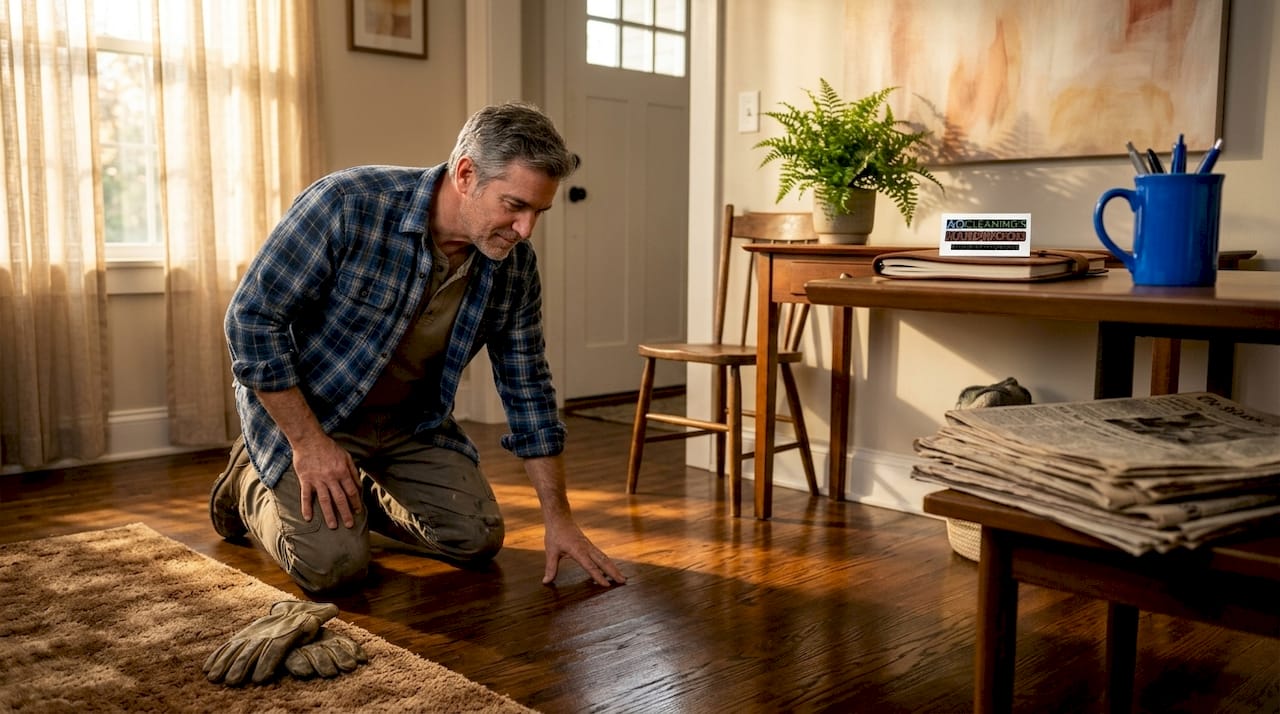
Hardwood floors are one of the most financially significant features in any home, yet most homeowners don’t realize how restoration protects hardwood investment until they’re already staring at a quote for full replacement. Here’s the number that changes the conversation: refinishing existing hardwood recovers about 147% of project cost at resale, compared to just 118% for installing new floors. In other words, restoring what you already have pays you back more than starting fresh. The industry term for this process is hardwood floor refinishing, and whether you need a light maintenance pass or a full sand-down, the financial and structural case for restoration over replacement is compelling.
Table of Contents
Key Takeaways
Point | Details |
Restoration beats replacement ROI | Refinishing recovers 147% of cost at resale versus 118% for new hardwood installation. |
Two main methods exist | Screen-and-recoat handles light wear; full sanding addresses deep damage and bare wood exposure. |
Timing is everything | Early intervention with maintenance restoration prevents minor finish wear from becoming expensive structural damage. |
Water damage needs speed | Responding within 24 to 48 hours dramatically increases the chance of salvaging water-damaged floors. |
Ongoing care compounds value | Routine cleaning and scheduled professional services extend floor life and reduce total long-term costs. |
How restoration protects hardwood investment financially
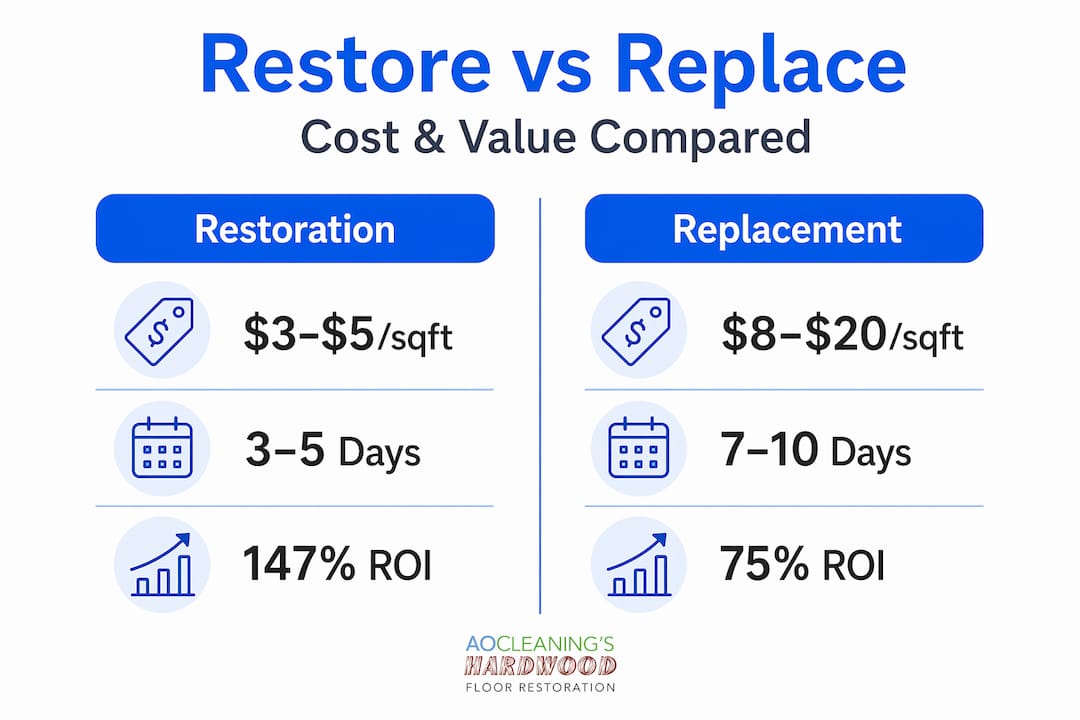
Replacing hardwood floors costs anywhere from $8 to $20 per square foot once you factor in materials, labor, and the disruption of a multi-day project. Professional refinishing comes in at a fraction of that. The financial gap alone makes the restoration versus replacement decision fairly straightforward when your floors are structurally sound.
But the real story is what happens when you sell. Professional refinishing improves resale value and buyer appeal far beyond what cosmetic cleaning can achieve, because restored floors signal to buyers that the home has been maintained with care. Buyers walking into a home with gleaming, freshly refinished hardwood read that as a proxy for overall home quality.
There’s a sustainability angle here too. Solid hardwood is one of the few flooring materials you can refinish 7 to 10 times over its lifetime, depending on the thickness of the planks. That means a set of floors installed in the 1970s can still look and perform like new today with proper restoration cycles. No other flooring category comes close to that lifecycle value.
“The floors in a well-maintained home tell buyers everything they need to know. Restored hardwood doesn’t just look better. It signals that someone cared about the property.”
Consider the math on a 1,000-square-foot first floor. A full sand and refinish might run $3,000 to $5,000. New installation could easily hit $12,000 to $20,000, plus removal costs. If restoration adds or preserves $7,000 or more in resale value, the numbers make the hardwood floor refinishing investment benefits obvious. You are not spending money. You are protecting an asset.
Restoration method | Typical cost per sq ft | Lifespan of results | Cost recovery at resale |
Screen-and-recoat | $1.50 to $3.00 | 3 to 5 years | High (maintenance investment) |
Full sand and refinish | $3.00 to $8.00 | 7 to 15 years | ~147% of project cost |
New hardwood installation | $8.00 to $20.00 | 25+ years (with restoration) | ~118% of project cost |
Restoration methods: screen-and-recoat vs. full sanding
Understanding the difference between maintenance restoration and full refinishing is the key to making smart decisions for your floors. These are not interchangeable services. Each solves a different problem.
Screen-and-recoat: the maintenance workhorse
Screen-and-recoat costs about $1.50 to $3.00 per sq ft and is the right call when your finish is dull or lightly scratched but the damage hasn’t reached the wood itself. The process uses synthetic abrasive screens (typically 120 to 150 grit) to lightly abrade the existing finish, creating a bonding surface for fresh polyurethane coats. No wood is removed. No stain changes are made.
This service typically extends floor life by 3 to 5 years per cycle and costs far less than a full refinish. Done on a regular schedule, it can delay the need for full sanding by years or even decades. Think of it as the equivalent of changing your car’s oil. You do it not because something is wrong, but because prevention is cheaper than repair.
Pro Tip: If your floors look tired but haven’t lost their finish entirely, schedule a screen-and-recoat before the damage reaches the wood layer. That intervention point is where you save the most money.
Full sanding: when you need to start fresh
Full sanding removes the finish down to bare wood, correcting deep scratches, stains, cupping, or discoloration that a screen-and-recoat cannot fix. It also lets you change the stain color entirely, which is a major advantage if your taste or your home’s style has shifted.
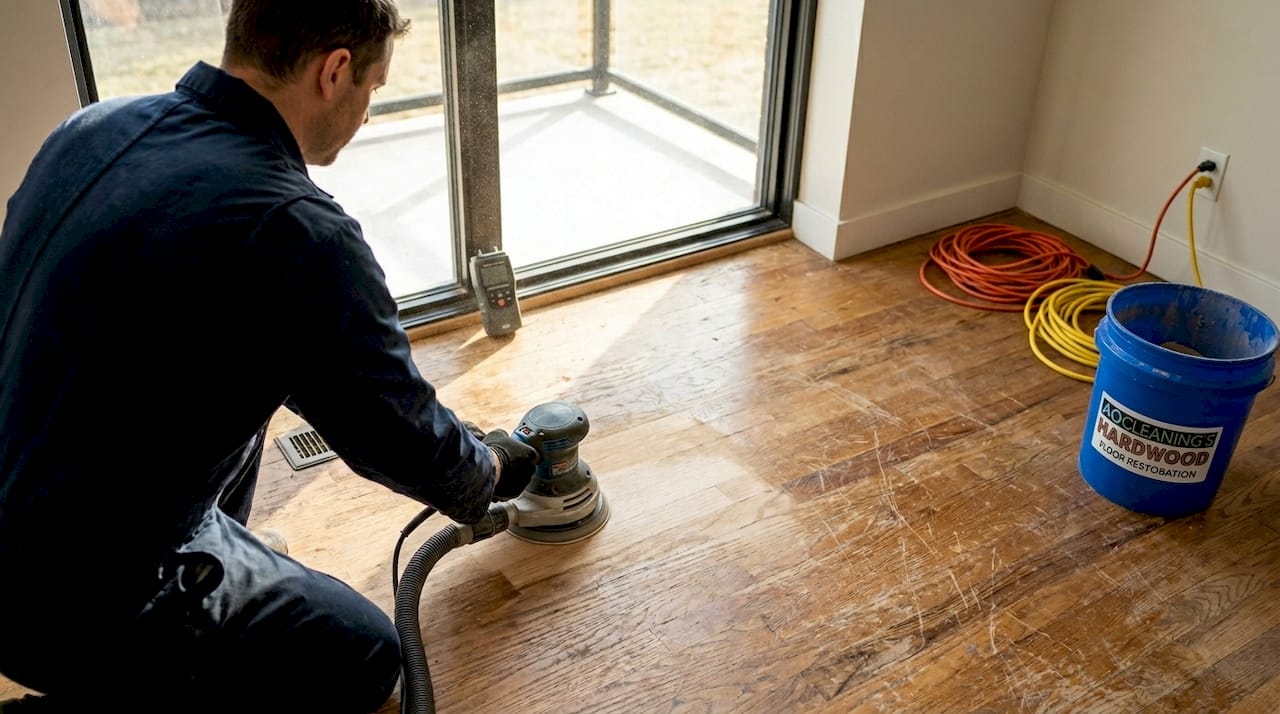
Screen-and-recoat fails when the finish is peeling, waxed, or when deep stains have penetrated the wood itself. Trying to screen-and-recoat over a compromised finish leads to peeling, bubbling, and bond failure. That is why choosing between buff-and-coat versus full sanding should always be based on whether the damage has reached the wood layer, not just on how the floor looks from a standing position.
Here is a quick guide to choosing the right method:
Choose screen-and-recoat when finish is dull, lightly scratched, or just aging
Choose screen-and-recoat for regular maintenance every 3 to 5 years before visible wood damage appears
Choose full sanding when scratches reach bare wood or stains are visible in the grain
Choose full sanding when finish is peeling, waxed, or severely uneven
Choose full sanding when cupping, crowning, or board separation has occurred
The hardwood floor screen and recoat page from Aosaveswoodfloors walks through exactly what each method involves and what to expect from the process.
Protecting floors after water damage
Water is hardwood’s most serious threat, and the window to act is narrow. When water intrudes, whether from a burst pipe, a dishwasher leak, or flooding, the damage to both the hardwood and the subfloor begins within hours. Boards start absorbing moisture, expanding unevenly, and in some cases lifting at the edges.
Professional drying after water damage costs about $3 to $6 per sq ft, which is dramatically less than the $8 to $20 per sq ft replacement cost. That price gap grows even wider when you factor in subfloor repairs, disposal of old materials, and the time cost of a multi-day installation project.
The protocol matters as much as the speed. Controlled drying conditions of 40 to 50% humidity at 70 to 80°F are required to bring moisture levels down evenly without causing warping or crowning. Professionals use air movers, dehumidifiers, sealed drying mats, and moisture meters to manage this process precisely. A homeowner with fans and open windows cannot replicate it.
Here is the proper response sequence for water-damaged hardwood floors:
Stop the water source immediately and remove standing water with a wet vacuum
Call a professional restoration service within 24 to 48 hours of the incident
Allow professionals to set drying equipment and monitor moisture levels daily
Wait for moisture readings to return to normal before any cosmetic restoration begins
Proceed with screen-and-recoat or full sanding based on the damage assessment
DIY drying risks trapping moisture inside planks and the subfloor, which accelerates mold growth and leads to structural failure that makes replacement unavoidable. Speed and proper equipment are not optional. They are what separates a $4,000 restoration from a $15,000 replacement.
Practical tips for protecting your hardwood long-term
The most expensive hardwood floor mistake homeowners make is waiting. Restoration timing is frequently overlooked, and by the time floors look visibly bad, the damage has often already crossed the line from maintenance restoration into full refinishing territory.
These habits protect the investment you have in your floors every day:
Sweep or dust-mop daily in high-traffic areas to remove grit that acts like sandpaper on finish
Use pH-neutral hardwood cleaners only. Products with vinegar or soap leave residue that clouds finish over time
Place felt pads under every piece of furniture that contacts the floor
Use entry mats at all exterior doors to capture moisture and debris before it reaches the hardwood
Control indoor humidity between 35% and 55% year-round to prevent seasonal expansion and contraction
Never wet-mop hardwood floors. Damp mopping with a wrung-out cloth is the maximum moisture your floor should experience
For scheduling, the general rule is to plan a screen-and-recoat every 3 to 5 years in normal household use, and a full sand and refinish every 10 to 15 years. High-traffic homes or homes with pets and young children may need to shift those timelines forward. Reading the floor matters more than following a fixed calendar.
Pro Tip: Get on your hands and knees with a flashlight aimed at a low angle across the floor surface. This raking light technique reveals finish wear and micro-scratches that are invisible when standing. If you see bare wood, you’ve waited too long for a screen-and-recoat.
Practical maintenance guidance for homeowners from Aosaveswoodfloors covers this in more detail, including product recommendations and room-by-room care tips. The homeowner’s guide to maintenance between refinishing is also worth bookmarking for ongoing reference.
Moisture protection during restoration is as important as the aesthetic work itself. Floors that look freshly refinished but harbor trapped moisture will fail from the inside out within a few years.
My honest take on what homeowners get wrong
I’ve watched homeowners spend $18,000 replacing floors that could have been restored for $3,500. Every single time, the conversation goes the same way afterward. They wish someone had told them sooner.
The mistake is treating restoration as cosmetic. It isn’t. It’s structural asset protection. The finish on your hardwood floor is not just there to look good. It’s the moisture barrier, the abrasion shield, and the primary line of defense between your $15,000 in flooring and everything that happens on top of it. When that finish wears through, you’re no longer maintaining a floor. You’re watching it fail in slow motion.
What most people don’t expect is how often bonding issues trip up DIY restoration attempts. A homeowner watches a video, rents a sander, and applies fresh polyurethane over a waxed or contaminated surface. The new finish peels within six months. Now they’ve wasted money and the floor is actually in worse shape than before they started.
My other honest observation: the homeowners who treat restoration as proactive asset management rather than reactive damage control spend significantly less over time. A $400 screen-and-recoat done every four years is categorically better than a $5,000 full refinish every fifteen years, both financially and for the long-term health of the wood.
If you are on the fence about whether to restore or replace, get a professional assessment first. The answer might genuinely surprise you.
— Jim
Ready to protect your floors? Here’s where to start
If your floors are showing their age, the first call to make is to Aosaveswoodfloors. They’ve been restoring hardwood floors across St. Louis, Columbia, Belleville, O’Fallon, and surrounding communities since 2003, and their team will tell you honestly whether a screen-and-recoat or a full sand and refinishing service is what your floors actually need. No upselling. No unnecessary work. For floors that need a lighter touch, the clean and buff service is a fast, affordable way to restore shine and protect the finish without sanding at all. Most jobs are done in a single day, with floors walkable in about three hours. Before you refloor it, let them restore it.
FAQ
What does hardwood floor restoration actually cost?
Screen-and-recoat restoration runs about $1.50 to $3.00 per square foot, while full sand and refinishing typically costs $3.00 to $8.00 per square foot. Both options cost significantly less than new hardwood installation, which ranges from $8.00 to $20.00 per square foot.
How often should hardwood floors be restored?
Most hardwood floors benefit from a screen-and-recoat every 3 to 5 years and a full sand and refinish every 10 to 15 years, depending on traffic levels and how well the finish holds up.
Is hardwood floor restoration worth it before selling a home?
Yes. Refinishing existing hardwood floors recovers approximately 147% of project cost at resale, which is a stronger return than installing new hardwood at 118% cost recovery.
Can water-damaged hardwood floors be restored instead of replaced?
In most cases, yes, if you act within 24 to 48 hours. Professional drying with controlled humidity and air movers costs roughly $3 to $6 per square foot, far less than full replacement at $8 to $20 per square foot.
How do I know if my floors need a screen-and-recoat or full sanding?
If the finish is dull or lightly scratched but wood grain is not exposed, screen-and-recoat is the right choice. If scratches have reached bare wood, the finish is peeling, or the floor was previously waxed, full sanding is required.
Recommended

Comments