


Hardwood Floor Care in Chesterfield, MO That Works

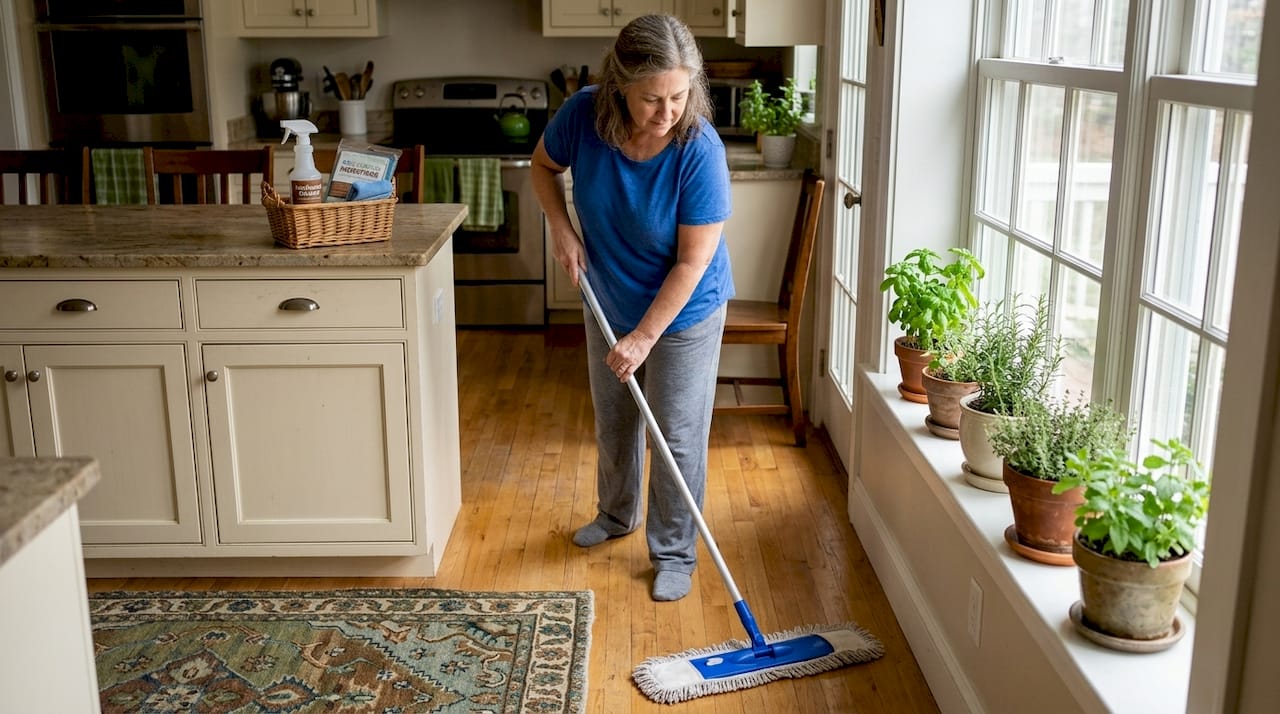
If you live in Chesterfield and you’ve been mopping your hardwood floors with a soaking wet mop or spraying them with a multi-surface cleaner, your floors are quietly taking damage every single time. Chesterfield mo hardwood floor care is not complicated, but it does require breaking some deeply ingrained habits. The good news: protecting your floors from wear, seasonal humidity swings, and product buildup is far simpler than most homeowners realize. This guide gives you the exact routines, product guidance, and professional service knowledge you need to keep your floors looking sharp for decades.
Table of Contents
Key takeaways
Point | Details |
Daily microfiber mopping matters | Dry dust mopping daily prevents roughly 80% of surface scratches with almost no effort. |
Moisture is the real threat | Excess water from string mops or steam mops causes warping and cupping that shortens floor life dramatically. |
Humidity control is non-negotiable | Keeping indoor humidity between 35% and 55% year-round prevents seasonal gaps, cupping, and structural damage. |
Professional care has clear tiers | Screen-and-recoat every 3 to 5 years extends finish life; full sanding is only needed when damage reaches bare wood. |
Store-bought polishes cause problems | Shine-adding products leave residue buildup that complicates refinishing and degrades finish integrity over time. |
Chesterfield, MO hardwood floor care: your daily and weekly routine
The most effective hardwood floor maintenance program is also the simplest one. Start with a daily dry microfiber dusting. This single habit, taking roughly five minutes, prevents about 80% of scratches caused by grit and fine particles that act like sandpaper under foot traffic. Use a flat microfiber pad, not a feather duster, which just redistributes debris.
For weekly cleaning, damp mopping is appropriate, but the word “damp” is doing a lot of work there. Your mop should be wrung out so thoroughly that the floor appears only slightly darkened for 30 to 60 seconds before drying completely. If you see water sitting on the surface, your mop is too wet. Industry experts agree that microfiber mops paired with pH-neutral hardwood cleaners are the safest method for protecting your finish long term.
What to use and what to avoid
Here is a clear breakdown of the tools and products that protect your floors versus those that quietly destroy them:
Use these:
Flat microfiber dust mops for daily dry cleaning
A hardwood-specific neutral cleaner diluted according to label directions
Microfiber spray mops for weekly damp cleaning
Felt pads under all furniture legs
Avoid these completely:
String mops, which hold far too much water
Steam mops, which force moisture into seams and destroy finish adhesion
Vinegar, ammonia, or any acidic cleaner
Multi-surface sprays not formulated for hardwood
Wax or shine-boosting polish sprays from big-box stores
Pro Tip: When you finish damp mopping a room, run your hand across a plank near a seam. If you feel any moisture at all, your mop was too wet. Adjust before the next session.
For daily and weekly maintenance best practices, following a consistent schedule matters far more than any single product choice.
When to call in a professional
Routine cleaning keeps your floors looking good day to day, but it cannot reverse finish wear over time. That is where professional Chesterfield flooring services come in. Understanding the tiers of professional care helps you make smart decisions about timing and cost.
Service | What it does | Best for |
Clean and buff | Removes buildup, polishes existing finish | Floors with light dullness and no finish wear |
Screen and recoat | Lightly abrades finish, applies new topcoat | High-traffic areas every 3 to 5 years |
Full sand and refinish | Removes all finish to bare wood, refinishes completely | Deep scratches, staining, or finish failure |
Professional care tiers follow a logical progression. Screen-and-recoat is the most commonly skipped service, and skipping it is exactly why floors end up needing full sanding earlier than necessary. Think of screen-and-recoat as a tune-up. A screen and recoat service adds a fresh protective layer before the existing finish fully breaks down, which is far less disruptive and less expensive than a complete refinish.
Signs you need professional attention
Watch for these indicators that your floors need more than routine cleaning:
The finish looks dull even right after cleaning
You notice worn gray or white patches in high-traffic zones
Scratches have cut through the finish and reached bare wood
The floor feels rough underfoot despite regular care
You see areas where the wood has absorbed liquid and darkened
Pro Tip: Do not wait until you see bare wood to schedule a professional assessment. A clean-and-buff or screen-and-recoat at the right moment costs a fraction of what a full refinish does, and it gets your floors looking brand new in a single day.
One major advantage of working with a qualified local service is access to dustless refinishing. Traditional sanding fills a home with fine wood dust for days. Dustless systems capture the vast majority of that debris at the source, which matters a great deal if anyone in your household has respiratory sensitivities.
Managing humidity in Chesterfield’s climate
Chesterfield sits in a region that experiences genuine seasonal extremes. Hot, humid summers and dry, cold winters create a wood-stress cycle that catches many homeowners off guard. Wood is hygroscopic. It absorbs and releases moisture from the surrounding air constantly, which causes boards to expand and contract with the seasons.
Seasonal humidity fluctuations in the St. Louis metro area directly impact hardwood stability. The target range year-round is 35% to 55% relative humidity. Outside that range, here is what happens:
Below 35%: Boards shrink, creating noticeable gaps between planks, especially in winter when heating systems run continuously
Above 55%: Boards swell, potentially causing cupping where board edges rise higher than the center
Persistent high humidity: Leads to warping, finish bubbling, and in severe cases, structural subfloor damage
Practical steps for humidity control
A whole-home humidifier connected to your HVAC system is the most effective solution for Chesterfield winters. Portable humidifiers work for individual rooms but require more consistent attention. On the monitoring side, a basic digital hygrometer (available at any hardware store for under $20) tells you exactly where your indoor humidity sits.
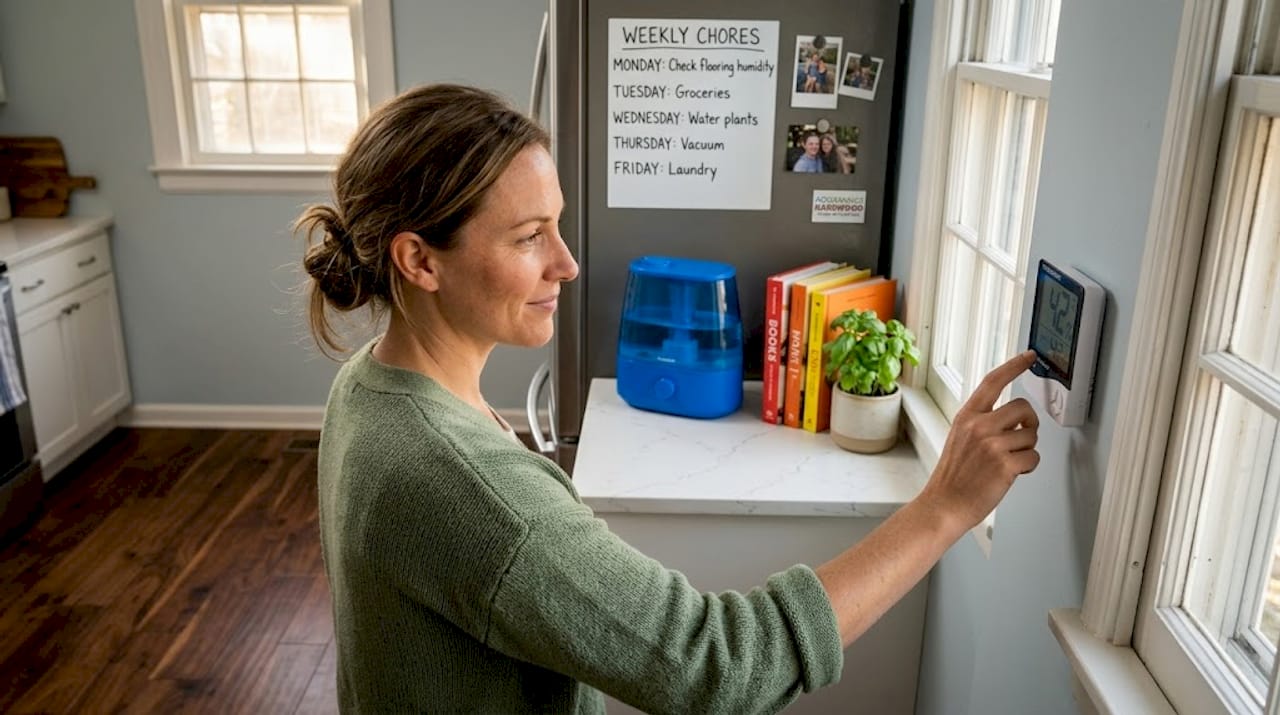
Consistent humidity maintenance between 35% and 55% is critical to prevent structural issues like cupping or persistent gaps. One common mistake: homeowners see winter gaps between planks and reach for caulk. Do not do this. Seasonal gaps are normal and reversible. Boards will expand back together as humidity rises in spring. Caulking them traps the boards and causes buckling when they expand.
Pro Tip: Set a recurring monthly reminder to check your hygrometer reading. Catching a humidity problem early, before boards have spent weeks in extreme conditions, prevents the majority of seasonal floor damage.
Common hardwood care mistakes to stop making
Even well-intentioned homeowners make errors that accumulate into real floor damage. Here are the most frequent mistakes seen in Chesterfield homes, and exactly how to fix them.
Using store-bought shine products. Products marketed to “restore shine” or “add luster” to your floors do not actually restore anything. They deposit a waxy coating on top of your existing finish. The National Wood Flooring Association warns against these products because residue buildup degrades long-term floor health and makes professional recoating nearly impossible without specialized stripping first.
Mopping with too much water. This is the single most common cause of hardwood floor damage during routine cleaning. Excess moisture seeps into seams, sits under the finish, and causes warping and cupping that no amount of cleaning will reverse.
Assuming the floor needs sanding when it just needs rejuvenation. Many floors that homeowners write off as “too far gone” can be brought back with a clean-and-buff or screen-and-recoat. The ‘point of no return’ is often a myth, according to experienced local professionals who regularly restore floors that homeowners had considered replacing.
Letting spills sit. Even sealed hardwood is not fully waterproof. Wipe up any liquid spill immediately with a dry cloth, then follow with a lightly damp cloth if needed. Do not spray cleaner directly onto the spill area and walk away.
Ignoring entryways and furniture. Most floor damage enters through the front door as grit on shoes. A quality entryway mat on both sides of exterior doors and felt pads under every piece of furniture are the cheapest protective investments you can make.
Pro Tip: If you have been using a wax or polish product on your floors, stop immediately and let the current buildup wear down naturally. Then switch to a pH-neutral hardwood cleaner going forward. If the buildup is significant, a professional wax removal service can strip it cleanly before your next recoat.
My take on what actually protects Chesterfield floors
I’ve worked with hundreds of homeowners across this region, and the pattern I see most often is this: people try to do too much. They buy shine sprays, steam mops, and whatever “hardwood cleaner” is on sale, and they end up layering problem on top of problem. The floors that age the best belong to people who do less, but do it right and consistently.
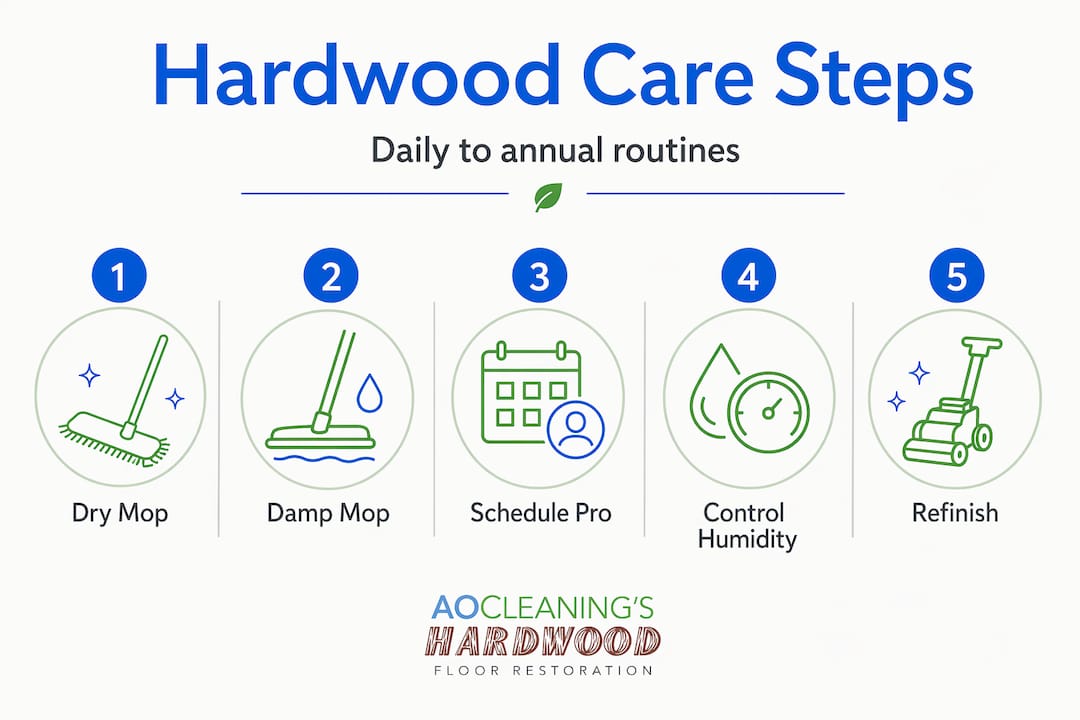
The humidity piece is where I see the most expensive mistakes. Homeowners spend hundreds on refinishing and then skip the humidifier, so the same gaps and cupping return within a year. The floor is not failing. The environment is. A $30 hygrometer and a $200 humidifier protect a $10,000 investment in flooring. That math is obvious, but a surprising number of people skip it.
The other thing I push back on constantly is the idea that floors past a certain point need replacing. I’ve seen floors that looked genuinely destroyed, floors with years of wax buildup and surface scratches everywhere, come back completely after a proper clean-and-buff or screen-and-recoat. Excess wax buildup from store-bought products is a real problem, but it is solvable. Before you write off any floor, get a professional opinion. The answer is almost always better than you expect.
— Jim
Get professional hardwood floor care in Chesterfield
If your floors need more than a good cleaning, Aosaveswoodfloors brings over 20 years of hardwood floor expertise to Chesterfield homeowners. With 450+ Google reviews and a reputation built on results, they are the team local homeowners call when consistent home care is not enough. Their services cover every tier of professional care, from clean-and-buff sessions to full sand and refinishing, all completed with dustless equipment and eco-friendly products. Most jobs finish in a single day, with floors ready to walk on in about three hours. If you have been thinking about replacing your floors, get a professional assessment first. As Aosaveswoodfloors puts it: “Before you REFLOOR it, let us RESTORE it.” Visit aosaveswoodfloors.com to schedule your consultation.
FAQ
How often should I clean hardwood floors in Chesterfield?
Dry microfiber dusting should happen daily or every other day, and damp mopping with a pH-neutral cleaner once a week is sufficient for most Chesterfield homes. Consistent light cleaning always outperforms occasional deep scrubbing.
What is the best hardwood cleaner for Chesterfield homes?
A pH-neutral cleaner specifically formulated for hardwood, such as the AO Hardwood Neutral Cleaner, is the safest choice. Avoid vinegar, ammonia, and any product that claims to add shine or restore luster.
How does Chesterfield’s climate affect hardwood floors?
Seasonal humidity swings in the St. Louis metro area cause hardwood boards to expand in summer and contract in winter. Keeping indoor humidity between 35% and 55% year-round prevents gaps, cupping, and long-term structural damage.
When does a hardwood floor need refinishing versus just recoating?
If scratches have only affected the finish and not reached bare wood, a screen and recoat is usually sufficient. Full sanding and refinishing is needed when damage penetrates the finish layer entirely or when significant staining or warping is present.
Are steam mops safe for hardwood floors in Chesterfield?
No. Steam mops force moisture and heat directly into wood seams and the finish layer, causing warping, cupping, and finish adhesion failure. Use a microfiber spray mop with a hardwood-safe cleaner instead.
Recommended

Comments