


Why Hardwood Floors Develop Black Stains: 2026 Guide

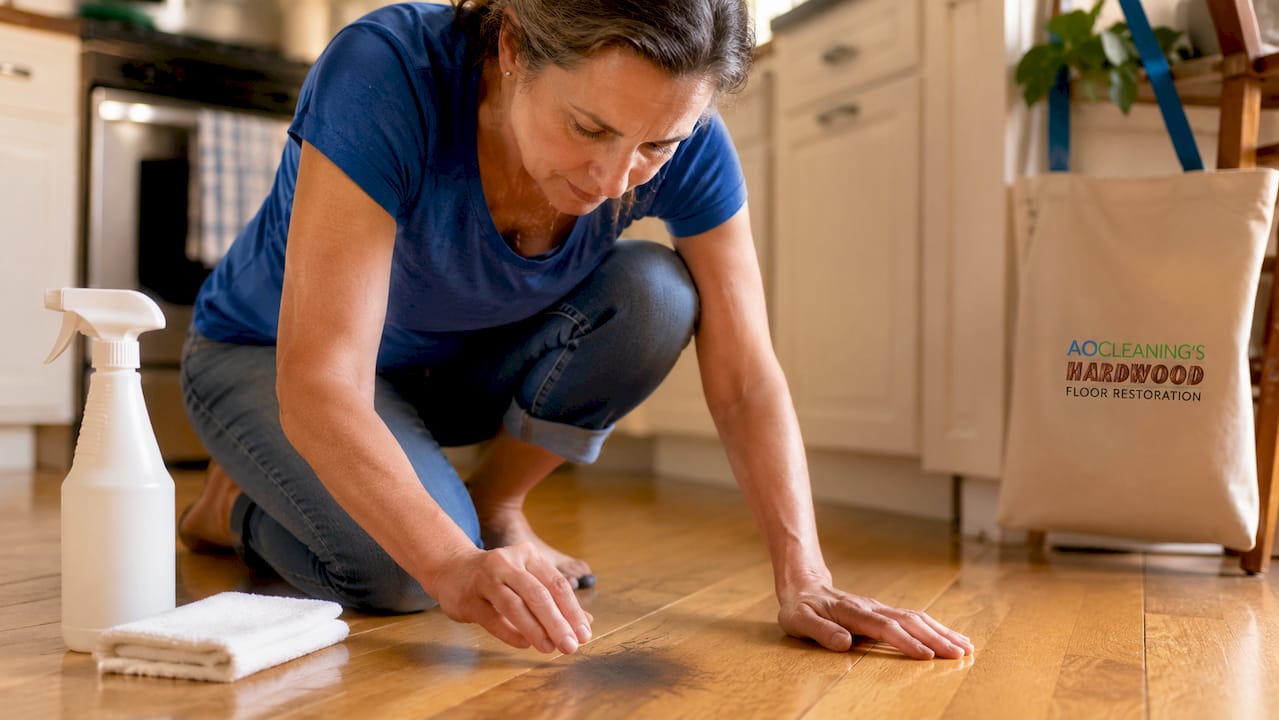
Black stains on hardwood floors are a wood-level problem caused by chemical reactions between the wood’s natural tannins and moisture, contaminants, or metals. Unlike surface scuffs or finish wear, these stains penetrate deep into wood fibers and resist ordinary cleaning or light sanding. The industry term for this process is tannin oxidation, and it explains why hardwood floors develop black stains that look permanent even after scrubbing. Common triggers include pet urine, water leaks, iron contact, and mold growth. Knowing the exact cause is the first step toward choosing the right fix.
Why hardwood floors develop black stains
Black stains on hardwood floors form when liquid or contaminants bypass the protective finish and reach the wood fibers below. Once inside the wood, those substances react with tannins, the naturally occurring compounds that give hardwoods like oak and walnut their color and structure. That reaction produces a dark, inky discoloration that no surface cleaner can reverse.
The most common causes of black stains on wood floors include:
Moisture from spills or leaks. Water that sits on the floor long enough will seep through the finish. Slow leaks from appliances, plumbing, or window frames are especially damaging because the exposure is prolonged and often unnoticed.
Pet urine. Urine contains acids and ammonia that penetrate deeply into wood fibers, causing permanent chemical changes that sanding alone often cannot fully remove.
Metal contact. Iron from furniture legs, nails, or hardware reacts with wood tannins in the presence of moisture. This iron-tannin reaction produces a deep, inky black stain that forms quickly.
Mold and mildew. Fungus grows rapidly on hardwood with sustained moisture, creating black splotchy stains that can also weaken the wood structure over time.
Contaminated water. Sewage backups or floodwater carry bacteria and chemicals that accelerate discoloration and create health risks beyond cosmetic damage.
Pro Tip: Press a dry white cloth firmly onto the stain for 30 seconds. If the cloth picks up color, the stain is still near the surface. If nothing transfers, the discoloration is deep in the wood and needs chemical treatment.
One detail many homeowners miss: gray spots and black stains are not the same problem. Gray weathering is superficial finish wear that improves with sanding and refinishing. Black stains signal a chemical change inside the wood that requires a different approach entirely. Treating gray spots as black stains, or vice versa, leads to wasted effort and money.
How tannins and wood chemistry create the staining
Hardwoods contain tannins as a natural part of their cellular structure. Oak floors are especially high in tannins, which is why oak is one of the most common species to develop dramatic black staining after moisture exposure. The tannins themselves are not the problem. The problem starts when moisture or a reactive substance triggers oxidation.
Here is how the process unfolds:
Moisture enters the wood. A spill, leak, or high humidity event pushes liquid past the finish layer and into the wood fibers.
Tannins oxidize. Oxygen and moisture together cause the tannins to darken, similar to how a cut apple browns when exposed to air.
Iron accelerates the reaction. If iron is present, from a metal furniture leg or a nail, the iron-tannin reaction produces a much darker, faster stain than moisture alone.
Contaminants bind to fibers. Pet urine acids and mold spores bind chemically to wood cells, making the discoloration structural rather than topical.
Dormant compounds reactivate. Even after the original moisture event dries up, contaminants and iron remain dormant until humidity rises again, causing stains to reappear months later.
“Black stains sometimes show up long after the original moisture event. Changing humidity reactivates dormant chemical compounds in the wood, making it look like a new problem when it is actually an old one.” — NYC Wood Floors
This last point surprises most homeowners. You fix a leak in october, the floor looks fine through winter, and then black stains appear in march when indoor humidity climbs. That is not a new leak. That is spring staining from chemical reactivation, a well-documented phenomenon in wood floor restoration. Understanding this prevents misdiagnosis and unnecessary repairs.
How do you remove black stains from hardwood floors?
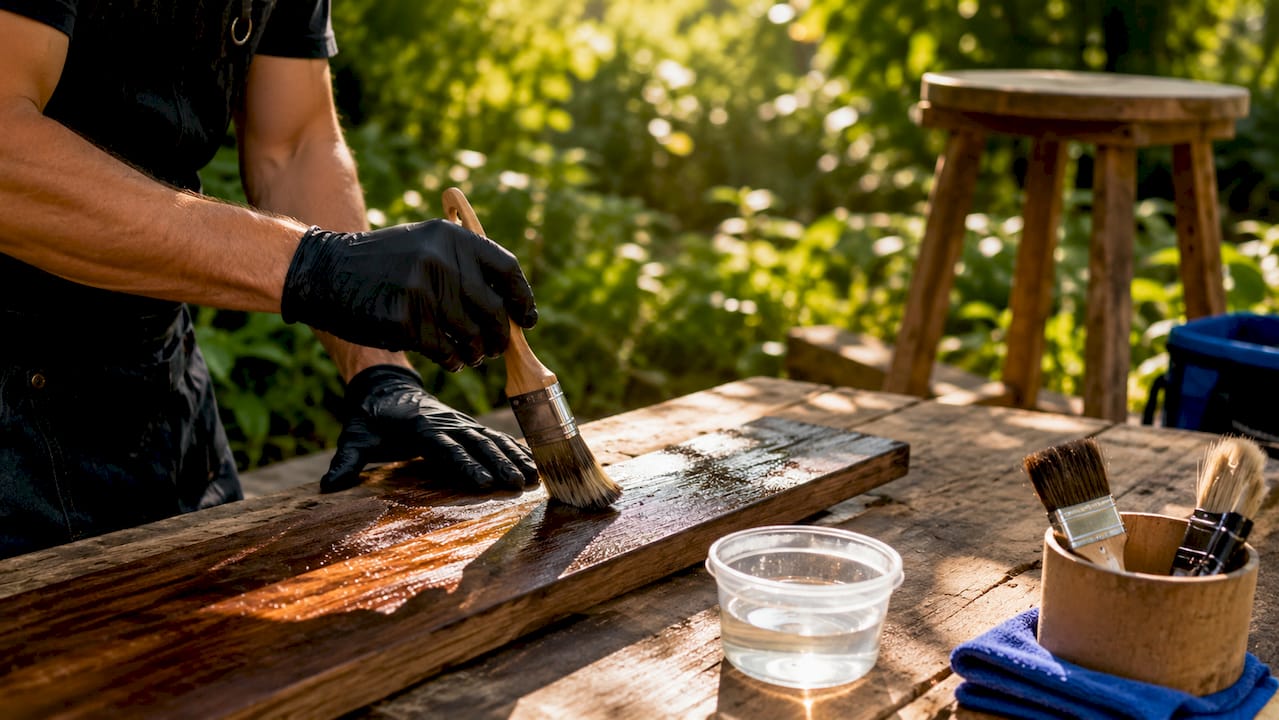
Removing black stains from wood requires a two-step approach: mechanical removal followed by chemical treatment. Surface cleaning alone accomplishes nothing for stains that have penetrated the wood fibers.
Method | Best for | Limitations |
Sanding only | Surface discoloration, gray weathering | Cannot reach stains deeper than 1/16 inch |
Oxalic acid bleaching | Tannin oxidation, water stains, iron stains | Requires bare wood; multiple applications may be needed |
Vinegar-water pre-treatment | Mold-related surface staining | Not effective for deep chemical stains |
Board replacement | Sewage or black water damage, severe pet staining | Permanent solution; color matching can be difficult |
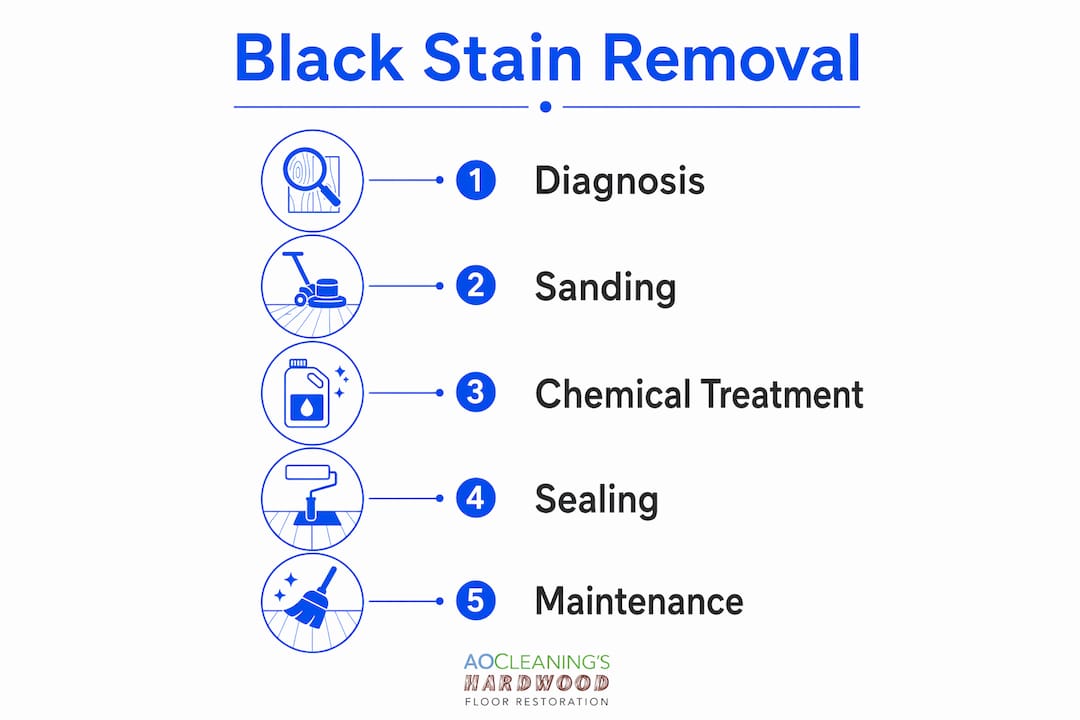
The professional standard for deep stains involves sanding the floor down to bare wood, then applying an oxalic acid solution for 30–60 minutes to reverse the oxidation inside the fibers. After the acid works, the area is neutralized with a borax solution, allowed to dry fully, and then refinished. Skipping the neutralization step leaves residual acid in the wood, which causes future finish adhesion problems.
Pet urine stains present a specific challenge. Sanding alone often cannot fully remove the dark discoloration because the acids bind permanently to wood cells. In severe cases, the affected boards need replacement rather than treatment. Homeowners who attempt multiple rounds of DIY sanding without chemical treatment typically make the problem worse by removing wood thickness without addressing the underlying chemistry.
Water damage severity also determines the treatment path. Clean water damage has the best restoration prognosis. Sewage or black water exposure nearly always requires full board removal due to microbial contamination and health risks. No amount of sanding or bleaching makes contaminated boards safe to keep.
Pro Tip: Always fix the moisture source before treating the stain. Applying oxalic acid to a floor that still has an active leak is a waste of time and money. The stain will return within weeks.
The hardwood restoration stages matter here. Knowing whether your floor needs a screen and recoat, a full sand, or board replacement changes the cost and timeline significantly. A professional assessment before any treatment saves most homeowners from expensive mistakes.
How to prevent black stains on hardwood floors
Preventing black stains is far easier than removing them. Most stains form because a small problem, a slow drip, a pet accident, or a metal chair leg, goes unaddressed long enough for moisture to penetrate the finish.
Clean spills immediately. Do not let liquid sit on hardwood for more than a few minutes. Even water can begin penetrating a worn finish within 10–15 minutes on older floors.
Use furniture pads on all metal legs. Metal contact promotes deep inky stains through iron-tannin reactions. Felt or rubber pads between metal and wood eliminate this risk entirely.
Control indoor humidity. Keep relative humidity between 35% and 55%. Fluctuations above that range drive moisture into wood fibers and reactivate dormant stain compounds.
Inspect for leaks regularly. Check under appliances, around toilets, and near exterior doors at least twice a year. Slow leaks cause the worst staining because the exposure is prolonged.
Address pet accidents immediately. Blot urine completely, then clean the area with an appropriate hardwood cleaner. The longer urine sits, the deeper it penetrates. Repeated accidents in the same spot almost always cause permanent staining.
Choose the right finish. Some hardwood floor finishes resist moisture penetration better than others. Oil-modified polyurethane and moisture-cure urethane offer stronger barriers than wax or older oil finishes.
Regular maintenance also matters. A floor with a worn or thin finish has almost no protection against moisture. Scheduling a screen and recoat every few years keeps the finish layer intact and gives moisture far less opportunity to reach the wood.
Key Takeaways
Black stains on hardwood floors are a chemical problem inside the wood, not a surface issue, and they require targeted treatment rather than ordinary cleaning or sanding alone.
Point | Details |
Black stains go deep | Stains penetrate beyond 1/16 inch and signal tannin oxidation or contamination inside wood fibers. |
Pet urine is the hardest to fix | Urine acids bind permanently to wood cells; sanding alone rarely removes the stain fully. |
Oxalic acid is the standard treatment | Applied to bare sanded wood for 30–60 minutes, oxalic acid reverses oxidation before refinishing. |
Stains can reappear months later | Dormant chemical compounds reactivate with humidity changes, not necessarily from new moisture events. |
Fix the source first | Treating stains without correcting the moisture source guarantees the stain returns. |
What 20 years of floor restoration taught me about black stains
Most homeowners who call me about black stains have already tried something that made the problem worse. They sanded the spot, it looked lighter, they refinished it, and two months later the stain was back and darker. That cycle happens because sanding removes wood but does not remove the chemistry causing the discoloration.
The mistake I see most often is skipping the diagnosis step. Before touching the floor, you need to know what caused the stain. Pet urine, iron contact, and water damage all look similar but require different treatments. Applying oxalic acid to a mold-based stain without first correcting the moisture source is like painting over rust. It looks fine for a season and then fails.
Realistic expectations matter too. Some pet urine stains, especially in homes with years of repeated accidents in the same spot, cannot be fully removed. The wood fibers are permanently altered. In those cases, board replacement is the honest answer, not a failure of technique. I have seen homeowners spend more on repeated DIY attempts than a professional replacement would have cost.
My strongest recommendation is this: if you see a black stain larger than a quarter, call a professional before doing anything else. The assessment costs nothing with most reputable companies, and it prevents the expensive mistakes that come from guessing.
— Jim
Hardwood floors with black stains? Aosaveswoodfloors can help
Black stains are one of the most common calls Aosaveswoodfloors receives from homeowners across St. Louis, Columbia, Belleville, and the surrounding area. With over 20 years of experience and 450+ Google reviews, the team knows exactly how to diagnose the cause and recommend the right fix, whether that is a chemical treatment, a full sand and refinish, or targeted board replacement.

For day-to-day maintenance that keeps your finish strong and your floors protected, the AO Hardwood Neutral Cleaner is a safe, effective option designed specifically for hardwood. For floors that already have deep staining or visible damage, professional refinishing in Clayton, Missouri is available with dustless techniques and same-day service. Before you refloor it, let Aosaveswoodfloors restore it.
FAQ
What causes black stains on hardwood floors?
Black stains form when moisture, pet urine, metal contact, or mold triggers a chemical reaction with the wood’s natural tannins. The result is deep discoloration inside the wood fibers that surface cleaning cannot remove.
Can sanding remove black stains from hardwood?
Sanding alone removes only the top wood layers. Stains deeper than 1/16 inch require oxalic acid bleaching after sanding to reverse the oxidation inside the wood fibers.
Why do black stains appear months after a water leak is fixed?
Dormant chemical compounds and iron deposits in the wood reactivate when indoor humidity rises, causing stains to appear long after the original moisture event. This is called chemical reactivation and is common in spring.
Are black stains from pet urine permanent?
Pet urine stains are often permanent because the acids bind chemically to wood cells. Severe or repeated staining in the same area typically requires board replacement rather than bleaching or refinishing.
How do I tell the difference between gray spots and black stains?
Gray spots are superficial finish wear that improve with sanding and refinishing. Black stains indicate a chemical change inside the wood and require oxalic acid treatment or board replacement.
Recommended

Comments