


What Is Engineered Hardwood Restoration?


Engineered hardwood restoration is the process of repairing, sanding, and refinishing the thin wood veneer on engineered floors to remove surface damage and apply a fresh protective finish without replacing the boards. Unlike solid hardwood, engineered floors have a limited wear layer, so every restoration decision depends on how much of that veneer remains. Done correctly, restoration extends floor life by decades and costs a fraction of full replacement. Done wrong, it destroys the floor permanently. Understanding what the process involves, and what your specific floor can handle, is the difference between a smart investment and an expensive mistake.
What is engineered hardwood restoration, and how does it work?
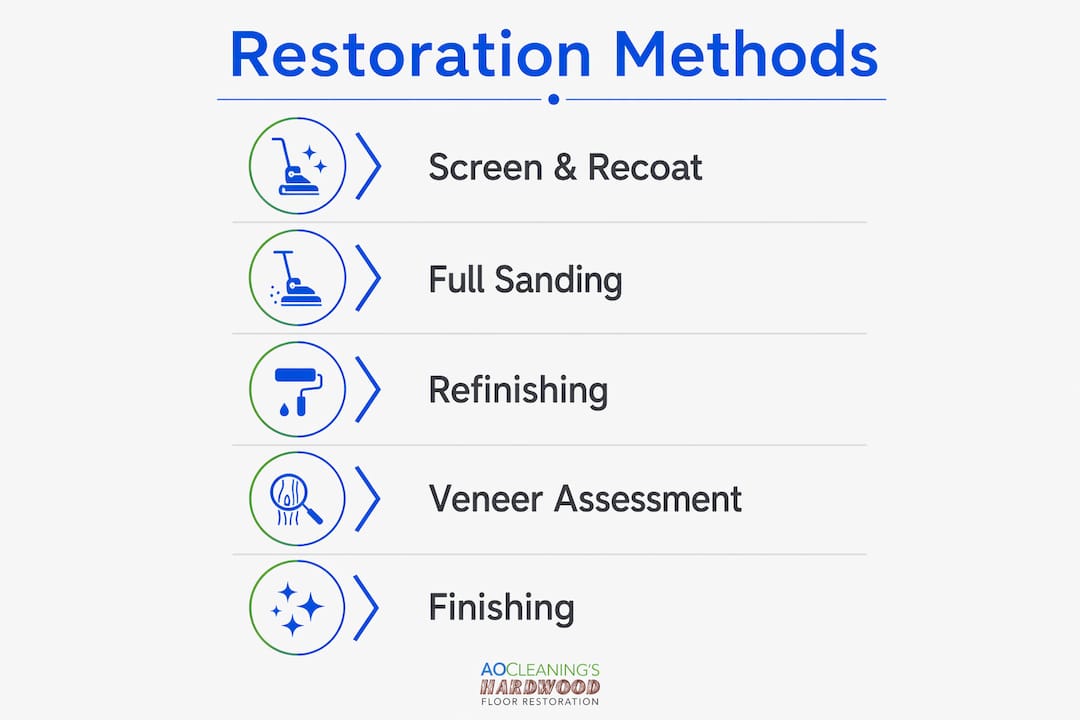
Engineered hardwood restoration covers three distinct approaches: screen and recoat, full sanding and refinishing, and targeted repairs. Each method addresses a different level of damage. Screen and recoat refreshes a dull or lightly scratched finish without touching the wood itself. Full sanding removes the old finish and a thin layer of the veneer to expose fresh wood before applying new coats. Targeted repairs fix isolated scratches, gouges, or water-damaged boards.
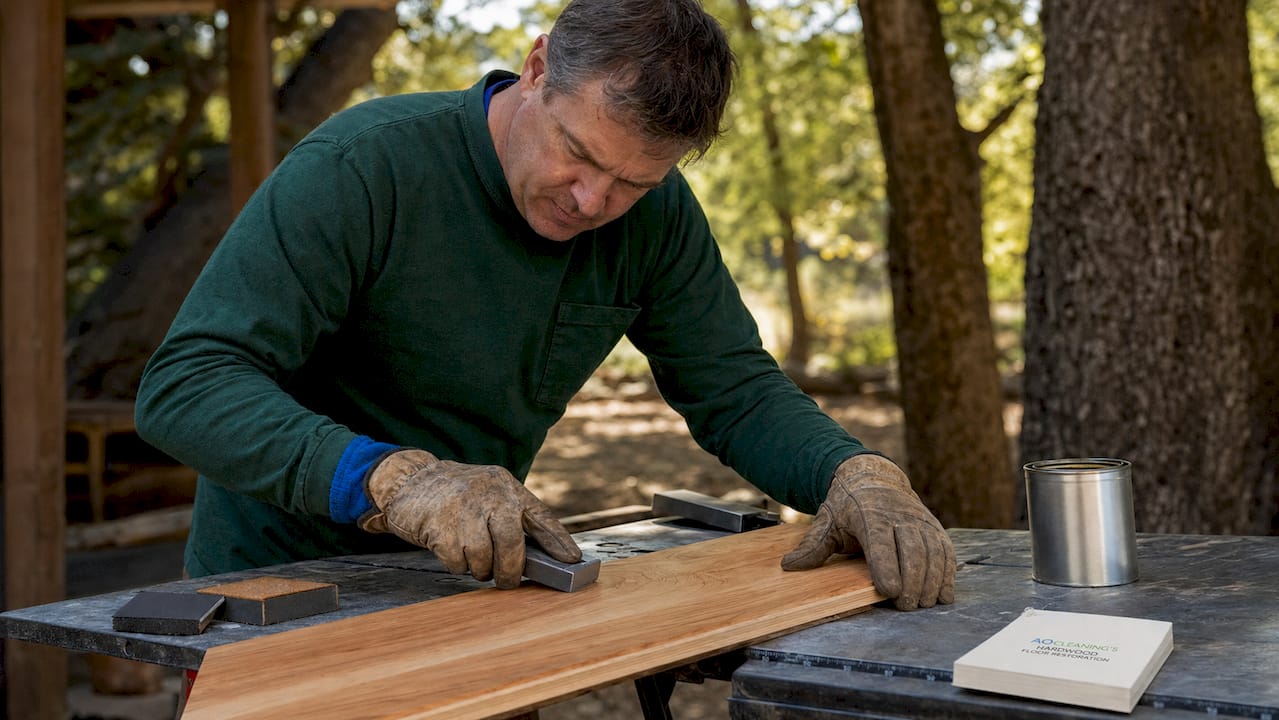
The industry term for the full process is hardwood floor refinishing, and it applies to both solid and engineered floors. The critical difference is precision. Engineered floors require calibrated equipment and a professional veneer assessment before any sanding begins. Professional veneer measurement is not optional. Guessing the remaining wear layer thickness can destroy the floor in a single pass.
The benefits of hardwood restoration are significant. You preserve the original wood species, avoid the cost and disruption of replacement, and keep your home’s character intact. Most restorations cost far less than new flooring installation, and Aosaveswoodfloors completes most jobs in a single day with floors ready to walk on in about three hours.
How does veneer thickness affect your restoration options?
Veneer thickness is the single most important factor in engineered hardwood repair decisions. It determines which restoration methods are safe, how many times the floor can be refinished over its lifetime, and whether sanding is even an option.
Here is how the numbers break down:
Veneer Thickness | Safe Refinishing Cycles | Best Restoration Method |
4–6mm | 3–6 times | Full sanding and refinishing |
3mm | 1–3 times | Full sanding or screen and recoat |
2mm or less | 0–1 time | Screen and recoat only |
Veneer thickness directly limits how many full refinishing cycles a floor can safely handle. A 2mm veneer with one prior refinish may have no safe sanding margin left at all.
The reason this matters so much is the math. Professional sanding removes roughly 0.75–1mm of wear layer per refinishing cycle. On a 3mm veneer, that leaves very little room for error after two cycles. On a 6mm veneer, you have a meaningful cushion. Once the veneer is gone, the plywood core is exposed and the floor cannot be restored by any method.
Pro Tip: Before scheduling any restoration work, ask the professional to measure your veneer thickness with a calibrated tool. This single step determines every other decision about your floor.
What are the main methods for restoring engineered hardwood floors?
The right restoration method depends on the damage level and the veneer thickness. Here is how each approach works in practice.
Screen and recoat. This is the lightest restoration method and the most common. A technician lightly abrades the existing finish using a screen pad, vacuums the residue, and applies one or two fresh coats of finish. No wood is removed. Screen and recoat is ideal for floors that look dull or have light surface scratches but still have a structurally sound finish. It can be done every 7–15 years depending on foot traffic, and it extends the life of the floor without consuming any of the veneer.
Full sanding and refinishing. This method addresses deeper scratches, worn-through finish, and staining that reaches the wood. A technician sands the veneer down to bare wood using precision equipment, then applies stain if desired and multiple finish coats. This is the most effective restoration for significant damage, but it requires confirmed veneer thickness before starting. Aosaveswoodfloors uses calibrated, dustless equipment on every full sand and refinishing job to protect the veneer and avoid the adhesion failures that come from airborne particulates.
Targeted repairs. Light scratches can be filled with color-matched wood filler or a touch-up kit. Water-damaged boards with localized cupping or staining can sometimes be replaced individually. Widespread delamination or severe moisture damage typically requires board replacement rather than surface restoration.
Dustless technology. This is not a separate method but a requirement for any professional restoration. Dustless screening prevents microscopic particulates from settling on the surface before the finish is applied. Particulates cause adhesion failure, which means the new finish peels or bubbles within months. Any restoration job done without dustless equipment is a risk not worth taking.
Pro Tip: If a contractor quotes you for sanding without first measuring your veneer, walk away. That single oversight is the most common cause of irreversible floor damage during restoration.
Engineered hardwood vs. solid hardwood restoration: key differences
Homeowners often assume engineered and solid hardwood floors restore the same way. They do not. The differences are significant enough to change the entire approach.
Solid hardwood can be sanded and refinished 5–6 times over its lifetime because the wear layer is typically 18–20mm thick. Engineered hardwood has a veneer of 2–6mm, which limits refinishing cycles dramatically. This is not a flaw in engineered flooring. It is simply a structural difference that requires a different restoration strategy.
Factor | Engineered Hardwood | Solid Hardwood |
Wear layer thickness | 2–6mm | 18–20mm |
Refinishing cycles | 0–6 (veneer dependent) | 5–6 cycles |
Sanding risk | High without measurement | Lower |
Screen and recoat suitability | Excellent | Good |
Moisture sensitivity | Higher | Moderate |
Restoration cost | Comparable | Comparable |
The finish type also differs. Many engineered floors use aluminum oxide finishes, which are harder than the oil-based finishes common on older solid hardwood. Harder finishes resist scratching better but require more aggressive screening to prepare the surface for a new coat. A professional who works only with solid hardwood may not have the right equipment or technique for engineered floors.
The practical takeaway is this: engineered hardwood rewards a lighter touch. Screen and recoat is often the smarter choice for engineered floors, preserving the veneer for the one or two full refinishing cycles the floor can handle later in its life.
How to maintain engineered hardwood floors between restorations
Proper engineered wood flooring care is the most effective way to delay restoration and protect your investment. Most finish degradation is caused by preventable mistakes, not normal wear.
Use pH-neutral cleaners only. Steam mops and vinegar degrade polyurethane finish and can cause moisture damage to the veneer. Both also void most manufacturer warranties. Use a cleaner specifically formulated for hardwood floors, applied with a barely damp microfiber mop.
Control indoor humidity. Maintaining 40%–60% humidity prevents the expansion and contraction that causes gapping, cupping, and finish cracking. A whole-home humidifier or dehumidifier is a worthwhile investment if your home runs dry in winter or humid in summer.
Protect furniture contact points. Felt pads under chair legs, table bases, and heavy furniture prevent the micro-scratches that accumulate into visible wear patterns over time. Replace felt pads every six months since they collect grit and become abrasive.
Sweep or vacuum regularly. Sand and grit act like sandpaper underfoot. Daily sweeping or vacuuming with a soft-bristle attachment removes abrasive particles before they work into the finish.
Address spills immediately. Standing water is the primary cause of delamination in engineered floors. Wipe spills within minutes, not hours.
Good hardwood floor maintenance does not just protect the finish. It extends the interval between restorations, which preserves the veneer for when you actually need a full refinish.
Key takeaways
Engineered hardwood restoration preserves your floor’s veneer through targeted methods matched to damage level and remaining wear layer thickness.
Point | Details |
Veneer thickness is the deciding factor | Measure wear layer before any sanding to determine which restoration method is safe. |
Screen and recoat extends veneer life | Light abrasion refreshes the finish every 7–15 years without consuming the wood layer. |
Full sanding requires precision equipment | Dustless technology prevents adhesion failures and protects the thin veneer during refinishing. |
Solid and engineered floors restore differently | Engineered floors have fewer safe sanding cycles, so method selection matters more. |
Maintenance delays restoration needs | pH-neutral cleaners and 40%–60% humidity protect the finish and reduce restoration frequency. |
What 20 years of floor restoration taught me about engineered hardwood
The most common misconception I see is that engineered hardwood is fragile and not worth restoring. That belief sends homeowners straight to the flooring store when their floors could have been saved for a fraction of the cost.
The truth is that most engineered floors can be restored when a professional assesses them correctly. The floors that cannot be saved are usually the ones someone tried to DIY sand first. A rented drum sander has no feedback mechanism. It removes wood at a fixed rate regardless of what is underneath. I have seen 3mm veneers sanded through to the plywood core in a single pass by a homeowner who thought they were saving money.
The other mistake I see regularly is skipping maintenance until the floor looks bad enough to restore. By that point, the finish is often worn through in high-traffic areas, and a full refinish is the only option left. A screen and recoat done at the right time, before the finish fails completely, costs less and preserves more veneer for future cycles.
My honest advice: get a professional assessment before you make any decision. Knowing your veneer thickness takes ten minutes and changes everything. It tells you exactly what your floor can handle, how many restoration cycles remain, and whether a light refresh or a full refinish is the right call. That information is worth more than any amount of online research.
— Jim
Restore your engineered hardwood floors with Aosaveswoodfloors
If your engineered hardwood floors are looking worn, scratched, or dull, replacement is rarely the first answer.
Aosaveswoodfloors has been restoring engineered and solid hardwood floors across the St. Louis metro area and central Illinois since 2003, with 450+ Google reviews to back it up. Their team uses calibrated, dustless equipment on every job, including full sanding and refinishing for floors with sufficient veneer and screen and recoat for lighter surface wear. Most jobs are completed in a single day, with floors ready to walk on in about three hours. Before you spend money on new flooring, call Aosaveswoodfloors first. Their tagline says it best: “Before you REFLOOR it, let us RESTORE it.”
FAQ
Can all engineered hardwood floors be refinished?
Not all engineered hardwood floors can be sanded and refinished. Floors with a veneer of 2mm or less may have no safe sanding margin remaining, making screen and recoat the only viable restoration option.
How many times can engineered hardwood be restored?
Refinishing cycles depend on veneer thickness: 4–6mm veneers allow 3–6 full refinishes, 3mm veneers allow 1–3, and 2mm or less allows zero to one. Screen and recoat can be done more frequently without consuming the veneer.
What is the difference between screen and recoat and full refinishing?
Screen and recoat lightly abrades the existing finish and adds new coats without removing any wood. Full refinishing sands the veneer down to bare wood, which addresses deeper damage but consumes 0.75–1mm of the wear layer per cycle.
What cleaning products are safe for engineered hardwood?
Use pH-neutral cleaners formulated for hardwood floors applied with a barely damp microfiber mop. Steam mops and vinegar degrade polyurethane finish, cause moisture damage, and typically void manufacturer warranties.
How do i know if my floor needs restoration or replacement?
Localized scratches, dull finish, and surface wear are signs that restoration is the right call. Widespread delamination, severe cupping, or veneer worn through to the core typically means board replacement is needed rather than surface restoration.
Recommended

Comments