


Dustless Floor Sanding Process: A Homeowner's Guide
- Kim M.

- Jun 16
- 8 min read
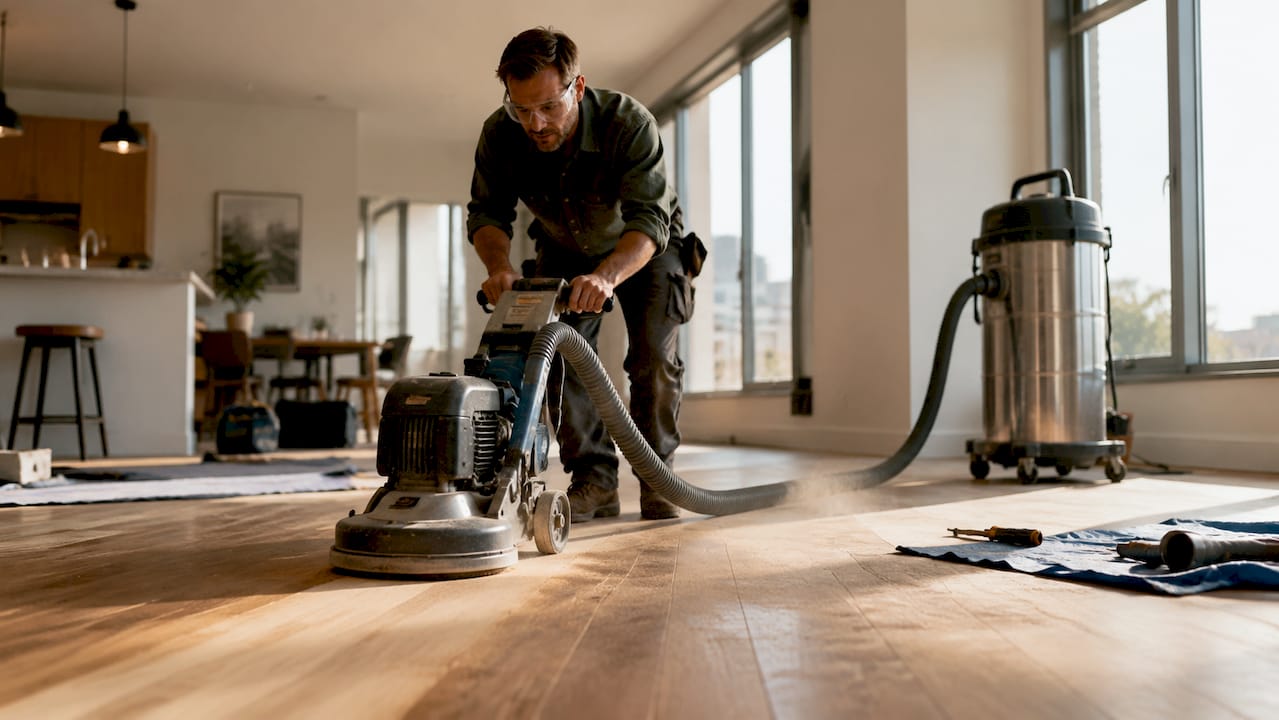
The dustless floor sanding process is defined as hardwood floor refinishing using specialized sanding machines connected to industrial HEPA-filtered vacuum systems that capture dust at the point of sanding, before it becomes airborne. This method traps 95–99% of wood dust at the source, preventing the fine particles that traditional sanding scatters across every surface in your home. The result is a cleaner project, better indoor air quality, and far less disruption to your daily life. The term “dustless” is the common name for what professionals also call dust-contained or dust-controlled refinishing. It is not a zero-dust process, but the difference compared to traditional sanding is dramatic.
How does the dustless floor sanding process work?
The process follows a clear sequence. Each step is designed to contain dust before it spreads, not clean it up after.
Floor assessment. A technician inspects the floor for damage, previous finish type, and wood thickness. This determines whether full-depth sanding or a lighter screening pass is needed. Full-depth sanding generates more dust and takes longer than screening, so the right call here affects the entire project.
Preparation. Furniture is removed from the work area. Technicians seal doorways with plastic sheeting and tape off HVAC vents. Sealing HVAC vents is one of the most critical steps. Dust that enters your ductwork can circulate through the home for days after the job is done.
Dust-contained sanding. The main sanding machine connects directly to an industrial vacuum equipped with a HEPA filter. As the drum or belt sander moves across the floor, the vacuum pulls dust into a sealed collection unit. HEPA filters trap particles down to 0.3 microns, which covers the vast majority of wood dust generated during sanding.
Edge and corner work. A smaller edge sander, also connected to a vacuum, handles the perimeter of the room. Corners may require hand tools. These areas are where dust containment is hardest to maintain, so experienced crews pay close attention here.
Staining and finishing. Once sanding is complete, the floor is cleaned and a stain or finish is applied. Because dust containment was effective during sanding, fewer particles are floating in the air to settle into the wet coating.
Final walkthrough. The crew inspects the floor, removes plastic barriers, and confirms the work area is clean. Most homeowners can walk on the floor within a few hours of the finish coat drying.
Pro Tip: Ask your contractor to show you the dust collection unit before and after the job. A full canister is proof the system worked. An empty one is a red flag.
What are the advantages of dustless sanding vs. traditional methods?
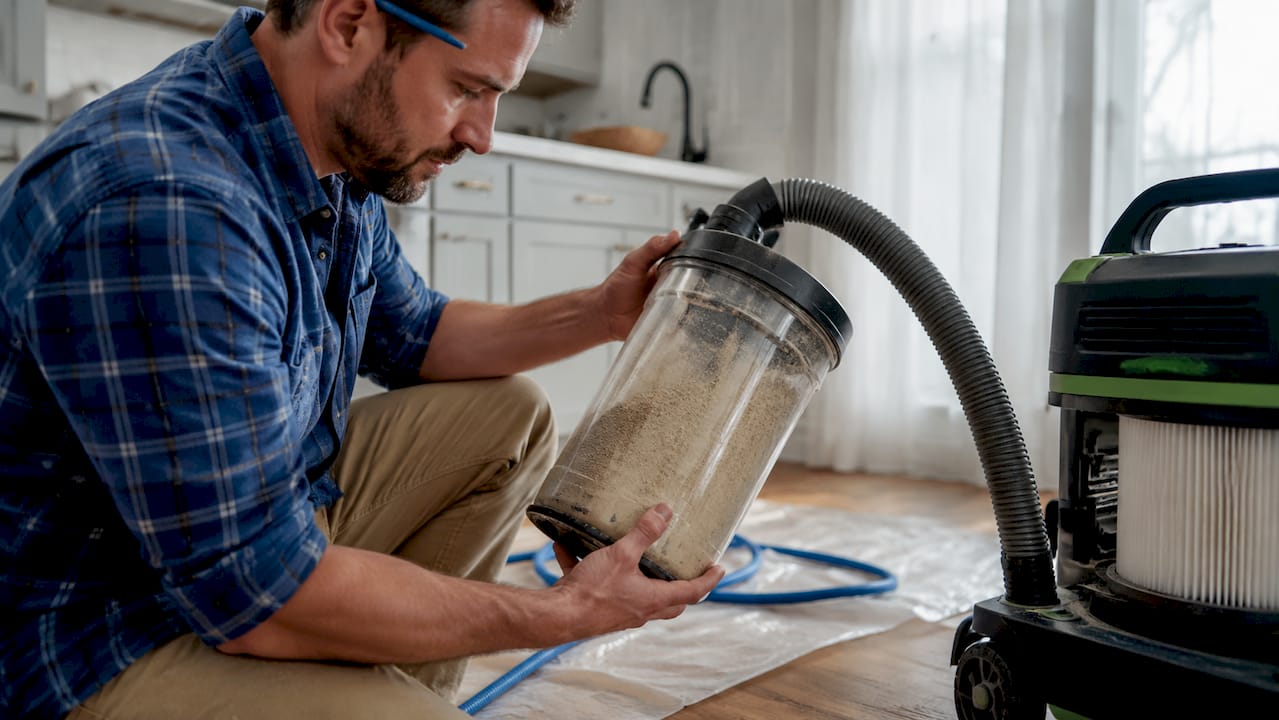
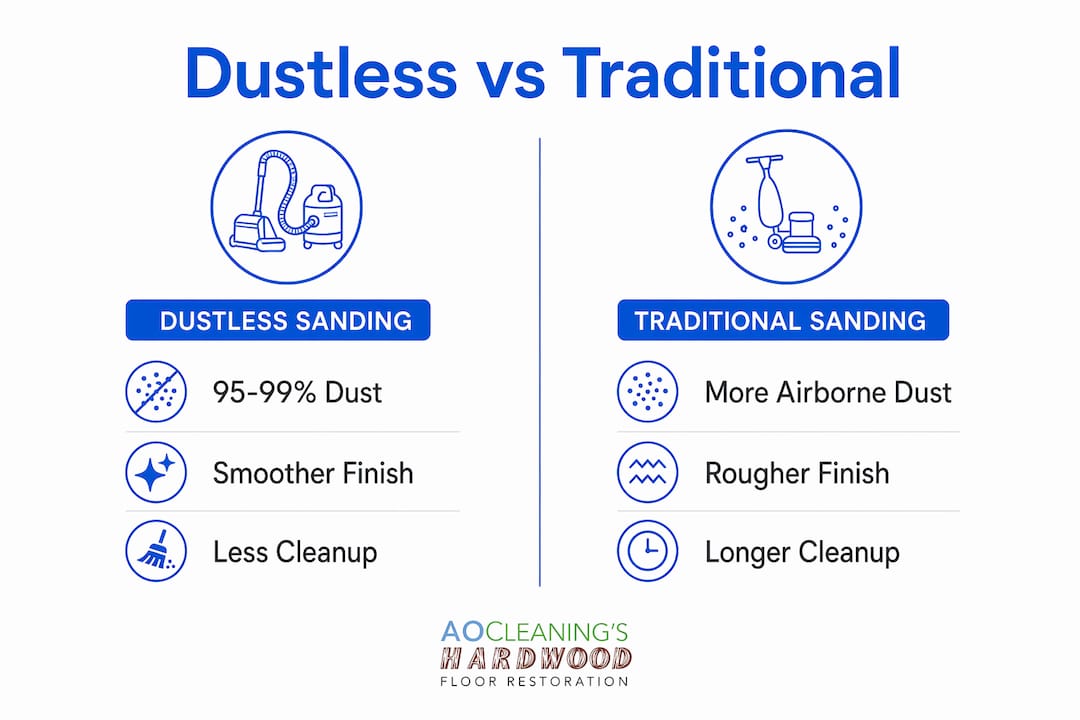
The gap between dustless and traditional sanding is larger than most homeowners expect. Traditional sanding sends fine wood dust into the air, where it settles on furniture, inside cabinets, and in HVAC systems. Cleanup alone can add a full day to the project.
Factor | Dustless Sanding | Traditional Sanding |
Dust containment | 95–99% captured at source | Dust spreads throughout home |
Indoor air quality | Significantly improved | Fine particles airborne for hours |
Post-project cleanup | Minimal, localized | Extensive, whole-home |
Finish quality | Smoother, fewer embedded particles | Risk of dust in wet coating |
Upfront cost | 10–30% higher | Lower initial price |
Stay-at-home option | Yes, for most projects | Often not recommended |
The finish quality difference is worth highlighting. Dustless sanding produces a smoother finish because fewer airborne particles settle into the wet coating during application. That means better adhesion and a more even surface texture over time.
Families with allergies, asthma, or pets see the biggest benefit. Homeowners can stay in the house during dustless sanding because dust does not infiltrate the HVAC system or coat surfaces in other rooms. That is simply not possible with traditional methods.
The one real drawback is cost. Dustless sanding runs 10–30% more than traditional sanding upfront. The faster cleanup and reduced post-project labor often offset that difference, but it is worth factoring into your budget.
Pro Tip: If you have pets or young children, the health case for dustless sanding is strong. Fine wood dust is a respiratory irritant, and HEPA containment keeps it out of the air your family breathes.
What factors affect timeline and cost?
Dustless refinishing projects typically complete in 1–3 days, which is faster than traditional methods when you factor in post-sanding cleanup. Several variables push that timeline in either direction.
Square footage is the most obvious factor. A 200-square-foot bedroom and a 1,200-square-foot open floor plan are completely different jobs. Larger areas require more passes, more finish coats, and longer drying windows.
Floor condition matters just as much. A floor with deep scratches, old wax buildup, or uneven boards needs full-depth sanding. A floor in decent shape may only need screening, which is faster and generates less dust even with containment equipment running.
Finish type and coat count add time. Water-based finishes dry faster than oil-based options, which can cut a day off the project. Two coats versus three coats is another variable that affects both timeline and final cost.
Here is what typically drives cost up or down:
Floor size: Larger areas mean more labor hours and more finish product.
Refinishing method: Full sanding costs more than screening or a screen-and-recoat service.
Number of finish coats: Each additional coat adds drying time and material cost.
Equipment quality: Contractors using professional-grade HEPA systems charge more, but the results justify it.
Geographic market: Labor rates vary significantly by region.
You can use the hardwood floor refinishing checklist from Aosaveswoodfloors to map out what your specific project will likely require before you call for a quote.
How to prepare your home for dustless floor sanding
Good preparation is the difference between a smooth project and a stressful one. Proper preparation, including furniture removal and sealing, is required for the containment system to work as designed. Skipping steps here undermines the entire process.
Follow these steps before the crew arrives:
Clear the room completely. Remove all furniture, rugs, and valuables. Do not leave anything you cannot afford to get dusty, even with dustless equipment running.
Seal off adjacent rooms. Use plastic sheeting and painter’s tape at doorways. This creates a physical barrier between the work zone and the rest of your home.
Cover HVAC vents. Tape plastic over every return and supply vent in the work area. Dust that enters the ductwork will recirculate for days.
Remove fragile items from nearby shelves. Vibration from sanding equipment can shift items on shelves in adjacent rooms.
Plan for pets and young children. Even with containment, the noise and activity are disruptive. Arrange for them to be elsewhere during the main sanding phase.
Pro Tip: Run a portable air purifier with a HEPA filter in an adjacent room during the project. It catches any fine particles that migrate past the barriers and keeps the rest of your home’s air clean.
For families with allergies or respiratory sensitivities, dustless sanding is the only responsible choice for an indoor refinishing project. The combination of HEPA vacuum extraction and sealed work zones keeps airborne particle counts low enough to make a real difference.
After the project, a light cleaning with a pH-neutral hardwood floor cleaner handles any minor residual dust. Aosaveswoodfloors carries the AO Hardwood Neutral Cleaner specifically for post-refinishing maintenance, and it will not strip or dull your new finish.
What are the realistic limits of dustless sanding?
“Dustless” is a marketing term, not a technical guarantee. Some residual dust remains confined to the immediate work zone in every project. The volume is small and localized, but homeowners who expect a perfectly sterile environment will be disappointed.
The containment rate of 95–99% sounds high, and it is. Fine particles smaller than 0.3 microns can slip past even HEPA filters, but the volume is negligible compared to traditional sanding. The practical result is a work zone that needs a light wipe-down, not a whole-home deep clean.
There are also situations where dustless sanding is not the right tool. Floors with severe structural damage, significant cupping, or boards that need replacement require more aggressive work that generates more dust regardless of containment equipment. In those cases, the conversation shifts from dustless sanding to whether full sand refinishing is even the right starting point.
Screening, which uses a fine abrasive pad to scuff the existing finish rather than remove it entirely, produces far less dust than full-depth sanding. It is a good option for floors that are structurally sound but dull. Understanding the difference between screening, full sanding, and sandless refinishing helps you ask the right questions when getting quotes. The timeline guide from Aosaveswoodfloors breaks down which method fits which situation.
Key takeaways
Dustless floor sanding captures 95–99% of wood dust at the source using HEPA-filtered vacuum systems, making it the most practical refinishing method for homeowners who want cleaner results, better air quality, and less disruption.
Point | Details |
Dust containment rate | HEPA systems capture 95–99% of particles, keeping dust out of your home’s air and surfaces. |
Not zero dust | Residual dust stays in the work zone; expect a light cleanup, not a sterile environment. |
Cost premium | Dustless sanding costs 10–30% more upfront but saves time and cleanup labor overall. |
Finish quality | Less airborne dust during coating means a smoother, more durable final surface. |
Preparation matters | Sealing HVAC vents and doorways is required for the containment system to work correctly. |
Why i think dustless sanding is the only way to refinish a home
After watching hundreds of refinishing projects play out, I have a clear opinion: traditional open-air sanding inside an occupied home is not acceptable anymore. The technology exists to do this job cleanly. Choosing not to use it is a cost decision, not a quality decision.
The homeowners who push back on dustless sanding usually do so because of the price difference. I understand that. But I have also seen what happens when fine wood dust settles into HVAC systems, coats kitchen cabinets, and gets breathed in by kids and pets for a week after the job is done. The 10–30% cost premium looks different when you frame it that way.
The most common misconception I hear is that “dustless” means the contractor does not need to seal off the work area. That is wrong. The vacuum system handles dust at the machine. The plastic barriers and sealed vents handle everything else. Both are required. A contractor who skips the sealing step is not doing dustless sanding correctly, regardless of what equipment they brought.
My advice: ask any contractor you interview to walk you through their containment setup before they start. If they cannot explain how they seal the HVAC vents and adjacent doorways, keep looking.
— Jim
Get a cleaner refinishing result with Aosaveswoodfloors
If your hardwood floors need attention and you want the job done without turning your home into a construction zone, Aosaveswoodfloors is worth a call. They have been serving homeowners across the St. Louis metro area and central Illinois since 2003, and dustless techniques are standard on every job they take.
Their professional hardwood floor refinishing service covers everything from full sand refinishing to screen and recoat, all using dust-contained equipment and eco-friendly finishes. Most jobs finish in a single day, with floors ready to walk on in about three hours. For ongoing maintenance after refinishing, the AO Hardwood Neutral Cleaner (1 gallon) keeps your floors clean without stripping the new finish. Before you decide to replace your floors, let Aosaveswoodfloors show you what restoration can do.
FAQ
What does the dustless floor sanding process actually involve?
The dustless floor sanding process uses sanding machines connected to industrial HEPA-filtered vacuums that capture wood dust at the point of contact, preventing it from becoming airborne. The work area is also sealed with plastic barriers and taped HVAC vents to contain any remaining particles.
Is dustless sanding truly 100% dust-free?
No. “Dustless” means high-efficiency dust containment, not zero dust. Some residual dust stays in the immediate work zone, but the volume is minimal compared to traditional sanding and cleanup is straightforward.
Can i stay home during dustless floor sanding?
Yes. Because dust is contained within the work zone and does not enter the HVAC system or spread to other rooms, most homeowners can remain in the house during the project, which is not practical with traditional sanding.
How long does a dustless sanding project take?
Most dustless refinishing projects complete in 1–3 days depending on floor size, condition, and the number of finish coats applied. Screening takes less time than full-depth sanding and generates less dust even with containment equipment running.
Why does dustless sanding cost more than traditional sanding?
Dustless sanding requires specialized equipment, HEPA filtration systems, and more detailed preparation work, which drives costs 10–30% higher than traditional methods. The tradeoff is faster project completion, less post-project cleanup, and a better quality finish.
Recommended

Comments