


Waterloo IL Floor Refinishing Explained for Homeowners

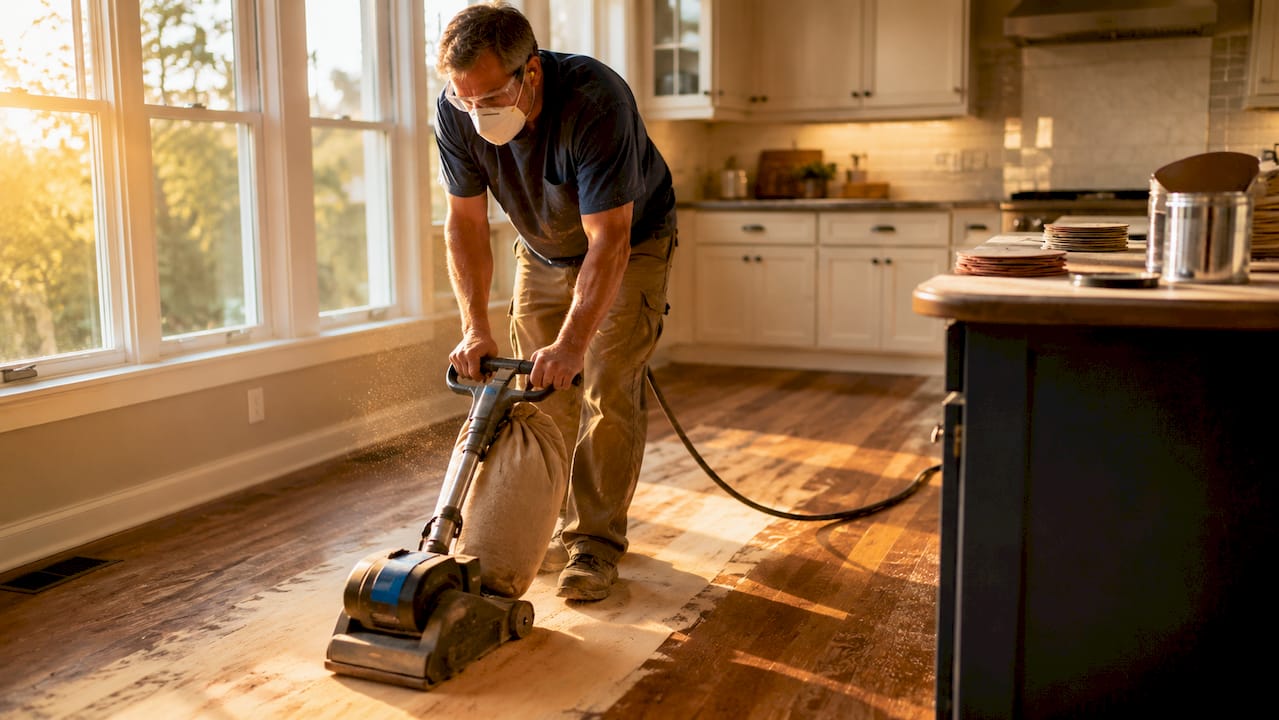
Floor refinishing is the process of sanding hardwood floors down to bare wood and applying new protective finish coats to restore their appearance and durability. For homeowners in Waterloo, IL, understanding this process is the difference between spending thousands on replacement and spending a fraction of that on restoration. Waterloo IL floor refinishing explained simply means knowing which method fits your floor’s condition, what the project involves, and what it costs. Oak, maple, and pine hardwood floors are common in Monroe County homes, and most can be refinished multiple times over their lifespan. Aosaveswoodfloors has served this region since 2003 and handles every stage of this process.
What are the primary floor refinishing methods and how do they differ?
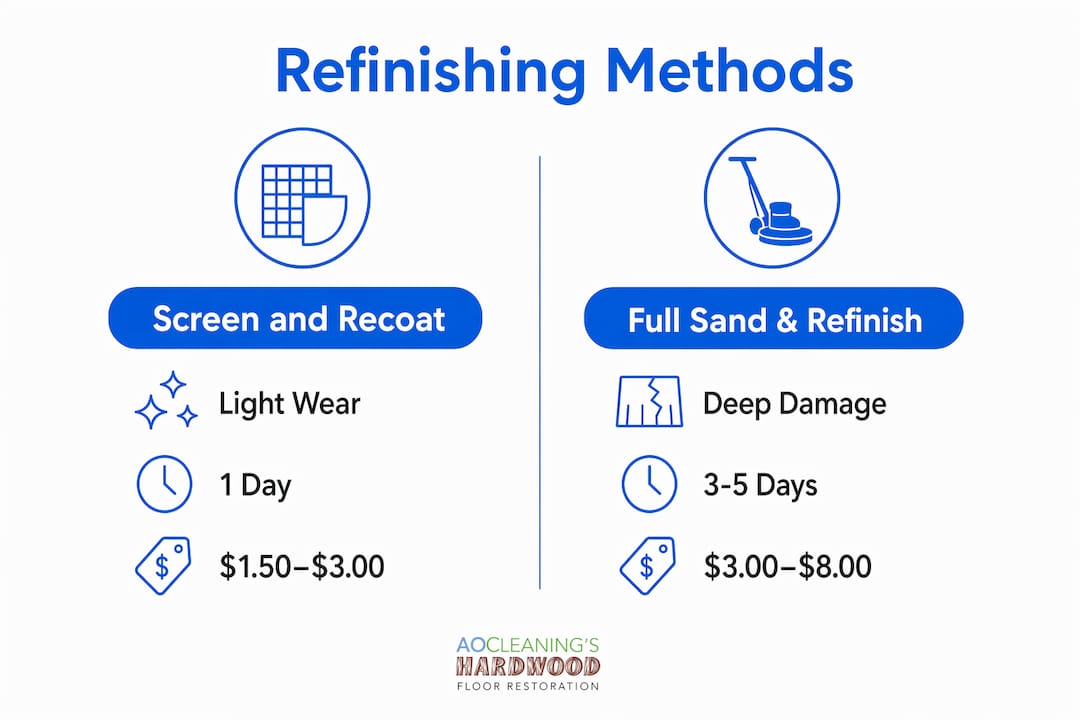
Two methods cover nearly every hardwood floor refinishing situation: screen and recoat, and full sand and refinish. Knowing which one your floor needs saves money and avoids unnecessary disruption.
Screen and recoat
Screen and recoat scuffs the old finish with a buffer and applies a fresh topcoat. The process takes about one day and produces minimal dust. It costs between $1.50 and $3.00 per square foot and works well when the wood itself is in good shape but the finish has dulled or worn thin. One important limit: screen and recoat cannot change the stain color or fix deep scratches and dents.
Full sand and refinish
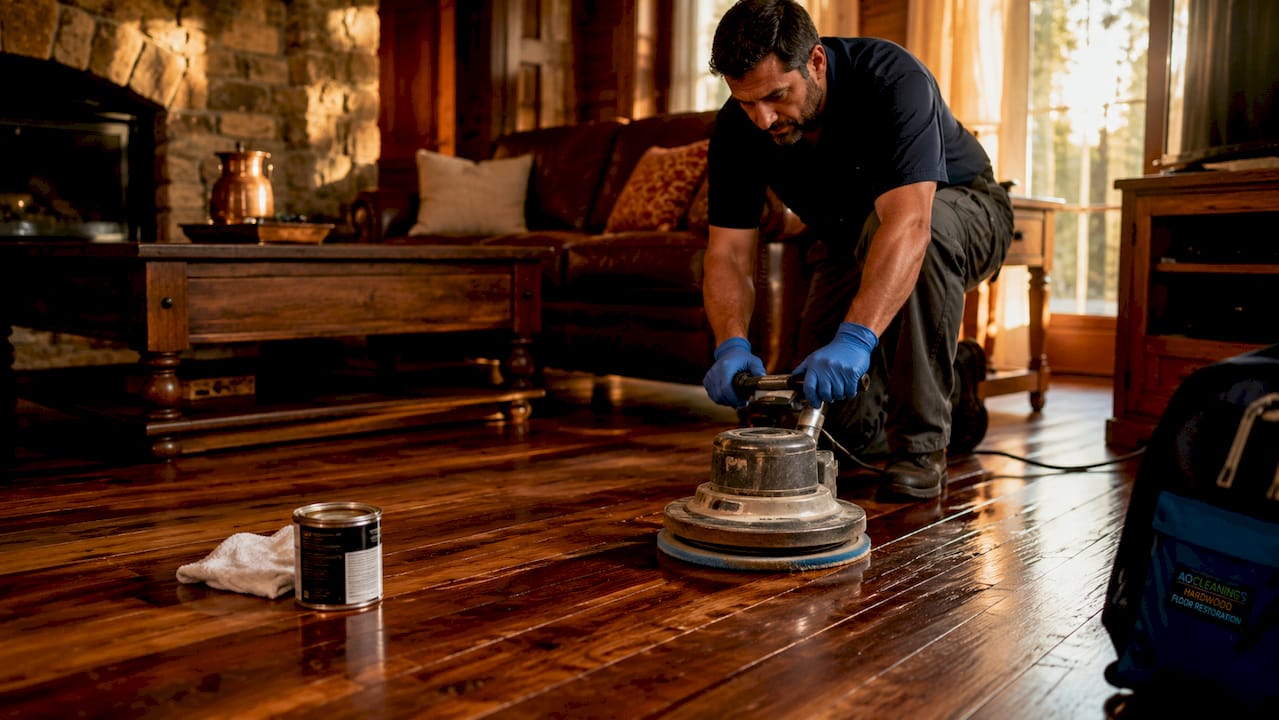
Full sand and refinish removes the entire finish layer and a thin layer of wood, then rebuilds the floor from bare wood up. This method fixes deep scratches, dents, and stains and supports a complete color change. It costs between $3.00 and $8.00 per square foot and takes 3–5 days. Dust output is significant, though contractors like Aosaveswoodfloors use dustless equipment to reduce that impact.
Factor | Screen and recoat | Full sand and refinish |
Cost per sq ft | $1.50–$3.00 | $3.00–$8.00 |
Time to complete | 1 day | 3–5 days |
Dust level | Minimal | Significant |
Changes stain color | No | Yes |
Fixes deep damage | No | Yes |
Best for | Light wear, dull finish | Scratches, dents, water stains |
Pro Tip: Run your hand across the floor in a raking light. If you feel ridges, deep gouges, or soft spots, screen and recoat will not fix them. Those floors need a full sand.
How to tell when your hardwood floors need refinishing in Waterloo, IL
Knowing when to call for floor refinishing services is as important as knowing which method to use. These are the clearest signs your floors are ready:
Dullness that cleaning cannot fix. If mopping and polishing no longer bring back the shine, the finish is depleted.
Visible scratches and scuffs. Surface scratches that catch light across the room indicate finish wear. Scratches that show raw wood mean the finish is gone.
Peeling or flaking finish. This is a sign of finish failure, often caused by moisture or age.
Gray or black discoloration. Dark spots near windows or doorways usually mean water has penetrated the wood.
Uneven color or fading. Sun exposure and foot traffic create worn paths that stand out against less-used areas.
The fastest diagnostic tool is a water test. Drop water on the floor and watch what happens. If the water beads up, the finish is still intact and a screen and recoat may be enough. If the water soaks into the wood within 60 seconds, the finish has failed and a full sand and refinish is needed to prevent permanent damage.
DIY restoration kits cost around $60, and hardwood floor restorers average $25, but these products only address minor surface scratches. They cannot fix finish failure, deep gouges, or water damage. Misreading your floor’s condition and applying a DIY product over a compromised finish can seal in moisture and make the problem worse.
Water damage is a specific concern in Waterloo, IL. Monroe County’s humid summers and cold winters create conditions that stress hardwood floors. Boards that have cupped, buckled, or developed soft spots may need replacement rather than refinishing. A professional assessment determines whether the planks retain enough thickness to withstand sanding safely.
What to expect during a professional floor refinishing project in Waterloo, IL
A professional refinishing project follows a clear sequence. Understanding each stage helps you prepare your home and set realistic expectations.
Clear the room. Remove all furniture, rugs, and breakables. Professionals will protect doorways and vents to contain dust.
Coarse sanding. Drum sanders handle the open floor area, starting with coarse grit to remove the old finish and level the surface. Edge sanders handle the perimeter where the drum cannot reach.
Progressive grit sanding. The crew moves through medium and fine grits to smooth the surface. Each pass is followed by vacuuming to remove dust before the next stage.
Stain application. If you are changing the color, stain goes on now. Water-based stains dry faster and have lower odor. Oil-based stains penetrate deeper and tend to produce richer color. This is the decision that most affects the final look of the room.
Finish coats. Professionals apply at least two coats of finish, with light sanding between coats. High-traffic areas receive three coats to build durability.
Curing. Floors are walkable in about 3 hours. However, waiting 7–14 days before placing furniture back protects the finish during its most vulnerable stage. Full cure takes 30 days, after which the finish reaches maximum hardness.
For an average Waterloo home with 500–800 square feet of hardwood, a screen and recoat finishes in one day. A full sand and refinish takes 3–5 days depending on room count and damage extent.
Pro Tip: After the project, sweep with a microfiber mop and avoid wet mopping for at least two weeks. Use felt pads under all furniture legs. These two habits extend the life of your new finish by years.
What are the typical costs and investment benefits of floor refinishing in Waterloo, IL?
Floor refinishing costs less than replacement in nearly every situation where the planks are thick enough to sand. Restoration is more cost-effective than replacement when the wood has sufficient thickness remaining. A professional assessment confirms whether your floors qualify.
Option | Estimated cost per sq ft | Project timeline | Disruption level |
Screen and recoat | $1.50–$3.00 | 1 day | Low |
Full sand and refinish | $3.00–$8.00 | 3–5 days | Moderate |
Full floor replacement | $8.00–$15.00+ | 1–2 weeks | High |
Several factors push costs higher or lower within these ranges. Floor size is the biggest driver. Larger square footage lowers the per-foot cost because setup and equipment time is spread across more area. Damage extent matters too. Floors with deep gouges, extensive water staining, or uneven boards take longer to sand properly. Finish type also affects price. Water-based polyurethane costs more than oil-based but dries faster and has less odor.
“Homeowners often assume their floors are past saving. In most cases, they are not. The wood just needs to be properly assessed before any decision is made.” — Aosaveswoodfloors
The investment case for refinishing is strong. Restored hardwood floors improve a home’s appearance immediately and add measurable value at resale. Buyers in the St. Louis metro area and Monroe County consistently respond well to hardwood floors in good condition. Spending $1,500–$3,000 on refinishing rather than $8,000–$15,000 on replacement is a straightforward financial decision when the wood is salvageable. For a detailed cost breakdown, the restoration vs replacement guide from Aosaveswoodfloors covers current pricing across service types.
Key Takeaways
Floor refinishing in Waterloo, IL is almost always more cost-effective than replacement, and choosing the right method depends entirely on the condition of your existing wood.
Point | Details |
Two core methods exist | Screen and recoat suits light wear; full sand and refinish fixes deep damage and color changes. |
Water test guides decisions | Water soaking into wood within 60 seconds means the finish has failed and full refinishing is needed. |
Curing time matters | Floors are walkable in 3 hours but need 7–14 days before furniture returns and 30 days for full cure. |
Refinishing beats replacement | Full replacement costs $8.00–$15.00+ per sq ft versus $3.00–$8.00 for a full refinish. |
Professional assessment is critical | Plank thickness determines whether sanding is safe; a pro confirms this before any work begins. |
What I’ve learned after 20 years of refinishing floors in this region
The most common mistake I see Waterloo homeowners make is calling for a quote after they have already decided to replace. By that point, they have mentally committed to the expense and the disruption. What they have not done is run the water test or had anyone check the plank thickness. Nine times out of ten, those floors can be saved.
The other thing I have learned is that Waterloo’s climate is harder on floors than most homeowners realize. The humidity swings between summer and winter cause wood to expand and contract. Floors near exterior doors and in kitchens take the most abuse. That wear pattern is normal and does not mean the floor is ruined. It means the floor needs attention before the damage goes deeper.
My honest advice: do not wait until the finish is completely gone. A screen and recoat at the right time costs a fraction of a full sand. Catching the problem early is always cheaper than fixing it late. If you are unsure where your floor stands, a professional floor assessment takes the guesswork out of the decision entirely.
— Jim
Hardwood floor refinishing services for Waterloo, IL homeowners
Waterloo homeowners do not have to look far for experienced hardwood floor refinishing help. Aosaveswoodfloors has served Monroe County and the greater St. Louis metro area since 2003, with over 450 Google reviews backing their work.

Their services cover every situation: screen and recoat for lightly worn floors, full sand and refinish for deeper damage, stain changes, and protective finish application. Every job uses dustless equipment and eco-friendly products. Most restoration work finishes in a single day, with floors walkable in about three hours. If you are weighing your options, their hardwood floor refinishing in Clayton, Missouri page shows the full scope of what professional refinishing looks like. Before you replace, let them take a look.
FAQ
What is floor refinishing?
Floor refinishing is the process of sanding hardwood floors to bare wood and applying new finish coats to restore appearance and durability. It is distinct from resurfacing, which only addresses the top finish layer without deep sanding.
How often do hardwood floors need refinishing?
Refinishing frequency depends on foot traffic and wear patterns. Most hardwood floors in residential homes need a full refinish every 7–10 years, with a screen and recoat possible between those cycles.
Can all hardwood floors be refinished?
Not all floors qualify. Planks must retain enough thickness to withstand sanding safely. A professional assessment confirms whether your specific floor can be refinished or needs replacement.
How long does floor refinishing take in Waterloo, IL?
A screen and recoat takes about one day. A full sand and refinish takes 3–5 days. Floors are walkable roughly 3 hours after the final coat, but furniture should wait 7–14 days to protect the curing finish.
Is DIY floor refinishing a good option?
DIY kits work only for minor surface scratches. Full refinishing requires drum sanders, edge sanders, and professional-grade finish products. Improper sanding can permanently damage planks, making professional service the safer choice for most homeowners.
Recommended

Comments