


Floor Maintenance Between Refinishes: A Homeowner's Guide

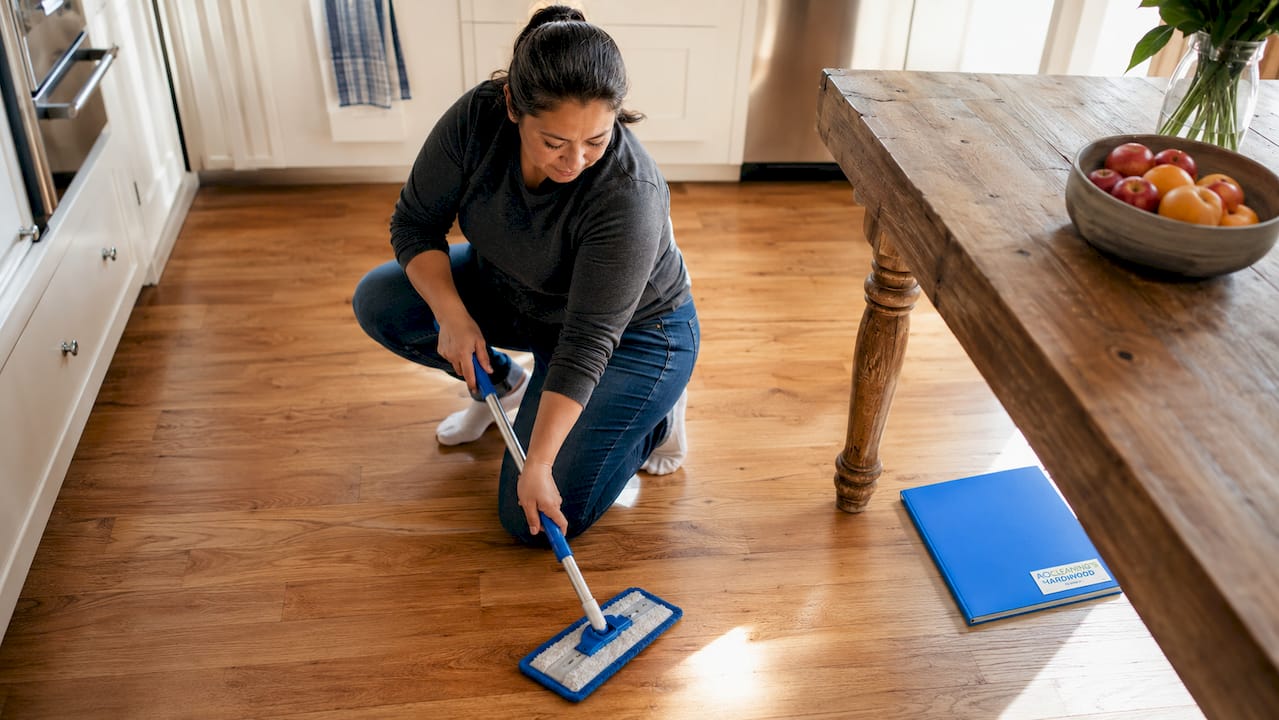
Floor maintenance between refinishes is the routine care, cleaning, and protective treatments that preserve your hardwood floor’s finish and extend its life until the next full refinishing is required. The industry term for this practice is “intercoat maintenance,” and it covers everything from daily dust mopping to periodic professional screen-and-recoat services. The National Wood Flooring Association sets the standard here: consistent upkeep between refinishing cycles is what separates floors that last decades from floors that need replacing. Aosaveswoodfloors has worked with homeowners across central Illinois and the St. Louis metro area since 2003, and the pattern is clear. Floors that receive regular care between refinishes stay beautiful far longer and cost far less to restore.
What is floor maintenance between refinishes?
Floor maintenance between refinishes covers three layers of care: daily cleaning habits, periodic deep cleaning, and professional finish renewal. Each layer protects the finish from a different threat. Daily habits stop abrasive grit from scratching the surface. Periodic cleaning removes buildup before it bonds to the finish. Professional renewal restores the protective coat before it wears through to bare wood.
The core routine tasks every homeowner should follow include:
Dust mopping daily or every other day. The National Wood Flooring Association recommends dust mopping every 1–2 days to prevent abrasive grit from grinding into the finish. Grit acts like sandpaper underfoot, and even light foot traffic accelerates wear when particles are left on the surface.
Damp mopping weekly with a pH-neutral cleaner. Use a barely damp mop and a cleaner formulated for hardwood floors. Never let standing water sit on wood. Excess moisture causes swelling, warping, and finish breakdown over time.
Spot cleaning spills immediately. Liquid left on hardwood penetrates the finish within minutes. Blot spills with a dry cloth rather than wiping, which spreads the liquid further.
Using quality doormats at every entry point. Up to 80% of dirt on hardwood floors is tracked in from outside. A mat at each door intercepts that dirt before it reaches your floors.
Enforcing a no-shoes policy indoors. A no-shoes policy is the single most effective way to keep road salt, chemicals, and abrasive debris off your finish.
Pro Tip: Use a microfiber dust mop rather than a broom. Brooms push fine particles around; microfiber traps them. Check the floor maintenance routine best practices from Aosaveswoodfloors for a full weekly schedule.
What is screening and recoating, and when do you need it?
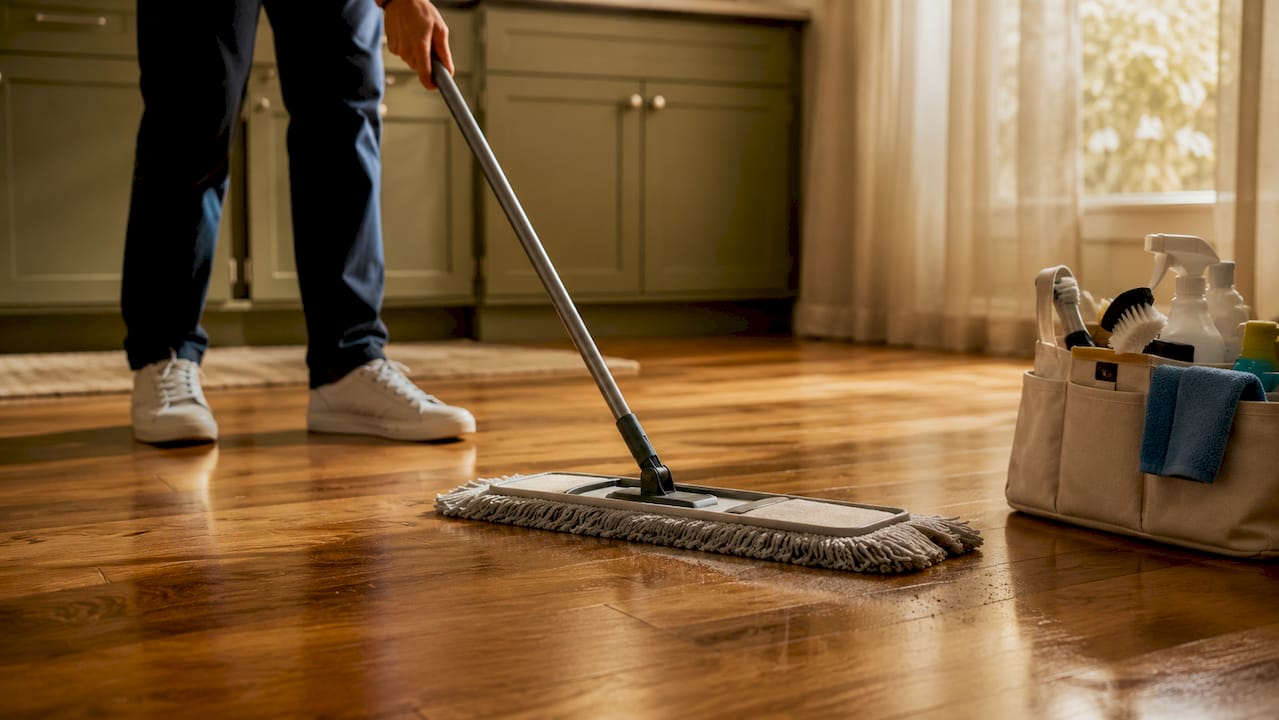
Screen-and-recoat is a professional maintenance service that lightly abrades the existing finish with a screen pad and applies a fresh coat of finish on top, without sanding down to bare wood. The result is a renewed protective layer and restored sheen at a fraction of the cost of full refinishing. This service sits between routine cleaning and full sanding in the maintenance timeline.
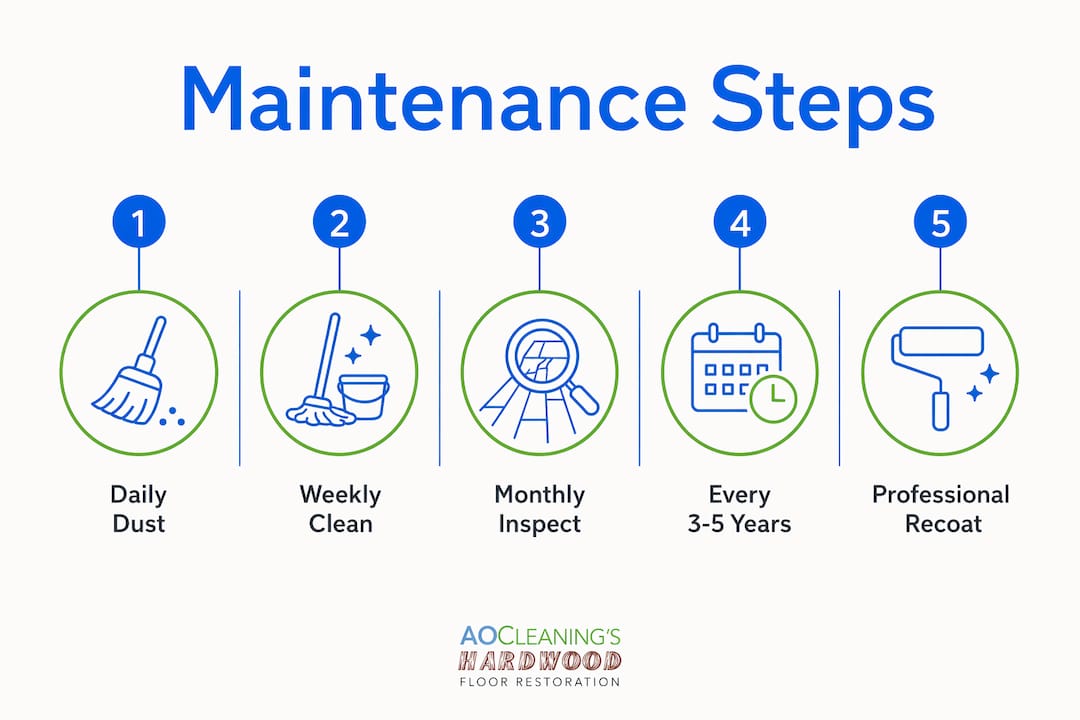
The standard schedule works like this:
Years 1–2: Daily and weekly cleaning routines protect the finish from grit and moisture.
Years 3–5: Screen-and-recoat every 3–5 years depending on foot traffic, restoring finish protection before wear becomes visible.
Years 7–10: Full refinishing every 7–10 years in residential settings, which involves sanding to bare wood and applying new finish from scratch.
The gap between those timelines is where most homeowners lose money. Skipping the screen-and-recoat step forces a full refinish years earlier than necessary.
Maintenance type | Frequency | What it addresses |
Dust mopping | Daily to every other day | Abrasive grit and surface debris |
Damp mopping | Weekly | Dirt buildup and surface film |
Screen-and-recoat | Every 3–5 years | Finish wear before wood exposure |
Full sand-and-refinish | Every 7–10 years | Deep scratches, bare wood, staining |
Not every floor qualifies for screen-and-recoat. Screen-and-recoat is only effective on floors whose finish is still intact and was applied within the last 5 years. A finish in poor condition or one that has worn through to raw wood requires full sanding instead. Applying a recoat over a failing finish produces peeling and adhesion failure within months.
Pro Tip: Schedule a professional screen-and-recoat before you see obvious dullness. By the time the floor looks worn, the finish may already be too thin to bond a new coat properly.
How do you know when your floor needs maintenance or refinishing?
The condition of the finish, not the appearance of dirt, determines whether your floor needs cleaning, recoating, or full refinishing. A dirty floor and a worn floor look similar to the untrained eye, but they require completely different responses. Cleaning a worn floor does nothing to restore protection. Refinishing a dirty floor wastes money on a problem a mop would solve.
Use these signals to read your floor correctly:
The water bead test. Sprinkle a few drops of water on the floor. If the water beads up, the finish is intact. If the water soaks in or darkens the wood within seconds, the finish has worn through and the wood is exposed.
Visible dullness in high-traffic paths. Dullness in a straight line from the front door to the kitchen is finish wear, not dirt. Cleaning will not restore the sheen.
Deep scratches that reach the wood. Surface scratches in the finish layer can often be addressed with recoating. Scratches that expose raw wood require sanding.
Finish peeling or flaking. Peeling finish means adhesion has failed. Screen-and-recoat will not bond to a peeling surface. Full refinishing is the only fix.
Gray or black staining in the wood. Dark staining below the surface indicates moisture has penetrated the finish and reached the wood fibers. This requires sanding to remove.
The critical inflection point is the moment the finish wears through to bare wood. Before that point, recoating is fast and affordable. After it, you are looking at a full sand-and-refinish project. Catching the floor at the right moment is the entire game in floor upkeep. Aosaveswoodfloors recommends a professional assessment every 2–3 years to catch wear before it crosses that line.
What common mistakes damage hardwood floors between refinishes?
The most damaging mistakes homeowners make are not acts of neglect. They are acts of misguided cleaning. Using the wrong tools or products accelerates finish wear faster than foot traffic alone.
Steam mops. Steam mops, vinegar solutions, and wet Swiffer pads all cause damage that accelerates finish wear and warping. Steam drives moisture into the wood grain, which swells the boards and breaks down the finish bond from below.
Vinegar and DIY cleaners. Vinegar is acidic and strips finish over time. Many homeowners use it because it cleans well initially, but the cumulative damage shows up as dullness and finish breakdown within a year or two.
Wet mopping. Any mop that leaves standing water on hardwood is the wrong mop. Wring out thoroughly until the mop head is barely damp.
Skipping doormats. Without mats at entry points, abrasive grit from outside reaches the floor with every step. The finish wears in high-traffic paths within months rather than years.
Delaying recoating. Delaying recoating until the finish wears through to bare wood turns an affordable maintenance job into a full sand-and-refinish project. The cost difference is significant.
Pro Tip: Humidity control matters as much as cleaning. Wood expands and contracts with moisture changes. Keep indoor humidity between 35% and 55% year-round to prevent gaps, cupping, and finish cracking. A whole-home humidifier or dehumidifier is a worthwhile investment for hardwood floor owners.
Controlling indoor humidity is one of the most overlooked best practices for floor care. Most homeowners focus entirely on cleaning and miss the environmental factor that causes the most structural damage over time.
Key takeaways
Consistent floor maintenance between refinishes is the most cost-effective way to protect your hardwood investment and delay expensive full refinishing for 7–10 years.
Point | Details |
Dust mop every 1–2 days | Removes abrasive grit before it scratches and wears down the finish. |
Screen-and-recoat every 3–5 years | Restores finish protection before wear reaches bare wood. |
Use the water bead test | Determines whether the finish is intact or has worn through to raw wood. |
Avoid steam mops and vinegar | Both accelerate finish breakdown and can cause warping over time. |
Act before the inflection point | Recoating a worn-but-intact finish costs far less than a full sand-and-refinish. |
What I’ve learned after 20 years of watching homeowners maintain their floors
The most common mistake I see is not neglect. It is misplaced effort. Homeowners scrub their floors with the wrong products, convinced they are doing the right thing, and then wonder why the finish looks worse every year. Vinegar is the biggest offender. It smells clean, it cuts grease, and it slowly destroys the finish coat every time you use it.
The second mistake is waiting. I have walked into homes where the floor looked “fine” to the owner but the finish had worn through in three or four spots. At that point, screen-and-recoat is no longer an option. The window closes faster than most people expect, especially in homes with kids, dogs, or heavy foot traffic near the kitchen.
What actually works is boring but reliable: a microfiber dust mop every day or two, a pH-neutral cleaner on a barely damp mop once a week, good mats at every door, and shoes off at the entry. That routine, done consistently, keeps a floor looking sharp for years. Then a professional recoat every few years puts the finish back where it needs to be.
The homeowners who get the most life out of their floors are not the ones who clean the hardest. They are the ones who clean correctly and call a professional before the floor tells them they waited too long. Proactive scheduling saves real money. A screen-and-recoat is a fraction of the cost of full sanding. That math is simple, but it only works if you act at the right time.
— Jim
Aosaveswoodfloors: professional floor care when you need it most
Routine home care keeps your floors looking good day to day, but professional services are what reset the clock on your finish.

Aosaveswoodfloors offers hardwood floor clean and buff services for a quick refresh, screen-and-recoat treatments to restore finish protection before wear becomes a problem, and full sand-and-refinishing when floors need a complete reset. Most services are completed in a single day, with floors ready to walk on in about three hours. Serving homeowners across St. Louis, Monroe, and Madison Counties, Aosaveswoodfloors has built a reputation as the most trusted hardwood floor maintenance company in the region. Before you replace your floors, let them take a look.
FAQ
What is floor maintenance between refinishes?
Floor maintenance between refinishes is the routine cleaning, protective care, and periodic professional treatments that preserve a hardwood floor’s finish between full refinishing cycles. It includes daily dust mopping, weekly damp mopping, and professional screen-and-recoat services every 3–5 years.
How often should hardwood floors be screened and recoated?
Industry standards call for screen-and-recoat every 3–5 years depending on foot traffic. This service restores finish protection before wear reaches the bare wood, avoiding the need for a full sand-and-refinish.
What cleaning products should I avoid on hardwood floors?
Avoid steam mops, vinegar solutions, and wet Swiffer pads. All three accelerate finish wear and can cause warping by driving moisture into the wood grain.
How do I know if my floor needs refinishing or just cleaning?
Use the water bead test: drop a few drops of water on the floor. If the water beads, the finish is intact and cleaning is enough. If the water soaks in, the finish has worn through and professional refinishing is needed.
Can I screen-and-recoat a floor that has not been maintained?
Screen-and-recoat only works on floors with a finish that is still intact and in good condition. A finish older than 5 years or in poor condition will not bond properly to a new coat, and full sanding is required instead.
Recommended

Comments