


Floor Cleaning vs. Restoration: What Homeowners Must Know

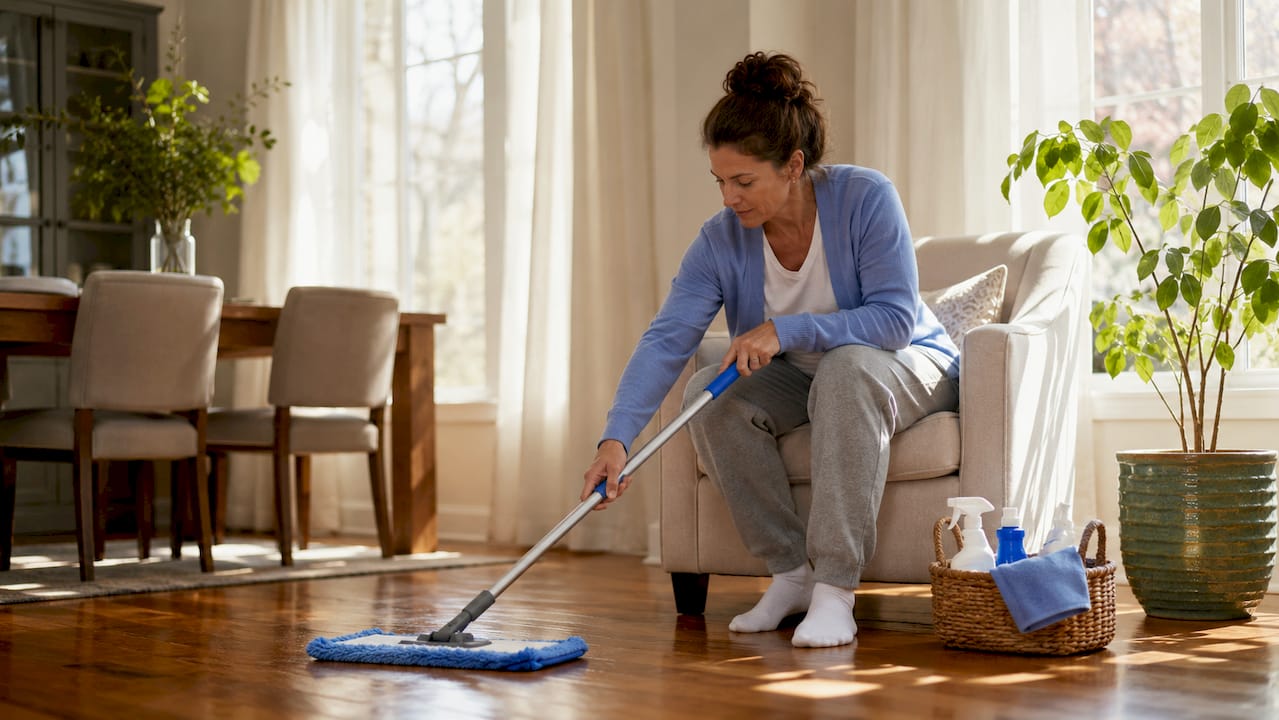
Floor cleaning is routine surface maintenance. Floor restoration is corrective rehabilitation that repairs worn finishes, scratches, and structural damage. The difference between floor cleaning and restoration is not just a matter of intensity. It is a difference in purpose, method, and outcome. Cleaning keeps your floors looking good day to day. Restoration brings them back from damage that no mop or cleaner can fix. Knowing which one your floors need saves you money and prevents the kind of neglect that turns a refinishable floor into a replacement project. Aosaveswoodfloors has helped homeowners across central Illinois and the St. Louis metro area make that call correctly for over 20 years.
What does floor cleaning involve and why is it important?
Floor cleaning is the regular removal of surface dirt, dust, grime, and spills to preserve your floor’s finish and appearance. It does not alter the floor’s structure or repair damage. Its job is to stop damage from starting.
The most common floor cleaning methods for hardwood include:
Dry dust mopping daily to remove abrasive grit that acts like fine sandpaper underfoot
Sweeping with a soft-bristle broom to clear debris before it scratches the finish
Damp mopping weekly with a pH-neutral, hardwood-safe cleaner and a nearly dry mop
Spot cleaning spills immediately to prevent moisture from penetrating the finish
Daily cleaning manages abrasive grit that would otherwise grind against your finish with every step. That grit is one of the fastest ways to dull a hardwood floor. Removing it consistently delays the need for professional restoration by months or even years.
Cleaning frequency matters as much as method. High-traffic areas like kitchens and entryways need daily attention. Lower-traffic rooms can get by with weekly sweeping and occasional damp mopping. The goal is always the same: keep abrasives off the surface and moisture out of the wood.
Improper products cause deterioration faster than skipping cleaning altogether. Steam mops force moisture into the wood grain and can cause warping. Vinegar and ammonia-based cleaners strip finish over time. Oil soaps leave residue that clouds the surface and complicates future restoration work.
Pro Tip: Always wring your mop until it is nearly dry before touching hardwood. Standing water is the enemy of wood floors, even sealed ones.
When and why is floor restoration necessary?
Floor restoration is necessary when cleaning no longer improves your floor’s appearance. It addresses damage that lives below the surface, in the finish layer or the wood itself.
The clearest signs your floors need restoration include:
Scratches you can feel with your fingernail, not just see
Dull finish that does not improve after a thorough cleaning
Gray or black staining near pet areas or water sources
Worn patches in high-traffic zones where the finish has thinned to bare wood
Peeling or flaking finish that lifts away from the surface
Visible wear like scratches and loss of sheen after cleaning signals that restoration is overdue. Standard cleaning cannot fix these issues. Ignoring them accelerates damage to the wood substrate itself, which is far more expensive to address.
Restoration techniques range from light to intensive depending on the damage level. A screen and recoat scuffs the existing finish and applies a fresh coat. Full sanding removes the finish entirely and takes the floor back to bare wood before refinishing. Wax removal strips old product buildup before a new finish can bond properly. Each method matches a specific level of wear.
Professional evaluation every 5 to 7 years is the industry standard for hardwood floors. That interval keeps the protective layer intact before wear reaches raw wood. Waiting longer often means the difference between a screen and recoat and a full sand and refinish, which costs significantly more.
Humidity is a factor most homeowners overlook. Moisture problems like cupping or gapping must be resolved before any restoration attempt. Sanding or recoating over an unstable floor will fail. The fix will not hold, and you will pay for the work twice.
Pro Tip: Before scheduling restoration, run a dehumidifier for two weeks if your home runs humid. Restoration applied to a stable, dry floor lasts significantly longer.
How do cleaning and restoration differ in methods, tools, and outcomes?
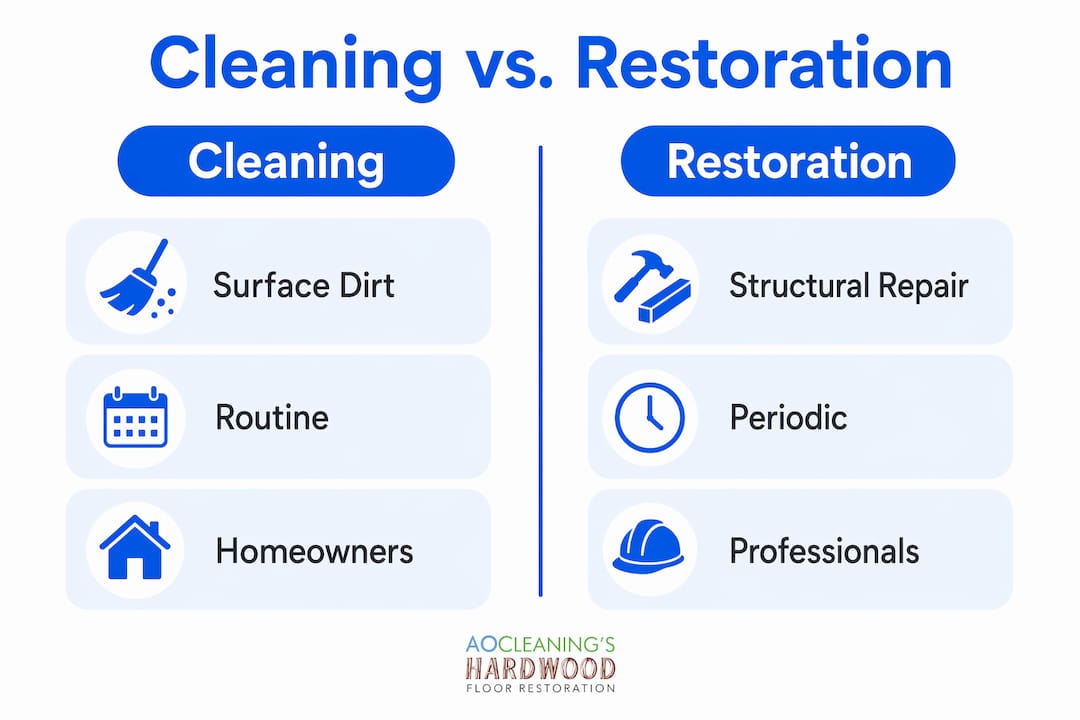
Deep cleaning is often mistaken as a substitute for restoration. It is not. Cleaning removes surface contamination. Restoration changes the finish structure. These are fundamentally different processes.
Category | Floor cleaning | Floor restoration |
Purpose | Remove surface dirt and maintain appearance | Repair damage, worn finish, and scratches |
Frequency | Daily to weekly | Every 5–7 years with professional evaluation |
Methods | Sweeping, dust mopping, damp mopping | Sanding, screening, recoating, stripping |
Tools | Mop, broom, pH-neutral cleaner | Floor sander, buffer, abrasive screens, finish applicator |
Outcome | Clean surface, preserved finish | Renewed finish, extended floor lifespan |
Who performs it | Homeowner | Professional technician |
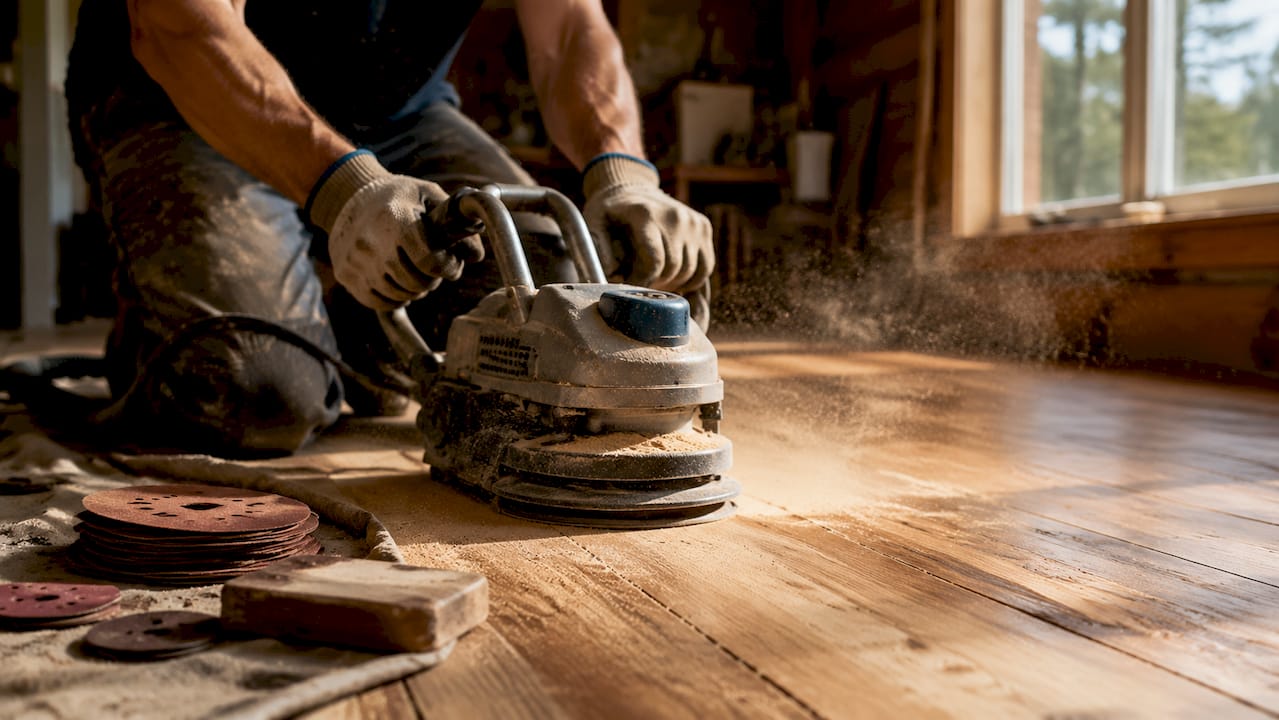
The equipment gap between the two is significant. Cleaning requires tools any homeowner already owns. Restoration requires professional-grade sanders, dustless containment systems, and finish applicators that apply product evenly across the full floor. Using consumer-grade equipment on a restoration job produces uneven results and can damage the wood.
Cost and time commitments also differ sharply. Routine cleaning costs nothing beyond supplies and takes minutes. Restoration is a professional service with a higher upfront cost. Timely restoration is more cost-effective than allowing damage to progress to full floor replacement. A floor replaced prematurely costs several times more than one restored at the right time.
Proper floor maintenance can extend hardwood lifespan up to 100 years compared to 20–30 years with neglect. That gap is almost entirely explained by the combination of consistent cleaning and timely restoration. Neither works as well without the other.
How to maintain your hardwood floors between professional services
The goal between professional visits is simple: slow down wear and keep the finish intact. A few consistent habits accomplish this without any special equipment.
Dust mop every day in high-traffic areas. Grit tracked in from outside is the primary cause of finish wear. Removing it daily is the single highest-impact habit you can build.
Wipe spills within minutes. Water left on hardwood seeps into seams and swells the wood beneath the finish. A dry cloth takes seconds. Repairs take days and cost money.
Use furniture pads on every leg. Chair and table legs drag across the finish hundreds of times a year. Felt pads eliminate that friction entirely.
Run a water bead test seasonally. Drop a few drops of water on the floor. If they bead up, the finish is intact. If they absorb into the wood, the finish has worn thin and a professional evaluation is due.
Control indoor humidity year-round. Indoor humidity between 35% and 55% keeps wood stable. Below that range, floors shrink and gap. Above it, they swell and cup. A whole-home humidifier or dehumidifier makes this manageable.
Applying wax or polish to modern factory-finished hardwood causes hazy buildup that bonds to the surface. That buildup prevents new finish from adhering properly during restoration, which raises the cost and complexity of the job. Skip the wax unless a professional specifically recommends it for your floor type.
You can find a full breakdown of recommended intervals and care steps in this hardwood floor maintenance guide from Aosaveswoodfloors. Knowing your floor’s finish type and age changes which products and methods are safe to use.
Pro Tip: Take a photo of your floors in good light every six months. Side-by-side comparisons reveal gradual wear that is easy to miss day to day. When the change becomes visible, it is time to call a professional.
Key Takeaways
Floor cleaning maintains surface appearance daily, while restoration repairs structural finish damage and should be professionally evaluated every 5–7 years to prevent costly floor replacement.
Point | Details |
Cleaning is preventative | Daily dust mopping removes grit that wears down finish faster than almost anything else. |
Restoration is corrective | Scratches you can feel and dull finish that survives cleaning both signal that restoration is needed. |
Deep cleaning is not restoration | Cleaning removes surface contamination; only mechanical processes like sanding change the finish structure. |
Humidity controls outcomes | Stabilize indoor humidity between 35% and 55% before any restoration attempt or results will not hold. |
Timing saves money | Restoration at the right interval costs far less than replacing floors damaged by delayed care. |
What 20 years of floor care actually taught me
Most homeowners I talk to fall into one of two camps. They either clean obsessively and never restore, or they ignore everything until the floor looks bad enough to replace. Both approaches cost more money than they need to.
The obsessive cleaners are often using the wrong products. I have seen beautiful hardwood floors clouded by years of oil soap buildup or warped by steam mops that were marketed as safe for wood. Cleaning frequency is not the problem. Product choice is.
The neglecters usually waited too long because they did not know what to look for. A floor that needs a screen and recoat is a one-day job at a reasonable cost. That same floor, left another two years, may need a full sand and refinish. Wait longer still, and you are looking at replacement. The signs your floors need refinishing are visible well before the damage becomes irreversible. You just have to know what to look for.
The homeowners who get the most out of their floors treat cleaning and restoration as a system, not separate decisions. They clean consistently, they check the finish twice a year, and they call a professional when the water bead test fails. That approach keeps floors looking good for decades without the drama of emergency repairs.
One thing I will say plainly: do not restore a floor without addressing humidity first. I have seen beautiful refinish jobs fail within months because the home ran too humid. The finish bubbles, the wood moves, and the work has to be redone. Fix the environment before you fix the floor.
— Jim
Hardwood floor restoration services from Aosaveswoodfloors
Aosaveswoodfloors has been restoring hardwood floors across central Illinois and the St. Louis metro area since 2003, with over 450 Google reviews backing their reputation.
If your floors have passed the water bead test or show scratches that cleaning cannot touch, a professional assessment tells you exactly what they need. Aosaveswoodfloors offers a full range of services from screen and recoat to full sand and refinish, all completed with dustless equipment and eco-friendly products. Most jobs finish in a single day, with floors ready to walk on in about three hours. For homeowners in the St. Louis area, their Clayton floor refinishing service is a direct path to floors that look new without the cost of replacement. Before you refloor it, let them restore it.
FAQ
What is the main difference between floor cleaning and restoration?
Floor cleaning removes surface dirt and preserves the existing finish. Restoration repairs damage to the finish or wood itself through mechanical processes like sanding and recoating that cleaning cannot accomplish.
How often should hardwood floors be professionally restored?
Professional evaluation for recoating or restoration is recommended every 5–7 years. That interval prevents wear from reaching the raw wood, which is far more expensive to repair.
Can deep cleaning replace professional floor restoration?
No. Deep cleaning removes surface contamination but does not alter the finish structure. Restoration requires mechanical processes like sanding and abrasion that only professional equipment can perform correctly.
What happens if I wax my hardwood floors before restoration?
Wax and polish applied to modern factory-finished hardwood create a hazy buildup that prevents new finish from bonding. This raises the cost and complexity of restoration and may require additional stripping steps before refinishing can begin.
How do I know if my floors need cleaning or restoration?
Run the water bead test. Drop a few drops of water on the floor. If they absorb into the wood rather than beading up, the finish has worn thin and restoration is likely needed. Scratches you can feel with your fingernail also confirm it is time for a professional evaluation.
Recommended

Comments