


How Long Floor Refinishing Takes: 2026 Guide

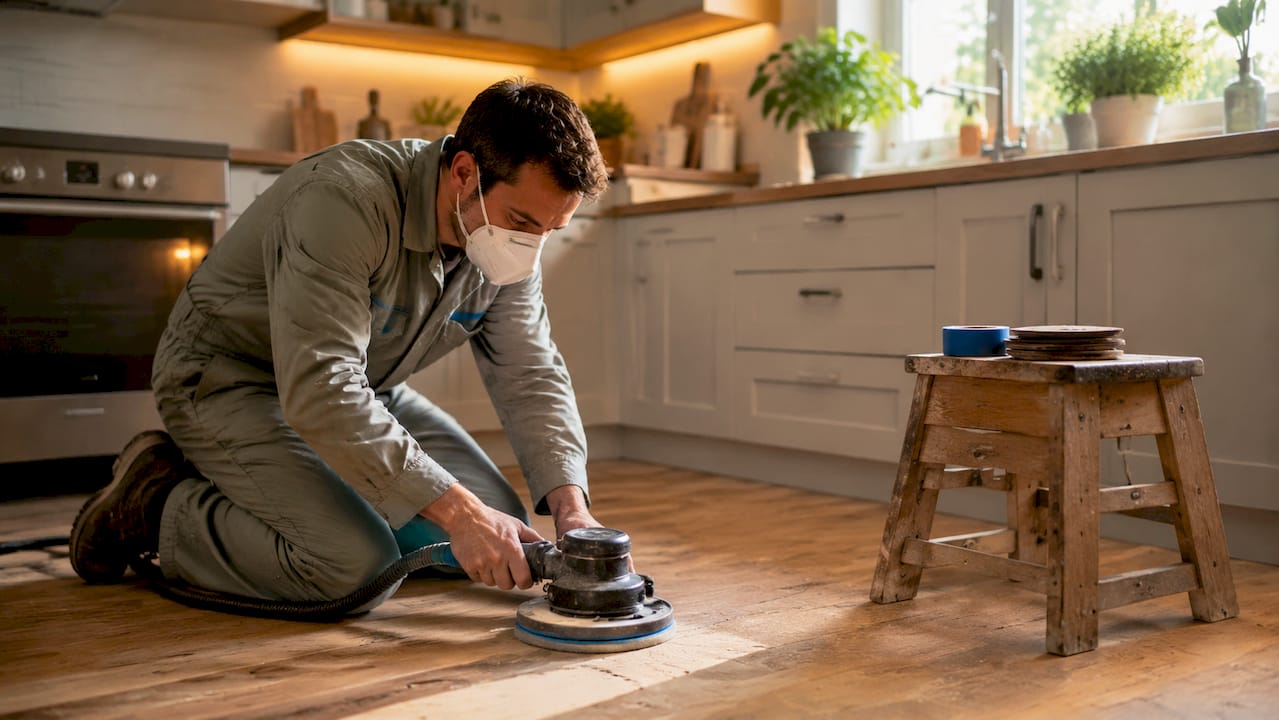
Hardwood floor refinishing typically requires 3–5 active days to complete, with additional curing time before you can place furniture or rugs back down. That timeline covers the full process: sanding, staining, and applying finish coats. How long floor refinishing takes in your home depends on floor size, current condition, and the finish type you choose. Understanding the floor refinishing duration before you start helps you plan your schedule, arrange temporary living space, and avoid the most common mistake homeowners make: walking on floors too soon.
How long does floor refinishing take, phase by phase?

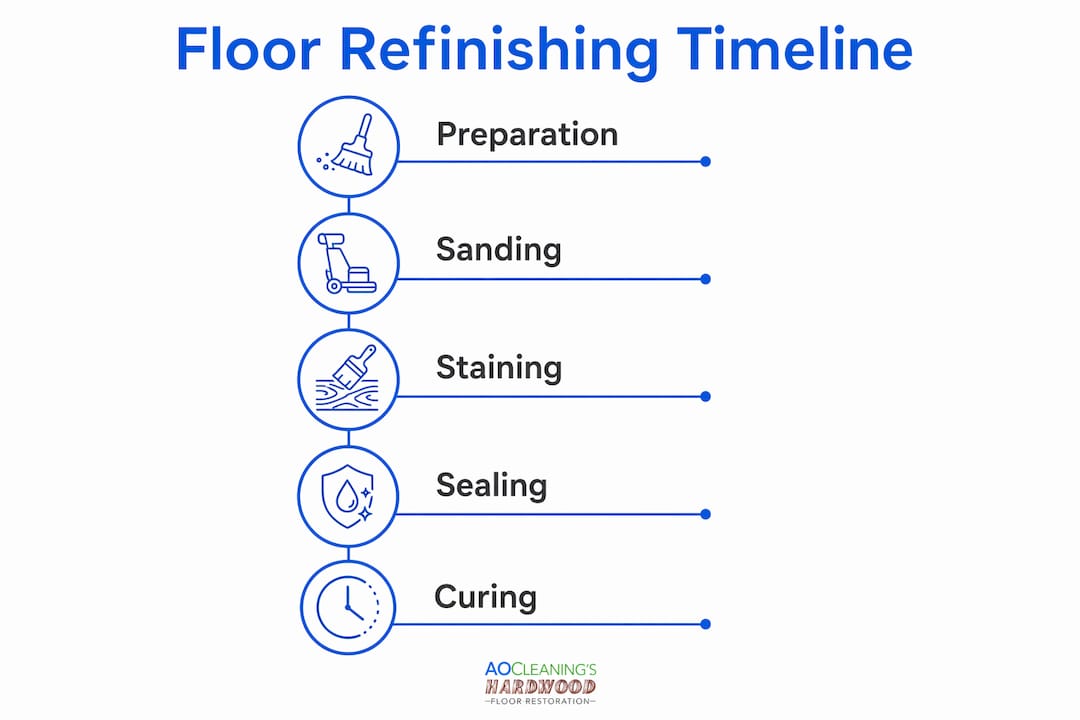
The floor refinishing process timeline breaks into four distinct phases. Each one adds days to the schedule, and skipping ahead between them damages the finish.
Day-by-day breakdown for a typical 1,000 sq ft project:
Day 1: Sanding and prep. The crew sands down the existing finish and levels the surface. Sanding and prep usually take 1–2 days depending on floor condition and square footage. Dustless equipment keeps the mess contained, but this is the loudest and most disruptive part of the job.
Day 2: Staining (if applicable). If you want a color change, stain goes on after sanding. Stain needs to dry fully before any finish coat is applied, which adds 4–8 hours minimum. Skipping stain cuts a half day off the schedule.
Day 3: First finish coat. The first coat of polyurethane or oil-based finish goes down. Each coat requires drying time before the next one can be applied. Multiple finish coats and required curing extend the active timeline well beyond the sanding days alone.
Day 4: Second and third finish coats. Most professional jobs apply two to three topcoats. Each coat adds drying time of 4–8 hours for water-based finishes, or longer for oil-based products.
Day 5: Final inspection and light use. Light sock-foot traffic is possible roughly 24 hours after the final coat. The floors look finished, but the chemistry is still working.
For a standard home, 1,000 sq ft averages 3–5 days of active work, with complex projects stretching to 7 days. That figure does not include the curing period that follows.
What factors make the refinishing timeline shorter or longer?
Not every project runs on the same clock. Several variables push the average floor refinishing time up or down significantly.
Floor size. Larger homes or multi-room projects take more time at every phase. Whole-house refinishing can run 5–10 active days for homes over 1,000 sq ft, plus the curing period that follows.
Floor condition. Damaged floors require extra prep before sanding even begins. Deep scratches, pet stains, and worn boards all need repair work. Extra prep time for water damage, deep scratches, or old finish buildup lengthens the overall timeline beyond typical estimates. A floor in poor condition can add a full day or more to the schedule.
Finish type. Water-based finishes dry faster than oil-based ones. Finish type strongly influences drying and curing times, with water-based products allowing recoating in as little as 2–4 hours versus 8–24 hours for oil-based formulas. That difference compounds across multiple coats.
Job complexity. Rooms with lots of corners, stairs, or irregular layouts take longer to sand and coat evenly. Open floor plans move faster.
Stain choice. Simple stain jobs with minimal repairs can shorten the schedule to as few as 2 days. Dramatic color changes or custom stain blends add time for testing and drying.
The floor’s age and wood species also matter. Older floors or softer woods like pine require more careful sanding to avoid gouging, which slows the prep phase. You can read more about this in Aosaveswoodfloors’ guide on floor age and refinishing.
Drying time vs. curing time: why the difference matters
This is where most homeowners get into trouble. Dry time and cure time are not the same thing, and confusing them is the most common mistake in the refinishing process.
Dry time means the finish has hardened enough for light foot traffic. You can walk on the floor in socks after about 24 hours. The surface feels solid and looks done.
Cure time means the finish has fully hardened at the molecular level. That process takes much longer. Full curing for heavy use and rugs takes 7–30 days depending on finish type. Placing a heavy couch on a floor that is dry but not cured will leave permanent dents.
Here is what the timeline looks like in practice:
24 hours: Light sock-foot traffic only
48–72 hours: Shoes and normal foot traffic
7 days: Light furniture can return (chairs, small tables)
14–30 days: Heavy furniture, area rugs, and full normal use
Homeowners often confuse dry time with cure time, which leads to premature use that damages the finish before it has set. The floor looks perfect. The chemistry is not finished yet.
Pro Tip: Ask your contractor for the specific manufacturer’s cure window for the finish brand they use. Even water-based polyurethane finishes vary widely in cure times based on humidity, ventilation, and coat thickness.
How to plan your refinishing project without disrupting your life
Good planning cuts stress and protects your floors. The time required for floor refinishing is predictable once you know the variables. Here is how to stay organized.
Pre-select your stain color before the crew arrives. Changing your mind on stain day adds hours or a full day to the schedule. Get samples on your actual floor beforehand.
Clear rooms completely before Day 1. Moving furniture mid-project slows the crew and risks scratching freshly sanded wood. Empty the space entirely the night before work begins.
Plan staged furniture returns. Staged furniture replacement protects the finish during curing. Bring light pieces back after 7 days and hold heavy items until the 14–30 day mark.
Arrange temporary living space. Sanding days are loud and dusty even with dustless equipment. If you have kids or pets, plan to be out of the house during active sanding. Pets are especially sensitive to finish fumes during coat application days.
Coordinate with your contractor on finish type. If you need the floors back in use quickly, ask about water-based finishes. They dry faster between coats and reach light-use readiness sooner than oil-based products.
Use a refinishing checklist. Aosaveswoodfloors has a detailed refinishing project checklist that walks you through every prep step before the crew shows up.
Pro Tip: Schedule refinishing for a stretch when you can stay somewhere else for at least 2–3 nights. You will protect the floors and avoid the temptation to walk on them too early.
Managing renovation logistics around a refinishing project takes real planning. Onyx Removals has a useful guide on planning home renovations that covers how to coordinate household moves and routines during projects like this one.
Key takeaways
The floor refinishing process timeline runs 3–5 active days for most homes, but full curing before heavy furniture use takes up to 30 days depending on finish type and floor condition.
Point | Details |
Active work timeline | Most homes require 3–5 days of active refinishing work, up to 7 for complex projects. |
Drying vs. curing | Floors are walkable in 24 hours but need 7–30 days to fully cure before rugs and heavy furniture. |
Finish type matters | Water-based finishes dry faster between coats; oil-based finishes take longer but offer a different look. |
Floor condition adds time | Damaged or heavily worn floors need extra prep that extends the schedule beyond standard estimates. |
Plan staged furniture moves | Return light furniture after 7 days and hold heavy pieces until the 14–30 day cure window closes. |
What 20 years of refinishing jobs taught me about timelines
The number I hear most often from homeowners is “a couple of days.” That expectation comes from somewhere, but it rarely matches reality once we assess the floor. A couple of days covers sanding and one coat. It does not cover drying between coats, a stain application, or the curing period that follows all of it.
The bigger issue is cure time. Homeowners see a beautiful floor on Day 3 and want to move everything back in. That instinct is understandable. The floor looks done. But the finish is still hardening, and a dining table dragged across it at Day 4 will leave marks that require a full recoat to fix. I have seen it happen more times than I can count.
My honest advice: if you are time-constrained, ask specifically about water-based finishes. They genuinely do cut the between-coat wait time, and for most homeowners, the visual difference from oil-based is minimal. The tradeoff in schedule flexibility is real.
The other thing I tell every homeowner is to get a damage assessment before committing to a timeline. A floor that looks like a 3-day job can turn into a 6-day job once we start sanding and find old finish buildup or water staining underneath. That is not a surprise you want on Day 2. Aosaveswoodfloors walks through hardwood restoration stages in detail so you know what to expect at each step before work begins.
Plan for the longer end of the estimate. If it finishes faster, that is a good surprise. If it does not, you are not scrambling.
— Jim
Get a realistic timeline from Aosaveswoodfloors

If you are trying to figure out how long your specific project will take, the best answer comes from a professional assessment of your actual floors. Aosaveswoodfloors has been refinishing hardwood floors across St. Louis, Columbia, Belleville, and surrounding communities since 2003, with over 450 Google reviews backing their work. Their full sand and refinishing service uses dustless equipment and eco-friendly finishes, and their team will give you a clear, honest timeline before work begins. Not sure if you need a full refinish or something lighter? Their screen and recoat service is a faster option for floors with lighter wear. Before you replace those floors, let Aosaveswoodfloors restore them.
FAQ
How long does hardwood floor refinishing take on average?
Most hardwood floor refinishing projects take 3–5 active days for a standard home, with complex or larger projects running up to 7 days. This covers sanding, staining, and applying multiple finish coats.
When can i walk on refinished floors?
Light sock-foot traffic is safe roughly 24 hours after the final coat. Normal shoe traffic is typically fine after 48–72 hours, but avoid heavy furniture and area rugs for at least 7–30 days depending on the finish used.
Does finish type change how long refinishing takes?
Yes. Water-based finishes dry faster between coats, often in 2–4 hours, while oil-based finishes can require 8–24 hours between coats. Water-based products reach light-use readiness sooner but both require a full cure period before heavy use.
How does floor condition affect the refinishing timeline?
Floors with deep scratches, pet stains, water damage, or old finish buildup require extra prep and repair work before sanding begins. That additional work can add one or more days to the standard 3–5 day estimate.
Can refinishing be done in one day?
A full sand and refinish on a standard-sized room is rarely completed in one day when multiple finish coats and drying intervals are required. Some lighter services like screen and recoat can be completed faster, with floors ready for light use the same day.
Recommended

Comments