


Hardwood Floor Wax Removal Cost: What St. Louis Homeowners Pay

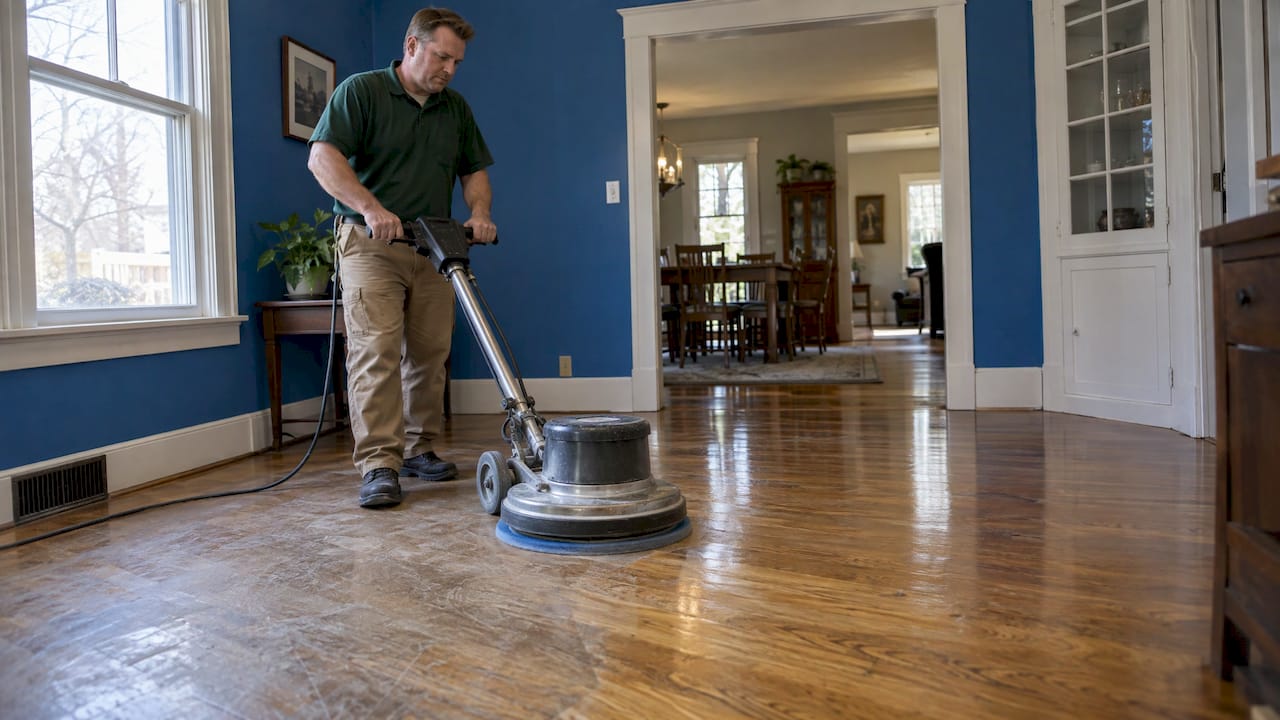
Professional wax removal on hardwood floors is usually quoted by the square foot, and published ranges run from roughly $2 to $4 per square foot, with the final number driven by how many layers of wax are on the floor and what has to happen afterward. The most useful thing to know before you call anyone is that the strip itself is only part of the bill. A floor that has been waxed for years often needs a fresh protective coat once the wax is gone, and that is where one estimate can look very different from another. At AO Cleaning we do wax removal as its own service, and the best way to get an accurate number is a hardwood floor wax removal quote based on your actual floor.
This guide is for homeowners in Columbia, Waterloo, O’Fallon, Edwardsville, Glen Carbon, Granite City, Troy, Clayton, Ladue, Chesterfield, Fenton, Sunset Hills, Oakville and across St. Louis who want to know what to expect before they book. Looking for ear wax? That is a different topic entirely. This page is about wax on wood floors.
TL;DR
Published professional ranges for stripping floor wax run about $2 to $4 per square foot, depending on region and floor condition.
Another guide puts a 1,500 sq ft home at $400 to $900 for wax buildup, so ranges overlap and differ. A written, on-site estimate beats any average.
Layers of wax, floor age, stairs and tight spots, and whether a new finish goes on afterward are what move the price.
If the finish underneath is worn, a screen and recoat is typically about $1 to $2 per square foot, far less than a full sand.
A good estimate names the square footage, the method, the coats and product, and when you can walk on the floor.
Table of Contents
What professional wax removal costs
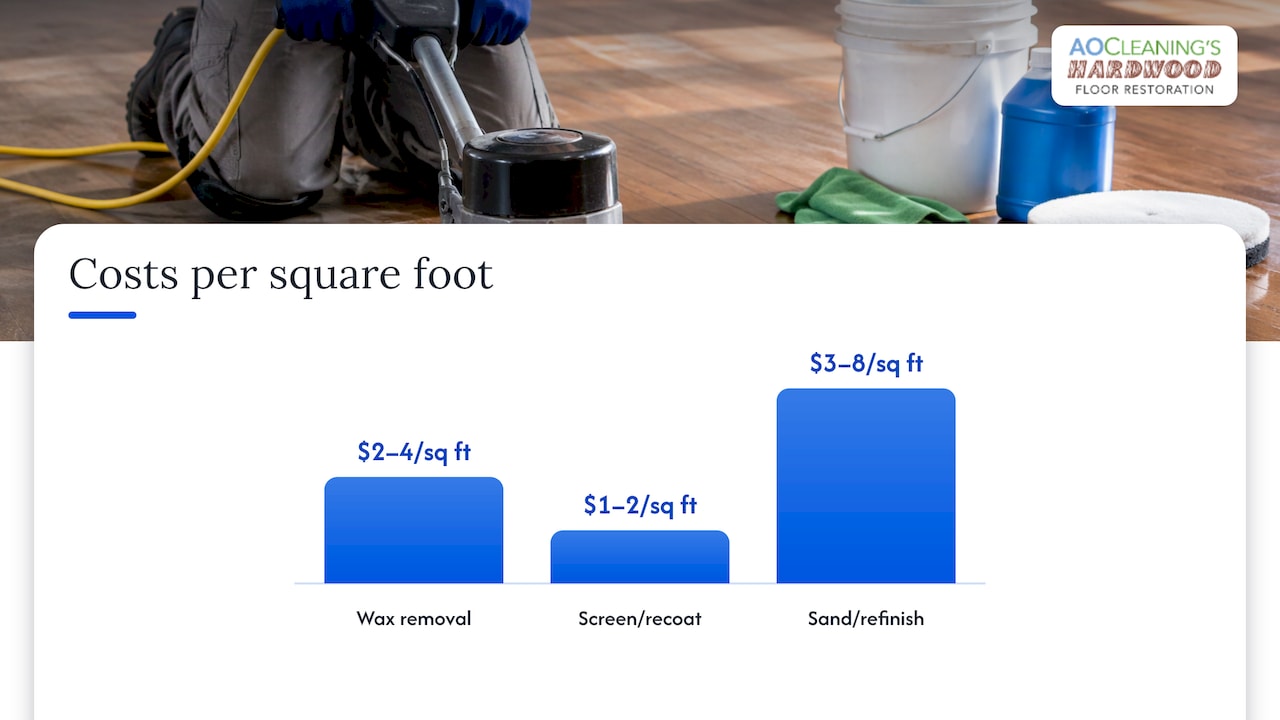
Two published guides give you the working range. One states that professional wax removal runs approximately $2 to $4 per square foot, depending on region and floor condition. Another puts stripping wax buildup from a 1,500 square foot home at $400 to $900, and says that removing misapplied wax from a polyurethane-finished floor in the same size home can run $450 to $1,200 in restoration labor.
Those numbers do not line up neatly, and that is normal. Wax removal is labor, not materials. A floor with one thin coat of wax comes up quickly. A floor with a decade of polish, mop-and-shine products and layered wax takes repeated passes. Prices also vary by region, so a national average is a starting point, not a quote for your house in Belleville or Ladue.
Here is a simple way to frame your own budget. Measure the rooms that have wood floors, multiply by the per-foot range, and treat the result as a ballpark. A 400 square foot living and dining area at $2 to $4 per square foot would land between $800 and $1,600 by that math. Then ask for a real estimate, because the condition of your floor decides where in the range you fall.
What you are paying for | Typical published range | What it covers |
Wax removal only | About $2 to $4 per sq ft | Stripping and removing old wax and residue |
Screen and recoat | About $1 to $2 per sq ft | Light abrasion and a fresh protective coat |
Full sand and refinish | About $3 to $8 per sq ft | Sanding to bare wood and applying new finish |
The screen and recoat and full refinishing figures come from a 2026 cost guide. National refinishing averages are also tracked by Fixr, which reports $800 to $1,600 for 200 square feet, or $3 to $8 per square foot.
What changes the price
When two neighbors in Edwardsville get quotes on similar-sized homes and the numbers differ, the cause is almost always one of these.
How much wax is on the floor
One coat and fifteen coats are not the same job. Heavy, yellowed buildup needs more product, more dwell time and more passes. Fixr notes that older floors with heavy wax finishes take longer to remove, which adds to the overall cost of refinishing.
Square footage and layout
Open floor space is efficient. Stairs, closets, transitions, a kitchen with an island and tight corners add detail work. Two homes of 1,800 square feet can price differently for this reason alone.
Floor age and finish type
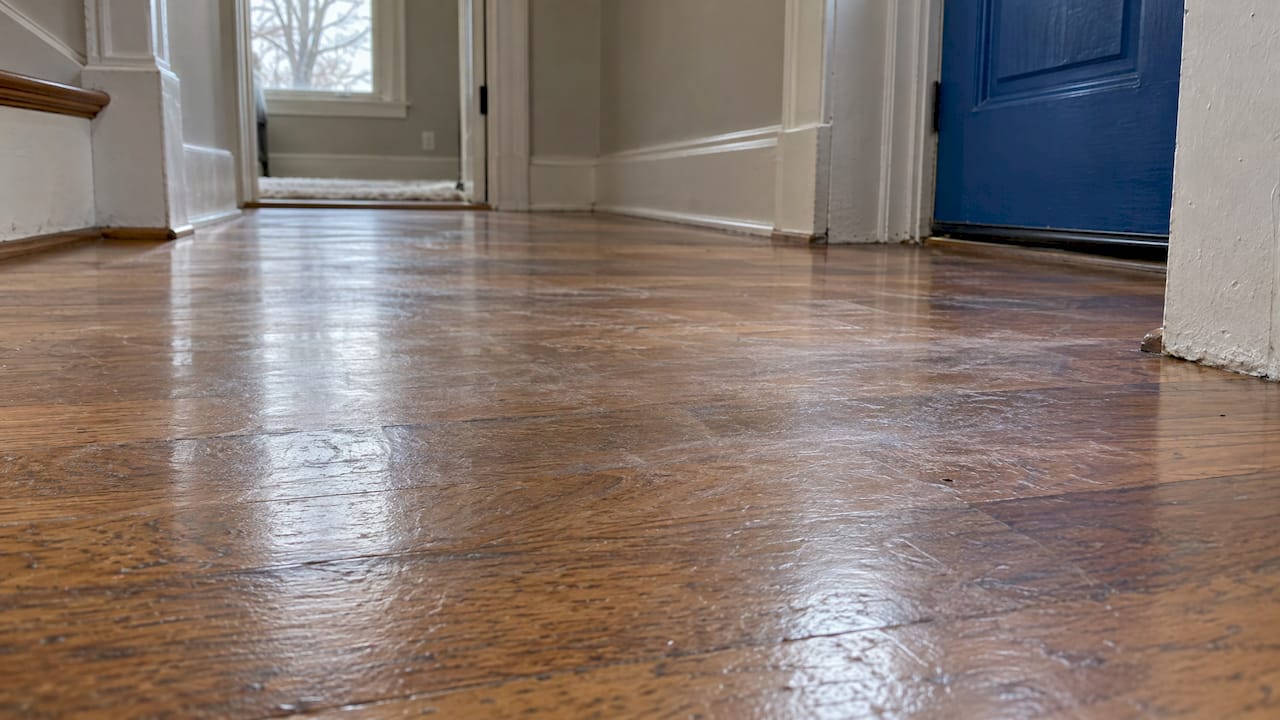
Older homes in Clayton, Ladue and the historic parts of Belleville and Edwardsville often have floors that have seen decades of paste wax and polish. Modern factory finishes are polyurethane, and wax does not bond to them. The polish sits on top, attracts dust and leaves a hazy film, which is why it takes an industrial stripper to remove. That film is the cloudy, sticky look many homeowners call “I can’t get my floor clean.”
What happens after the wax is gone
Once the wax is off, the floor needs a protective finish that will not fight with what is left behind. Some floors can be recoated right away. Others need a screening pass first. Whether you add a screen and recoat is the single biggest swing between a low-end and high-end total, so make sure your estimate says which one you are getting.
When wax removal turns into a bigger job
Sometimes the wax is hiding a worn finish. Once it is stripped, you can see gray traffic paths, dull spots or scratches that the shine had been covering. That is not a surprise charge, it is simply what the floor looked like all along.
Your options from there, from lightest to heaviest:
Wax removal only. Right when the finish underneath is sound and the problem is the buildup itself.
Screen and recoat. Right when the finish is dull or lightly worn but the wood is not stained or deeply scratched. Our screen and recoat service is built for this. Our guide to clean and buff versus screen and recoat shows how to tell which your floor needs.
Full sand and refinish. Right when the finish is worn through to bare wood, there are deep scratches or stains, or you want a new color. See what full sand refinishing involves.
Because the three services cost very different amounts, an estimate that only says “floor refinishing” tells you little. You want to see which of the three is being quoted and why.
How to read a wax removal estimate
Bids differ in more than price. One industry cost breakdown notes that skipping the strip and rinse removes about 3.0 of the 6.4 hours in a typical job, close to half the labor. That is a reminder that a low number can mean less work was priced in. A complete estimate should state:
The square footage being treated, room by room.
The method: whether the floor is stripped of wax or only scrubbed and recoated.
The coats and product that go on afterward, if any.
When you can walk on it and when furniture can go back.
Dust control. Sanding-based work is messy unless the crew uses dustless equipment.
If any of these is missing, ask. The answers tell you what you are actually buying.
Why wax removal done right saves money
The cheapest outcome is a floor you never have to replace. Replacing hardwood is a far larger expense than any of the services above, and in most cases the wood itself is fine. The haze, stickiness or dullness is a surface problem. That is why our line is “Before you REFLOOR it, let us RESTORE it.”
The other way homeowners lose money is applying the wrong product. A wax or polish put over a polyurethane finish is the very thing that creates the film in the first place. Matching the product to the floor, and keeping wax away from urethane finishes, is the best cost-avoidance step once your floor is clean. Our article on what wax buildup does to floors walks through the signs and the fix.
Perspective
Most of the wax calls we get start the same way: a homeowner has tried a new mop, a new cleaner, maybe a polish, and the floor looks worse each time. The floor is not ruined. It is wearing a coat it was never meant to have. Our approach is to restore the floor you already own. We use dustless techniques and eco-friendly products on every job, so you are not living with a mess or lingering odors, and most restoration services are completed in a single day, with floors ready to walk on in about three hours. We have served central Illinois and the St. Louis metro area since 2003, and what keeps homeowners coming back is simple: they wanted their floors back, not a bigger project. Wax removal, then a screen and recoat if the finish needs it, often gets a floor there without the expense and disruption of sanding to bare wood. Kim
Getting your number
If your floors look cloudy, sticky or streaky, the next step is to have someone look at them. Our in-home consultation lets us see the floor, identify what is on it and tell you whether you need wax removal alone, a screen and recoat, or something more. We work across St. Louis, Monroe and Madison Counties, including Columbia, Belleville, Fairview Heights, Waterloo and O’Fallon.
You can see exactly what the service involves on our wax removal page. We are a locally owned company based in Columbia, IL, with more than 450 Google reviews.
FAQ
How much does hardwood floor wax removal cost?
Published professional ranges are about $2 to $4 per square foot, depending on region and floor condition. Heavy buildup, stairs and detail areas push toward the top. A written estimate after someone sees your floor is the only number you can budget on.
Is wax removal cheaper than refinishing?
Usually, yes. Full sanding and refinishing commonly runs about $3 to $8 per square foot, while a screen and recoat is around $1 to $2 per square foot. If the finish under the wax is sound, removing the wax can be all you need.
Will I need a new finish after the wax comes off?
Sometimes. If the finish beneath is dull or worn, a screen and recoat restores the protection and the shine. We can tell you which applies during a consultation.
How do I keep wax from building up again?
Do not apply wax or polish over a polyurethane finish, because it does not bond and leaves a hazy film. Use cleaners made for your floor’s finish. If you are unsure what finish you have, we can identify it for you.
Sources
Recommended

Comments