


Hardwood Floor Cleaning Mistakes That Dull and Damage Floors

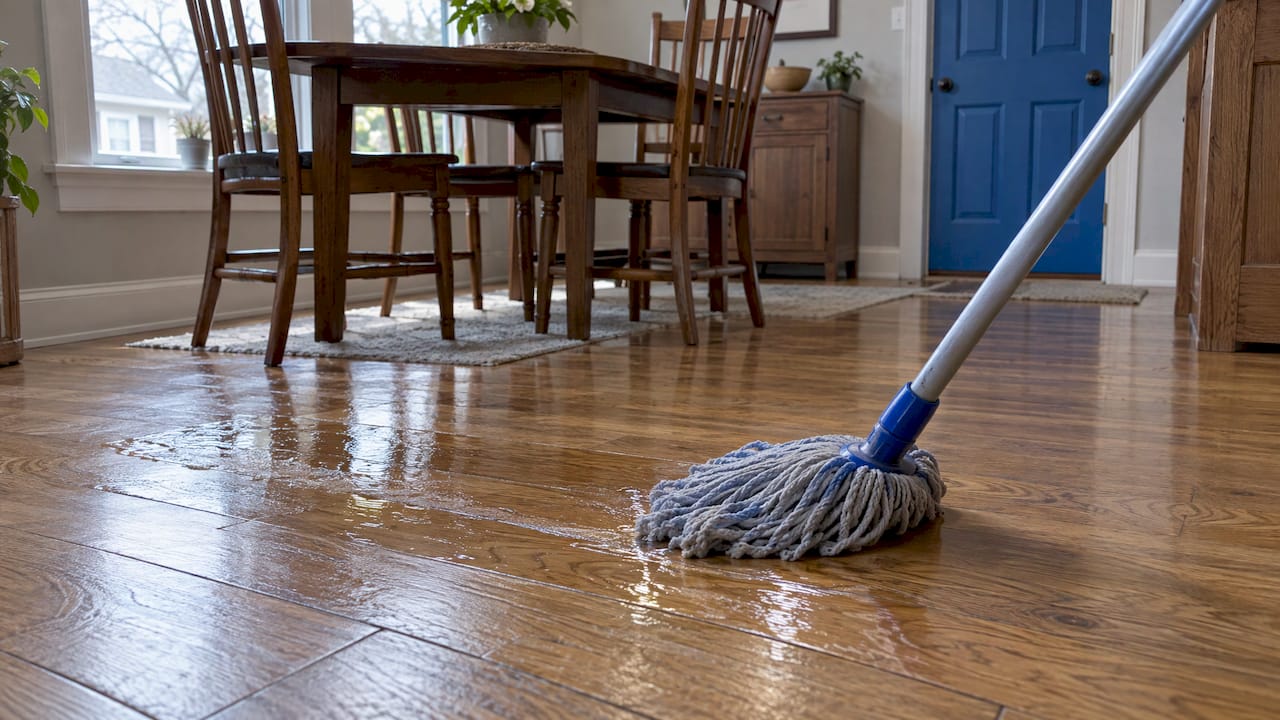
Most damaged hardwood floors were not neglected. They were cleaned too hard, too wet or with the wrong product. The biggest mistakes are too much water, steam mops, vinegar, oil soaps and wax-based products, ammonia or bleach, and mopping over grit. The good news is that the damage is usually in the finish, the protective top layer, and a finish can often be restored without replacing a single board. If your floors look hazy, streaky or worn after cleaning, we would rather see them before you buy new flooring.
TL;DR
Water is the number one enemy: wet mops, steam mops and pooled liquid cause swelling, cupping and finish damage.
Vinegar, ammonia, bleach, oil soaps, polishes and wax products either strip the finish or leave a film that builds up.
Grit does more scratching than shoes: dry-sweep or vacuum with a soft head before any damp cleaning.
Cloudy, streaky or dull floors are usually a finish problem, not a dirt problem, and a professional can often fix them in one day.
Winter heating in the St. Louis area dries wood out, so humidity control belongs on your cleaning checklist too.
Table of Contents
Why hardwood punishes the wrong cleaning habits
Most hardwood floors in St. Louis, Metro East and St. Charles County homes are protected by a clear finish, usually a polyurethane coating. That coating, not the wood, is what you actually clean. When you strip it with a harsh chemical or cloud it with residue, the floor looks dull no matter how hard you scrub. When water gets past it, the wood swells.
That is why the usual instinct, scrubbing harder when a floor looks dirty, makes things worse. Manufacturers say the same thing in their care instructions. Mannington states plainly that you should never mop or flood a hardwood floor with water or other products, because it can severely damage the flooring.
Here are the mistakes, roughly in order of how much damage they do.
Mistake 1: Too much water
A soaking mop is the classic error. Wood absorbs moisture quickly, and even a sealed floor has seams between boards where water travels. Cornell Cooperative Extension advises against wet-mopping wood floors because standing water can dull the finish, damage the wood and leave a discoloring residue.
A Pine-Sol scientist quoted by The Spruce says that using too much liquid or letting it pool can warp, streak and over time damage wood, whether the floor is sealed or not.
What it looks like in your home:
Edges of boards that curl upward (cupping) or a crowned, raised center
White or cloudy patches in the finish
Dark staining near dishwashers, sinks, entry doors and pet bowls
Gaps or ridges that were not there last year
Spills are the other half of this. Wipe them up right away with a soft cloth rather than letting them sit.
Mistake 2: Using a steam mop
Steam mops are sold as the sanitary way to clean floors, which is why so many homeowners reach for one. On wood they do the opposite of helping. Blue Ridge Hardwood’s FAQ says steam mops create drastic temperature and moisture changes that may warp the wood or lift the finish, and that steam damage can void the warranty. Robbins says in its flooring FAQ that damage from a steam mop is not covered under the warranty.
If you inherited a steam mop from a previous cleaning routine, retire it for the wood floors and keep it for tile.
Mistake 3: Vinegar and other “natural” fixes
Vinegar and water is the most repeated home remedy online, and it is the one flooring professionals see backfire. Consumer Reports notes that guidelines from a major hardwood manufacturer warn that distilled white vinegar and other acidic products could pit or etch a floor’s finish.
The damage is slow. The floor looks fine for a few weeks, then loses its sheen in the places you cleaned most. Etched finish cannot be wiped away, because the dullness is in the coating itself.
Mistake 4: Ammonia, bleach and general-purpose sprays
Strong chemicals strip the finish. Havwoods’ global product director told The Spruce that ammonia and bleach strip the finish and leave floors dull and more vulnerable to scratches. Once the coating is thin, moisture can enter the wood and break it down.
Two related habits make it worse:
Mixing cleaners. The same Spruce article reports a Clorox scientist warning that mixing products can damage the floor and cause a potentially harmful chemical reaction. Never combine cleaners, and read the label on anything you use.
Using the wrong product for the floor. Cornell Extension warns against products made for vinyl or tile, because self-polishing acrylic waxes make wood slippery and dull quickly.
Anything that fits a kitchen counter, a bathroom and a floor in one bottle is probably not made for your finish.
Mistake 5: Oil soaps, waxes, polishes and furniture sprays
These feel like care because the floor looks glossy right after. The shine is a film sitting on top of the finish, and the film is the problem.
Mannington advises against oil soaps, liquid or paste wax products, and household cleaners with lemon oil, tung oil or ammonia. Shaw’s maintenance documentation adds citrus oils, silicone, and two-in-one cleaners with polish additives to the list, and notes that problems they cause are not covered under warranty. The National Wood Flooring Association’s maintenance guide says most factory-finished flooring warranties are voided by oil-soap cleaners and that household dust treatments should never be used.
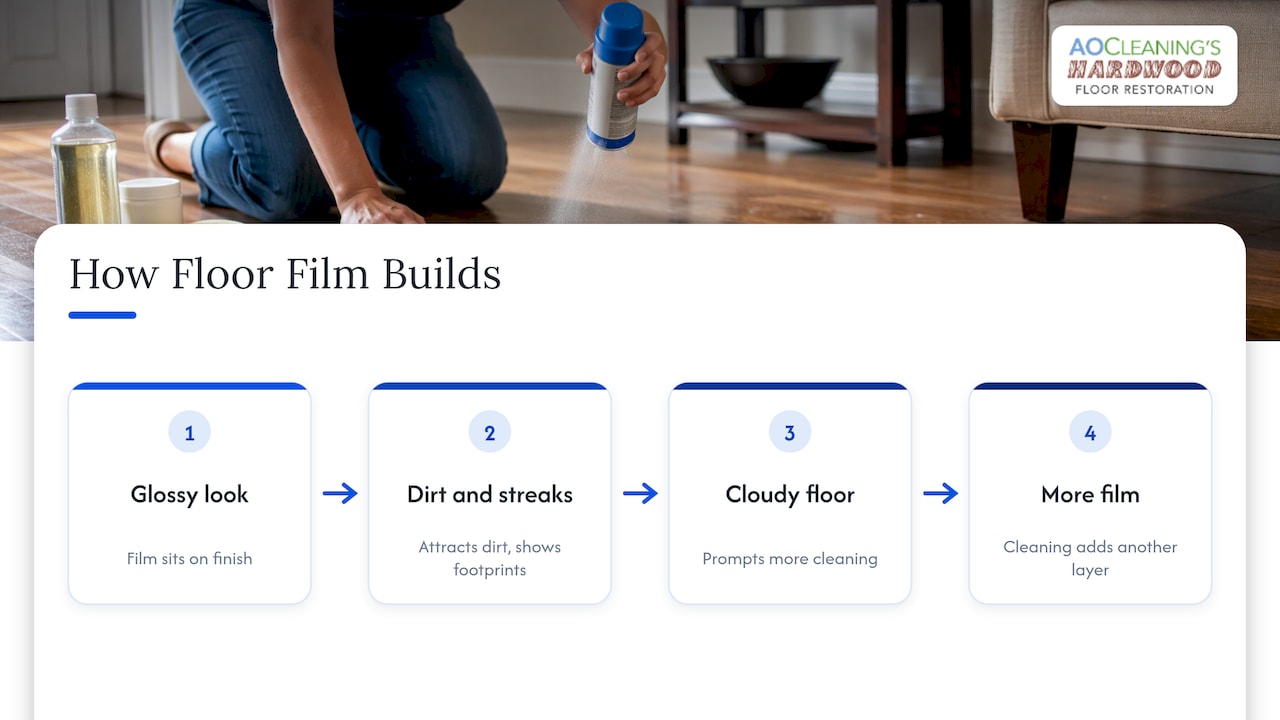
The film builds up in layers. It attracts dirt, shows footprints and streaks, and eventually the floor looks cloudy, which leads homeowners to clean more, which adds more film. Wax is a special case: layers of old wax have to be removed before a floor can be recoated or refinished properly. Our hardwood floor wax removal service exists for exactly that situation.
Mistake 6: Skipping the dry sweep
Grit is sandpaper. Sand, salt and tiny stones come in on shoes, and mopping or vacuuming with the wrong head drags them across the finish. Sweep or vacuum regularly, and use a soft-bristle broom or microfiber dust mop for light cleaning, as Consumer Reports recommends.
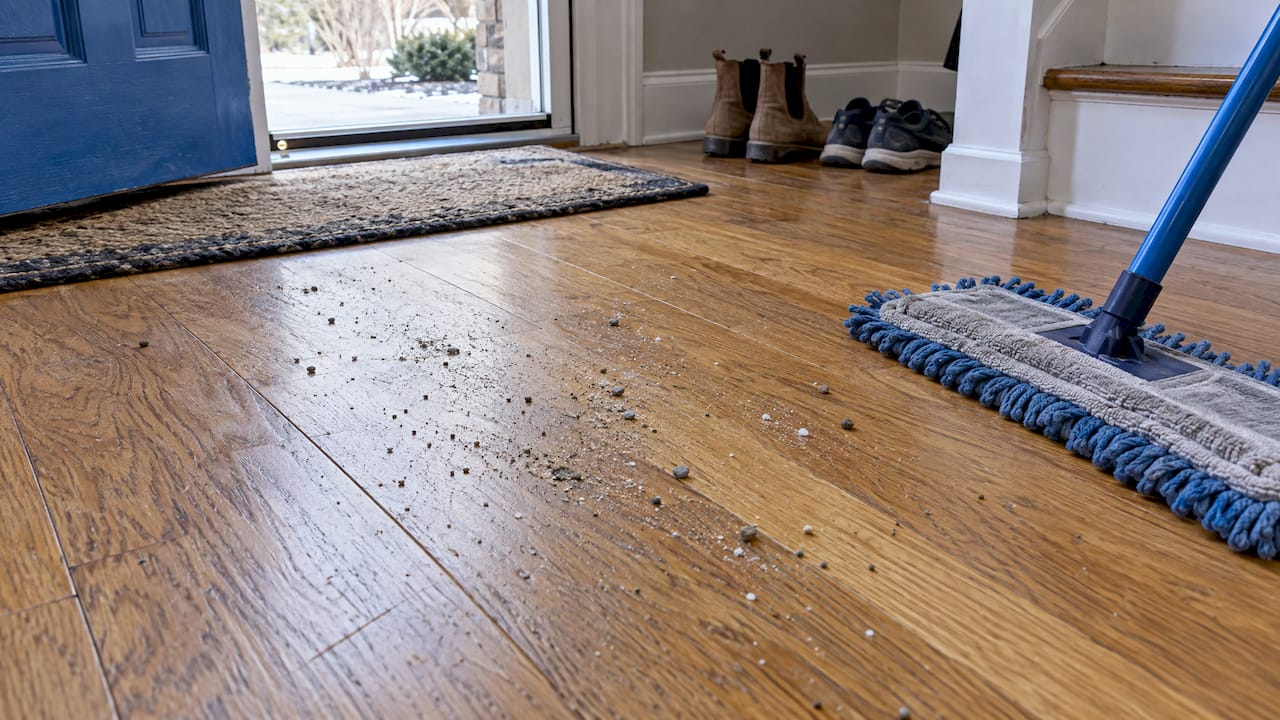
The vacuum matters too. The Spruce flags the wrong attachment: a beater bar can scratch the floor, and heavy wheels can dent it. Use a bare-floor setting with a brush or felt head.
Tools to keep away from wood floors:
Steel wool and abrasive scrubbers. They leave scratches that are hard to repair, and bits of steel can break off and cause rust stains when they meet moisture.
Scouring powders and buffing machines. Shaw’s care page for retailers lists both as things to avoid.
Dirty mop pads. A pad full of grit spreads it around. Wash microfiber pads after each use.
For a deeper look at how scratches start, see what causes hardwood floor scratches.
Mistake 7: Leaving cleaner on the floor
Streaks usually mean too much product. Consumer Reports notes that excess cleaner left on the surface can damage the wood’s fiber, and Shaw’s documentation says not to let excess cleaner remain on the surface. Use a damp, not dripping, mop with a neutral-pH cleaner made for wood, and work in small sections.
That same Shaw document describes how a floor with product residue is brought back: dry mop first, spray a neutral-pH wood cleaner in manageable sections, then rinse with a damp microfiber pad, repeating as needed. Before you use any new cleaner, check the flooring manufacturer’s care guidelines and try it on a small area first, as the Consumer Reports expert advises. If you want to know which kinds of products suit wood, our guide to cleaning products for hardwood floors covers it.
Mistake 8: Ignoring humidity and heels
Cleaning is not the only way floors get damaged, and some “cleaning problems” are really climate problems. Mannington says wood lives in a comfort zone of 35% to 55% relative humidity and 60 to 80°F, and that the HVAC system should stay on at all times. Cornell Extension recommends a humidifier in winter to keep wood movement and shrinkage to a minimum.
That matters here. Midwest winters with forced-air heat dry a house out, and gaps between boards often open in January and close again by summer. Gaps are not a cleaning failure, but scrubbing them with water makes them worse.
Footwear is the other hidden culprit. Cornell Extension reports that a 125-pound person in high heels exerts an impact of 2,000 pounds per square inch, and an exposed heel nail up to 8,000, enough to dent any floor surface. Use entrance mats, felt pads under furniture legs and trimmed pet nails.
Our article on humidity for hardwood finishing explains the numbers in more depth.
A short, safe routine that avoids all of this
You do not need a complicated system:
Every few days: sweep or vacuum with a soft head, bare-floor setting.
As needed: wipe spills immediately with a soft cloth.
Occasionally: damp-mop with a microfiber pad and a hardwood-specific, neutral-pH cleaner, wrung out well, then let the floor dry.
Seasonally: check humidity, move rugs and look under them. Shaw recommends checking and cleaning under area rugs weekly.
Every 6 to 18 months: schedule professional cleaning, depending on traffic, per Shaw’s care page.
For a fuller routine, read our floor maintenance routine best practices.
When cleaning is not the answer anymore
Some problems cannot be fixed with a better mop. These are the signs it is time to have the floor assessed:
A haze or cloudiness that returns after you clean, which points to residue or a worn finish.
Dull lanes where you walk, in front of the sink and at doorways.
Water that soaks in instead of beading. Drop a little water in a high-traffic spot: if it darkens the wood, the finish is no longer protecting it.
Gray or bare wood, deep scratches, or black marks around old water spills.
Wax buildup from older products that makes the floor sticky or patchy.
Cupping or board lifting after a leak or heavy mopping. Fix the moisture source first, and if there was a leak or flood, call your insurer and a licensed plumber or water-damage contractor as well.
In many cases the fix is smaller than people fear. A dull floor with an intact surface may only need a clean and buff. A worn finish with sound wood is often a candidate for a screen and recoat. Deep damage or a color change calls for full sand, stain and refinishing. Our guide to cleaning versus restoration shows how to tell which one you need.
After any home project, fine dust settles on floors, and the same logic applies as with any trade: why cleanup matters after roofing shows how debris left behind causes secondary damage. Dust and grit left on a wood floor scratch the finish when walked over, so clear it with a dry pass before anything damp.
What we do differently
We started in 2003, and in that time the most common story we hear is not “my floors are old.” It is “I cleaned them the way the bottle said and now they look worse.” Our approach is to find out what the floor actually needs before anyone talks about replacing it. Often the answer is a lighter service than you expected: a clean and buff, a screen and recoat, or wax removal. Our tagline is “Before you REFLOOR it, let us RESTORE it,” and we mean it. We use dustless techniques and eco-friendly products on every job, and most restoration services are finished in a single day, with floors ready to walk on in about three hours. That means you are not living in a dust cloud or moving out for a week. If you have been trying fix after fix, stop. Each new product adds another layer between you and the finish we need to work on. Call us, let us look, and we will tell you where the floor stands. Kim
Get your floors looked at in your home
If your floors are hazy, streaky or worn from past cleaning, our in-home consultation is the place to start. AO Cleaning’s Hardwood Floor Restoration has served homeowners across central Illinois and the St. Louis metro area since 2003, from Columbia, Waterloo and Belleville to Clayton, Ladue and Chesterfield. We offer 1-day hardwood floor restoration, clean and buff, screen and recoat, wax removal and full sand and refinishing, with more than 450 Google reviews behind the work.
Book an in-home consultation and we will tell you which service fits your floor.
FAQ
Can I use vinegar and water on my hardwood floors?
It is best not to. Consumer Reports notes that manufacturer guidelines warn acidic products like distilled white vinegar can pit or etch a finish. A hardwood-specific, neutral-pH cleaner and a damp microfiber mop are the safer routine.
How often should hardwood floors be professionally cleaned?
Shaw’s care page suggests every 6 to 18 months, depending on traffic. Homes with kids, pets and busy entryways sit toward the shorter end. If the floor looks dull between visits, ask for an assessment rather than adding more products.
Is a steam mop ever safe on hardwood?
Manufacturers say no. Blue Ridge Hardwood and Robbins both state that steam damage can void the warranty, and steam may warp wood or lift the finish. Stick to dry sweeping and a lightly damp microfiber mop.
Why do my floors look streaky after mopping?
Usually residue: too much cleaner, a product not made for wood, or an oil soap or polish film building up. Dry mop, then use a neutral-pH wood cleaner sparingly and rinse with a damp microfiber pad. If streaks keep coming back, the finish itself may need attention.
Do I need to replace my floors if the cleaning damage is bad?
Not necessarily. If the boards are structurally sound, damage that sits in the finish can often be addressed with a buff, a recoat, wax removal or a refinish. Warped or rotted boards are different, and an in-person look will tell you which case you have.
Sources
Recommended

Comments