


Ladue MO Hardwood Restoration Explained for Homeowners

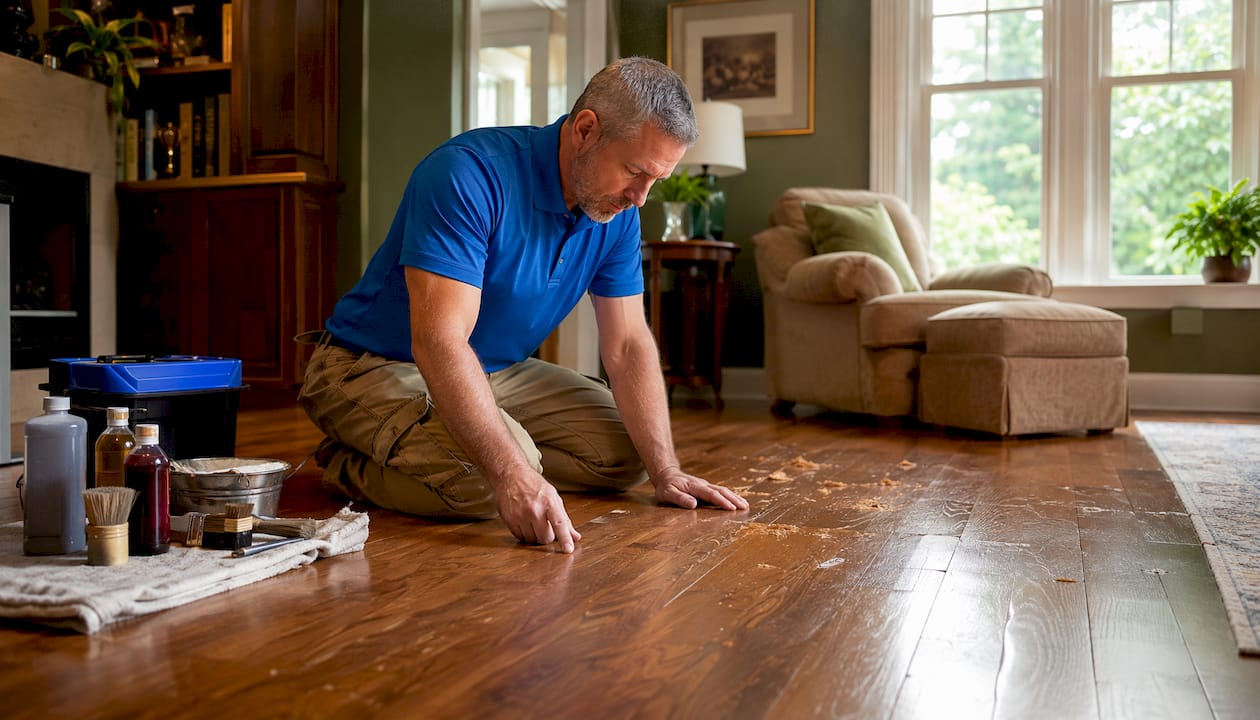
For most Ladue homes, hardwood restoration means repairing structural problems first (squeaks, soft spots, damaged boards), then sanding and refinishing the surface. Refinishing alone handles cosmetic wear when the floor is structurally sound. If you’re not sure which one you need, that distinction will determine your cost, your timeline, and whether the result actually lasts.
Before you call anyone, do these three things:
Inspect your floors and photograph every problem area: scratches, gray traffic lanes, soft spots, water stains, and gaps.
Schedule an in-home assessment with a local pro who will check wear-layer thickness and structural integrity before quoting.
Request written, itemized estimates from at least two contractors so you’re comparing scope, not just price.
Aosaveswoodfloors offers in-home estimates and dustless restoration services specifically for Ladue and the St. Louis metro area. Typical full restoration projects generally require 7 to 14 days from start to finish, including repairs, sanding, staining, and multiple finish coats, with furniture returning 3 to 7 days after the final coat has cured.
Table of Contents
How do you know if your floors need refinishing, restoration, or replacement?
What do hardwood restoration services cost in the Ladue area?
How to find and vet a trustworthy hardwood contractor in Ladue
The mistake most Ladue homeowners make before calling anyone
Aosaveswoodfloors serves Ladue homeowners with same-day restoration and no-mess results
What does hardwood restoration actually mean in Ladue, MO?
People use “restoration” and “refinishing” interchangeably, but they describe different scopes of work with different price tags.

Refinishing removes the worn surface finish and a thin layer of wood through sanding, then applies fresh stain (optional) and new topcoats. It’s the right call when the floor is structurally solid and the damage is cosmetic: dullness, light scratches, uneven sheen, or a color you’re tired of.
Restoration goes further. It addresses structural problems before the sanding even starts: squeaky boards, soft spots, subfloor damage, board replacement, and gap filling. Only after those repairs are complete does the crew sand and refinish. Restoration costs more per square foot and takes longer, but it solves problems that refinishing will simply sand over and leave intact.
The choice affects everything. A refinish on a floor with hidden soft spots will look great for six months and then telegraph every problem back through the new finish. Restoration done right produces a result that holds for a decade or more.
Pro Tip: If your floor has any soft spots, active squeaks, or boards that flex underfoot, get a restoration quote alongside the refinishing quote. The difference in cost is usually far less than what a second mobilization would run two years later.
How do you know if your floors need refinishing, restoration, or replacement?
Most Ladue homeowners can make a solid preliminary call themselves before a pro ever walks through the door. Here’s what to look for:
Visual signs that suggest refinishing:
Gray or white traffic lanes where the finish has worn through
Surface scratches that don’t catch a fingernail
Dull, flat sheen that cleaning products no longer improve
Minor color variation or fading near windows
Signs that point toward restoration:
Deep scratches or gouges that reach bare wood
Black water stains (these often go deeper than they look)
Cupping or crowning (boards that bow up or down at the edges)
Boards that flex, squeak, or feel soft underfoot
Wide seasonal gaps that have widened beyond normal movement
Signs that may mean replacement:
Boards too thin to sand again (check at a vent or threshold for remaining thickness)
Active moisture intrusion that hasn’t been resolved
Widespread structural failure across more than 30% of the floor
Before calling a pro, use a floor inspection checklist to document what you find. Take photos in natural light, note any history of water exposure (flooding, leaky appliances, pet accidents), and measure the approximate square footage of affected areas. That information speeds up the estimate visit considerably.
Engineered hardwood adds one more variable: veneer thickness determines whether sanding is even possible. A professional can check this at a vent or threshold in minutes. If the veneer is too thin, refinishing isn’t on the table regardless of how the surface looks.
What service options will Ladue contractors quote you?
Understanding what each service actually covers lets you compare bids on scope, not just price. Here’s what you’ll typically see:
Service | What It Covers | What It Doesn’t Fix | Typical Timeline |
Screen and recoat | Light scuffing of existing finish + new topcoat | Deep scratches, worn-through finish, structural issues | 1 day; walk-on same day |
Full sand and refinish | Removes old finish entirely, sands to bare wood, applies new stain + topcoats | Structural soft spots, squeaks, damaged boards | 3–5 days |
1-day restoration | Surface cleaning, light abrasion, and protective recoat | Heavy wear, board damage, cupping | 1 day; walk-on ~3 hours |
Full restoration | Repairs + board replacement + full sand and refinish | Active moisture problems (must be resolved first) | 7–14 days |
Localized board replacement | Replaces damaged or stained boards, blends with surrounding floor | Widespread structural failure | Varies by scope |
Screen and recoat is the most affordable option but only works when the existing finish is still bonded and the surface is lightly worn. If a contractor recommends it for a floor with gray traffic lanes or worn-through areas, that’s a mismatch worth questioning.
Full restoration is the most comprehensive path and the one that addresses structural issues refinishing alone cannot touch. Aosaveswoodfloors’s 1-day restoration option fits homeowners whose floors need a refresh but are structurally sound, with minimal disruption and a fast return to normal use.
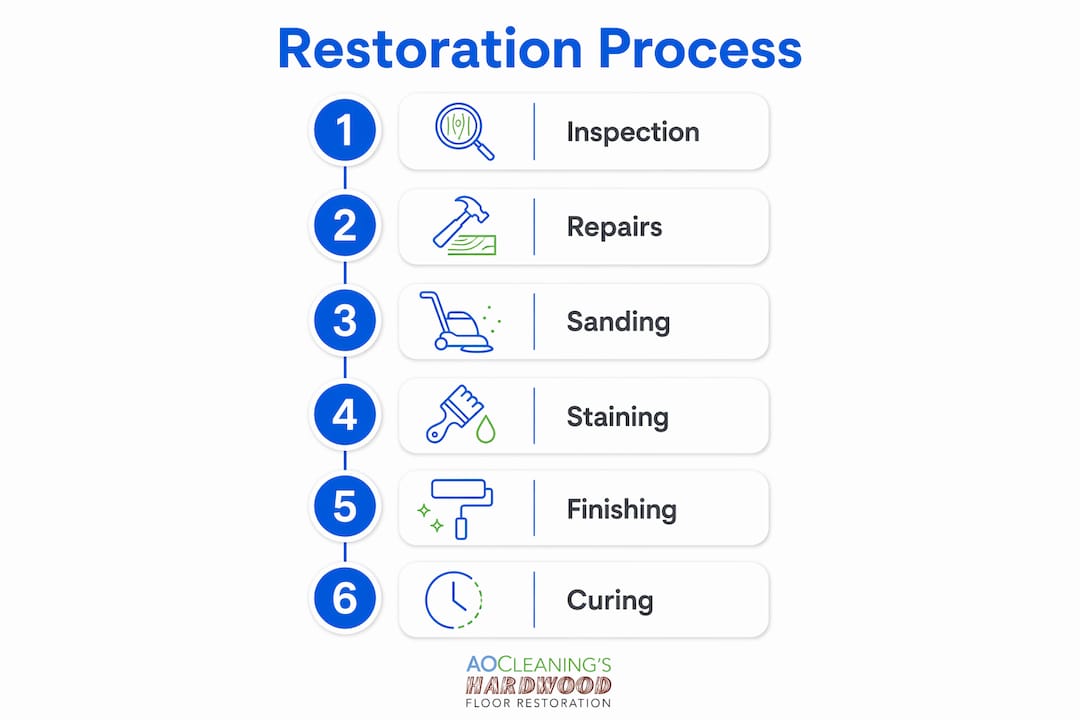
What actually happens on the job, step by step?
A full restoration follows a predictable sequence. Knowing it helps you plan around the crew’s schedule and avoid surprises.
The typical sequence:
Assessment and prep — The crew confirms the scope, protects adjacent areas, and seals off HVAC vents to contain dust.
Repairs — Squeaky boards are secured, soft spots are addressed, and damaged boards are replaced and laced in.
Coarse sanding (flattening cut) — Removes old finish and levels minor unevenness. This pass generates the most dust and is where containment matters most.
Intermediate and fine sanding — Refines the scratch pattern and prepares the surface for stain.
Stain application (optional) — Applied and wiped, then allowed to dry before sealing.
Sealer and topcoats — Typically two to three coats with light screening between each for adhesion.
Final inspection and cleanup — Crew removes containment, cleans the space, and walks you through the result.
Typical timing by room size:
Scope | Estimated Duration | Walk-on Time | Furniture Return |
Small room | 1–3 days | 2–4 hours after final coat | 3–7 days post final coat |
Medium job | 3–7 days | 2–4 hours after final coat | 3–7 days post final coat |
Full floor or multi-room | 7 days | 2–4 hours after final coat | 3–7 days post final coat |
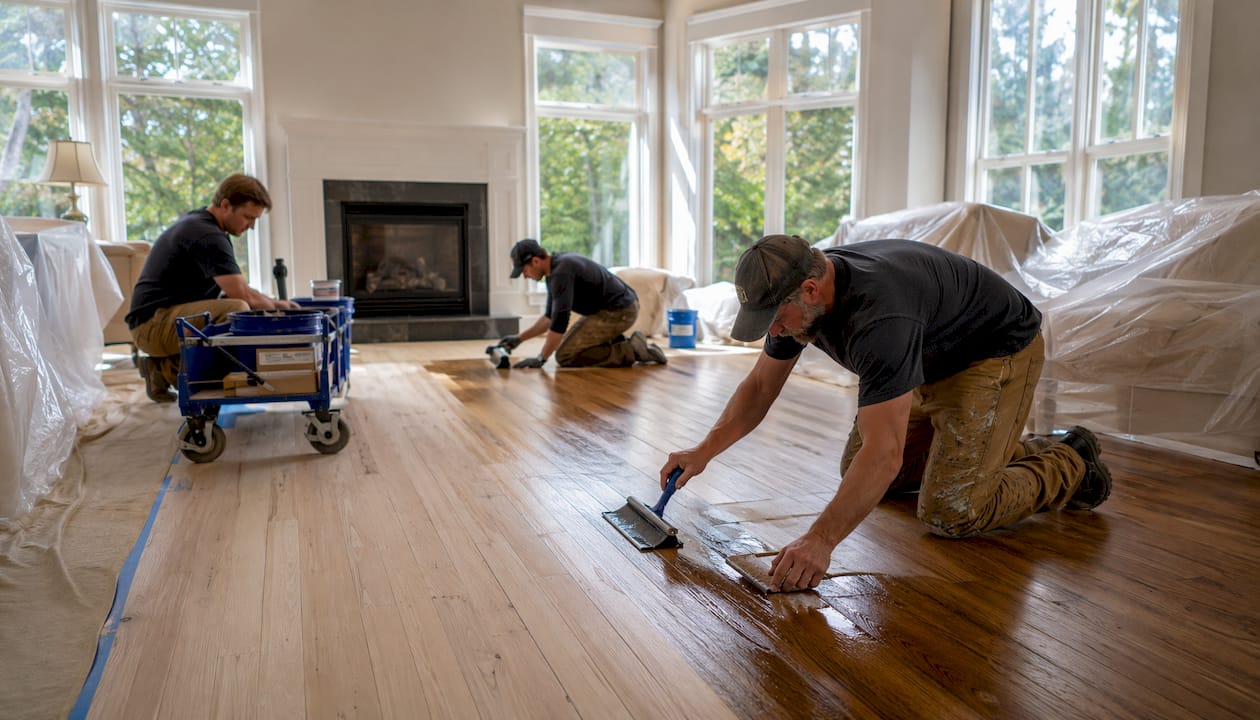
Walk-on time and full cure time are not the same thing. You can walk carefully on the floor within hours of the final coat, but the finish continues hardening for days. Dragging furniture back too early is one of the most common ways homeowners damage a fresh finish.
Pro Tip: For multi-room jobs, ask the contractor to sequence rooms so you always have a finished, walkable area to use. A good crew plans the workflow around your household, not just the floor.
What should you know about dust, fumes, and air quality?
Sanding generates a significant amount of fine wood dust, and some finishes produce strong fumes during application and cure. A professional contractor should have answers to both concerns before the job starts.
Dust control — what to look for:
Dustless or dust-containment sanding systems that capture debris at the machine rather than letting it circulate
Door seals and plastic sheeting to isolate the work area from the rest of the house
HVAC vent covers to prevent dust from entering the ductwork
Entry protection (floor coverings in hallways and adjacent rooms)
Finish-related air quality:
Water-based polyurethane dries in 2–4 hours between coats, produces lower VOCs, and has minimal odor. It’s the easier choice for households with children, pets, or anyone sensitive to fumes.
Oil-based polyurethane has a longer dry time and a stronger solvent odor during application. Ventilation is more critical, and re-entry times are longer.
Conversion varnish is a two-component finish with excellent durability but higher VOC content; professional application and ventilation are non-negotiable.
Questions to ask your contractor before the job:
What sanding system do you use, and how much dust should I expect?
Which finish products do you carry, and what are the VOC levels?
When is it safe for children and pets to re-enter?
Do you recommend running fans or opening windows, and for how long?
Aosaveswoodfloors uses dustless techniques and eco-friendly products on every job, which means you’re not dealing with a cloud of fine dust or lingering chemical odors when the crew leaves.
Which finish is right for Ladue homes?
St. Louis humidity is a real factor in finish selection. The region gets genuinely humid summers and dry winters, and wood moves with those swings. A finish that ignores seasonal expansion and contraction may look perfect in October and show stress fractures by February.
Water-based polyurethane keeps the wood’s natural color truer over time, dries faster between coats, and has lower VOC content. It’s a strong choice for lighter wood species and modern interiors where you don’t want any ambering.
Oil-based polyurethane adds a warm amber tone that many homeowners in traditional Ladue interiors actually prefer, especially on red or white oak. It’s more durable per coat and requires fewer coats overall, but dry times are longer and the odor during application is significant.
Conversion varnish (also called Swedish finish) is a two-part catalyzed finish with exceptional hardness and scratch resistance. It’s popular in high-traffic areas and commercial settings. The tradeoff is higher VOC content and a narrower application window once the two components are mixed.
Oil and oil-modified finishes penetrate the wood rather than sitting on top, giving a matte, natural look. They’re easier to spot-repair but require more frequent maintenance and don’t offer the same surface protection as film-forming finishes.
For most Ladue homes with oak floors and moderate to high foot traffic, water-based or oil-based polyurethane is the practical choice. The right answer depends on the wood species, the look you want, and how much maintenance you’re willing to do. A contractor who doesn’t ask about your household’s traffic patterns before recommending a finish isn’t giving you a complete picture.
What do hardwood restoration services cost in the Ladue area?
Cost ranges vary by service type, wood species, and the scope of repairs involved. Here’s a realistic framework for the St. Louis metro area:
Service | Typical Cost Range | Main Cost Drivers |
Screen and recoat | Lower end of the range | Floor size, number of coats |
Full sand and refinish | Typical cost varies depending on species, stain, number of coats, and access | |
Full restoration (with repairs) | Higher end or above that range | Board replacement, subfloor work, stair areas |
Localized board replacement | Priced per board or per area | Species match, grain pattern, lacing difficulty |
The biggest variables that push a quote higher: the amount of board replacement needed, whether the wood species is common (oak) or harder to source (walnut, cherry), stair treads and risers (which require hand-sanding), patterned areas like herringbone or parquet, and travel distance from the contractor’s base.
When comparing estimates, ask for itemized breakdowns that separate labor, materials, disposal, dust control, and any warranty. A quote that bundles everything into one number makes it impossible to understand what you’re actually paying for. The long-term investment case for restoration is strong when you compare it to full replacement costs, which typically run several times higher per square foot.
Just as with siding repair versus replacement, the repair-first approach almost always delivers better value when the underlying structure is sound.
When does DIY make sense, and when should you call a pro?
Renting a drum sander and watching a few videos is genuinely tempting when you’re looking at a refinishing quote. The honest answer: DIY refinishing is possible for a confident, patient homeowner on a small, flat, structurally sound floor. It’s a bad idea in most other situations.
Where DIY can work:
A single small room with no structural issues
Surface-only wear where a screen and recoat (not a full sand) is appropriate
Homeowners who have done it before and own or can rent proper equipment
Red flags that mean hire a pro:
Any soft spots, active squeaks, or boards that flex
Water staining that goes beyond the surface
Engineered flooring where the veneer thickness is unknown
Floors that have been sanded multiple times and may be thin
Matching replacement boards to existing wood (grain, color, and age matching is a skill)
Stair treads, which require hand tools and patience most renters don’t have
The most expensive DIY mistake isn’t a bad finish. It’s sanding through a thin wear layer on engineered flooring, or sanding a cupped floor flat before the moisture issue is resolved, which locks the problem in permanently.
What homeowners can safely do before the pro arrives:
Move furniture out of the room
Clear closets if the floor runs through them
Remove area rugs and floor registers
Document trim, thresholds, and any areas you want the crew to preserve
Note which rooms share HVAC zones (relevant for dust containment planning)
How to prepare your home and what to expect on job day
Good preparation makes the job go faster and protects your belongings. Here’s a numbered checklist to work through before the crew arrives:
Clear the room completely. Every piece of furniture, every lamp, every item on shelves that vibrate. Sanding creates vibration and dust that travels.
Remove window treatments if the contractor requests it, or at minimum cover them with plastic sheeting.
Secure pets in a separate area of the house or arrange for them to be off-site. Sanding noise is stressful for animals, and fresh finish is not safe for them to walk on.
Cover or seal HVAC vents in adjacent rooms if the contractor hasn’t already planned for this.
Plan your living arrangements. For a multi-day job, you may need to sleep in a different part of the house or arrange temporary accommodations.
Confirm the written schedule with the contractor the day before: start time, expected daily progress, and when you’ll need to stay off specific areas.
Communicate special requests in writing. Stain samples, trim matching, access to the basement for subfloor work — get it confirmed before day one.
On the job itself, expect noise during sanding (significant), a contained work area, and a crew that moves methodically through the sequence described earlier. Most contractors will give you a daily progress update. If yours doesn’t, ask for one. You should know at the end of each day what was completed and what’s next.
How to care for your floors after restoration
The finish is at its most vulnerable in the first 30 days. How you treat it during that window has a direct effect on how long it lasts.
Daily habits that protect the finish:
Sweep or dust-mop with a microfiber pad rather than a broom (brooms can scratch)
Clean spills immediately; standing water is the finish’s worst enemy
Use felt pads under all furniture legs, including chairs that move frequently
Monthly and seasonal maintenance:
Damp-mop with a pH-neutral hardwood cleaner; avoid vinegar, steam mops, and anything oil-soap-based on polyurethane finishes
Check humidity levels seasonally; the St. Louis area’s swings between humid summers and dry winters affect how boards move and how the finish holds
Inspect high-traffic areas for early wear before it reaches bare wood
When to call a pro again:
Screen and recoat every 3–5 years in high-traffic areas to refresh the topcoat before it wears through
Full sand and refinish when the finish is worn through in multiple areas or the floor has taken structural damage
Spot repairs for isolated board damage before it spreads
Aosaveswoodfloors carries the AO Hardwood Neutral Cleaner specifically formulated for maintained hardwood floors, available in a 32 oz bottle for regular use. Using the right cleaner from day one is one of the simplest ways to extend the life of a fresh finish.
How to find and vet a trustworthy hardwood contractor in Ladue
The Ladue and St. Louis metro area has no shortage of flooring contractors. The difference between a good result and a frustrating one usually comes down to how thoroughly you vet the bid.
Signals of a trustworthy contractor:
Written, itemized estimate that separates labor, materials, dust control, and warranty
Dustless or dust-containment sanding equipment (ask to see it, not just hear about it)
Proof of insurance and licensing
Written workmanship warranty with clear terms
Verifiable local reviews (Google, BBB) with responses to negative feedback
Before-and-after photo gallery from local jobs, not stock photos
Questions to ask during the estimate visit:
How much wear layer is left on my floors, and how did you check?
What’s your repair plan for the damaged boards, and how will you match them?
What sanding system do you use, and how do you contain dust?
Which finish products do you carry, and what are the VOC levels?
What’s the expected timeline, and when can furniture return?
What does your warranty cover, and for how long?
Red flags to walk away from:
A quote that’s significantly lower than others with no explanation of what’s excluded
Pressure to sign the same day without time to review the written estimate
No mention of dust containment or finish options
Inability to provide local references or a photo portfolio
No written warranty offered
The Missouri flooring market rewards homeowners who take the time to compare written scopes rather than verbal promises. Two quotes that look similar in price can represent very different levels of work.
What a trusted local pro does differently
Aosaveswoodfloors has been serving Ladue and the broader St. Louis metro area since 2003. That’s over 20 years of local jobs, local wood species, and local humidity patterns. With 450+ Google reviews, the track record is verifiable, not just claimed.
A few things that distinguish their approach:
Dustless sanding on every job. Not as an upgrade, as the standard. Homeowners don’t deal with fine dust settling across the house for days after the crew leaves.
Written, itemized estimates. Every quote breaks down labor, materials, and scope so you know exactly what you’re paying for.
Eco-friendly products. The finishes and cleaners used are selected with household safety in mind, relevant for families with children and pets.
1-day restoration option. For floors that need a refresh rather than a full overhaul, the job is done in a single visit with floors walkable in about three hours.
Workmanship guarantee. The work is backed in writing.
When you’re vetting any contractor, ask to see before-and-after photos from Ladue or nearby St. Louis-area jobs. Aosaveswoodfloors’s service area covers Ladue, St. Louis, and surrounding communities across St. Louis, Monroe, and Madison Counties.
Key Takeaways
Hardwood restoration in Ladue is worth pursuing before replacement when the floor is structurally sound, and the right service choice depends on whether the damage is cosmetic or structural.
Point | Details |
Restoration vs. refinishing | Restoration includes structural repairs before sanding; refinishing is surface-only and costs less. |
Full restoration timeline | A complete job typically runs over several days, with furniture returning after sufficient curing time post final coat. |
Cost range | Full sand and refinish runs $5–$12 per sq ft; restoration with board replacement sits at the higher end. |
Get itemized estimates | Always compare written, itemized quotes — scope differences are invisible in lump-sum bids. |
Aosaveswoodfloors | Serves Ladue and the St. Louis metro with dustless restoration, 1-day options, and written workmanship guarantees since 2003. |
The mistake most Ladue homeowners make before calling anyone
The most common error I see is homeowners deciding between refinishing and replacement without ever checking whether restoration is on the table. They get one quote for a full sand-and-refinish, decide it’s too expensive, and start pricing new flooring. Nobody told them that a targeted restoration — fixing the three squeaky boards, replacing two water-damaged planks, and refinishing the whole floor — would have cost less than half of what new installation runs.
The second mistake is treating dust control as a luxury. Contractors who don’t use containment systems leave fine wood dust in your HVAC, on your furniture, and in your air for days. That’s not a minor inconvenience. It’s a health consideration and a sign of how the contractor thinks about your home.
St. Louis-area floors have specific challenges: seasonal humidity swings, older framing in many Ladue homes, and oak floors that have often been sanded before. A contractor who doesn’t ask about your floor’s history before quoting isn’t doing the job right. The best ones check wear-layer thickness at a vent, ask about past water events, and look at how sunlight hits the floor before recommending a finish. That’s the difference between a result that holds for a decade and one that looks tired in two years.
Aosaveswoodfloors serves Ladue homeowners with same-day restoration and no-mess results
If your floors are showing wear and you’re not sure whether a refresh or a full restoration is the right call, Aosaveswoodfloors makes that decision straightforward. Their in-home assessment covers wear-layer thickness, structural integrity, and finish condition before any quote is written, so you know exactly what you’re dealing with.

Most full restoration jobs, including repairs, sanding, staining, and finishing, are typically completed over 7 to 14 days, with furniture returning 3 to 7 days after the final coat. For homeowners who need only a cosmetic refresh and whose floors are structurally sound, a 1-day restoration option is available with floors walkable in about three hours. Every estimate is written and itemized, and every job comes with a workmanship guarantee.
For ongoing maintenance between professional visits, the AO Hardwood Neutral Cleaner is available directly from Aosaveswoodfloors — a pH-neutral formula designed for the finishes they use, in a one-gallon size that lasts. To schedule your in-home estimate or learn more about restoration options for your Ladue home, visit aosaveswoodfloors.com.
Useful sources and further reading
Hardwood Floor Restoration: Process, Cost, Timeline & What to Expect — D and G Flooring; covers restoration scope, sanding sequence, timeline, and cost ranges.
How Thick Does Hardwood Flooring Need to Be to Refinish It — Couch Potato Carpet; explains wear-layer requirements for solid and engineered hardwood.
Guide to Hardwood Floor Refinishing in St. Louis — Morganco Design Build; local perspective on finish quality, humidity considerations, and the refinishing process.
Hardwood Restoration and Refinishing FAQ — Lawson Brothers Floor; local Ladue-area context on common homeowner questions.
Professional Hardwood Floor Refinishing in Ladue, Missouri — Aosaveswoodfloors; local service details and booking for Ladue-area homeowners.
AO Hardwood Neutral Cleaner — Aosaveswoodfloors; maintenance cleaner for use after restoration or refinishing.
Recommended

Comments