


Homeowners: 3 Checks to Verify HEPA Dust Containment Sanding
- Kim M.

- 2 days ago
- 7 min read
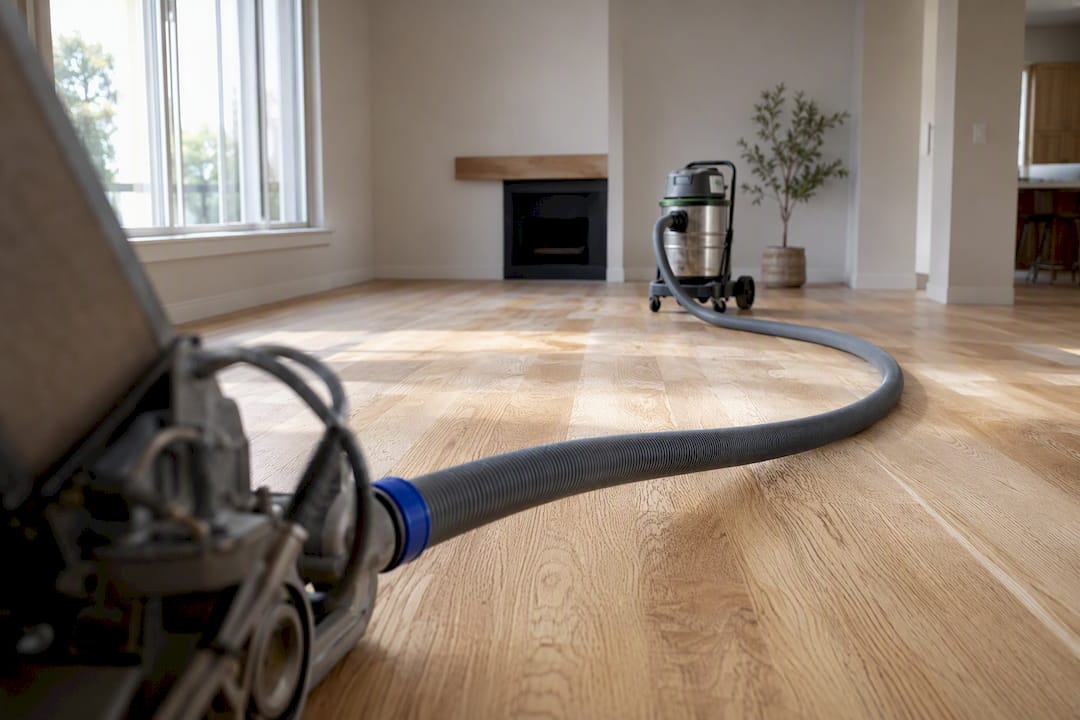
HEPA dust containment sanding is a professional refinishing method that connects sanders directly to HEPA-rated vacuum systems, capturing most airborne dust before it ever settles on your walls or furniture. Expect a dramatic reduction in dust, not zero dust. Before hiring anyone, confirm three things: HEPA filtration on every machine, dedicated edger extraction, and a clear answer on where the exhaust goes.
TL;DR:
Ensure the contractor uses a vacuum system rated between 200 and 400 cfm with HEPA filters, not just a shop vac, to effectively capture airborne dust.
Confirm the edger is connected to extraction hoses, and request a demonstration or photo to verify proper hose connection at the job site.
Prepare the home by sealing HVAC registers, removing furniture, and clearing pathways to minimize dust redistribution during sanding.
Expect a two to five-day timeline for multi-room projects with stain and finish layers, with some jobs completing in a single day if scope is limited.
Conduct a post-job walk-through to check for residual dust on surfaces, view before-and-after photos, and obtain the finish warranty before final payment.
Table of Contents
How does HEPA dust containment sanding actually work?
The setup is straightforward in concept, harder to execute well. A contractor connects the drum sander to a vacuum system rated for construction dust, routing airflow through a HEPA filter before it exhausts. Some crews run truck-mounted vacuums that pull dust through a hose out to a unit parked in the driveway, keeping filter changes and exhaust entirely outside your home. Others use portable HEPA units inside, which work fine for row houses or condos without driveway access, but require careful in-home filter and canister handling.
This differs from “sandless” refinishing (screening and recoating), which doesn’t remove wood at all and produces almost no dust because there’s no sanding happening. True dust containment sanding still removes material down to bare wood. It just captures the byproduct as it’s created.
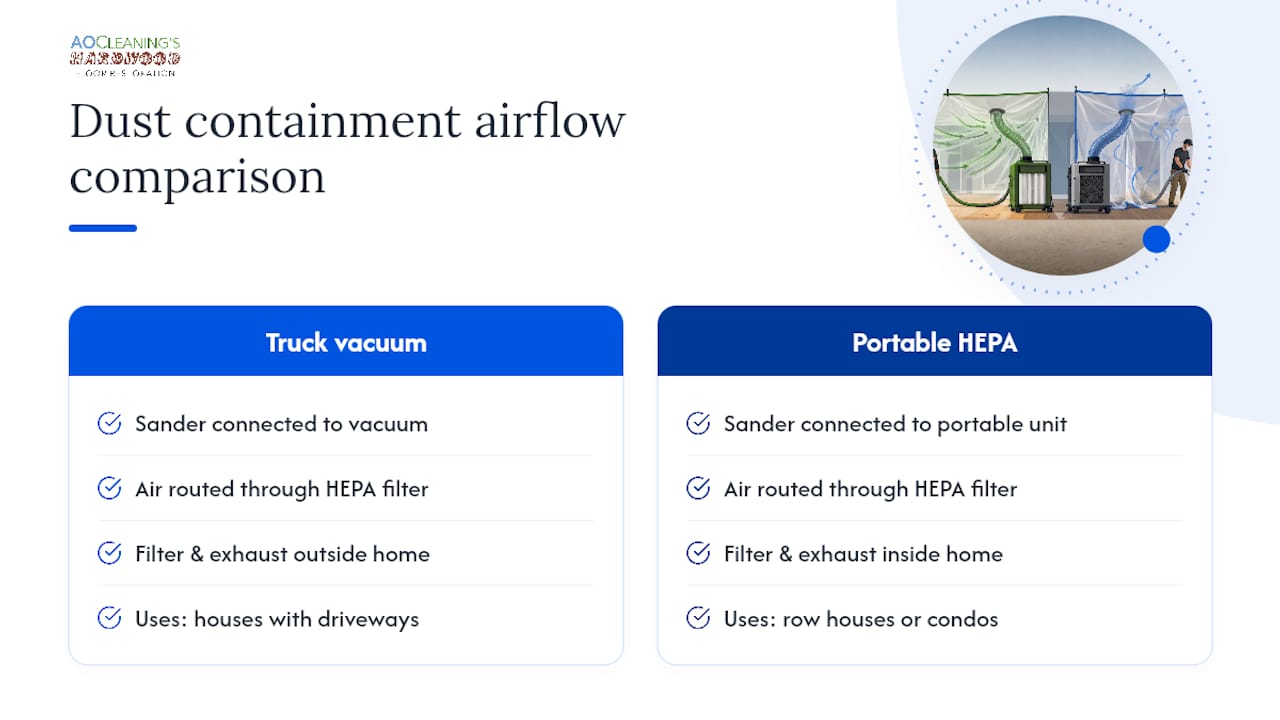
Bona’s dust containment systems claim up to 99.8% airborne dust removal, and independent trade guides put typical capture rates for well-run dustless systems in a high range. That’s the standard to hold contractors to, not perfection, but close to it.
What should you ask a contractor before signing a contract?
Not every company advertising “dustless” or “low-dust” sanding is running the same equipment. The gap between a crew with proper HEPA extraction and one running a shop vac with a fine-dust bag is enormous, and you can’t tell from the truck logo.
Ask these questions directly, and expect specific answers, not reassurance:
What brand and cfm rating is your vacuum system, and does it use a HEPA filter?
Is your edger connected to extraction, or is it hand-sanded without a hose?
Where do you empty filters and canisters, offsite in a truck unit or inside my home?
Can you show recent job photos or provide references from local homeowners?
What’s your written scope of work, and does it explicitly cover dust containment and post-job cleanup?
What’s the walk-on time after the final coat, and is there a warranty on the finish?
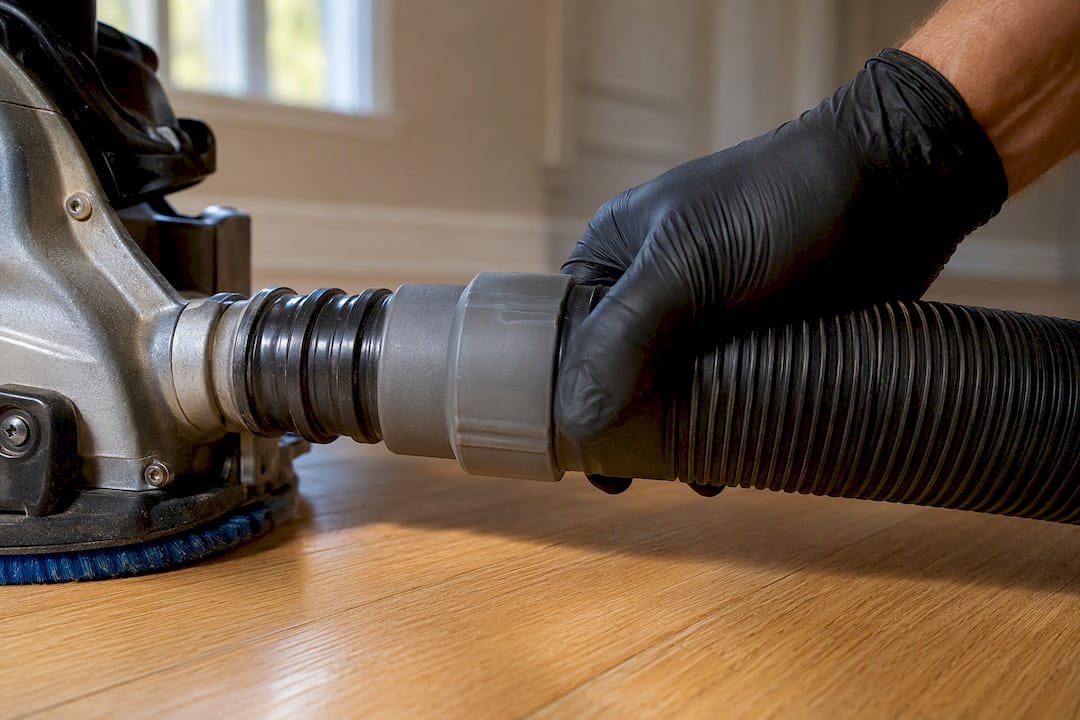
The edger question matters more than people realize. Trade guides consistently point to the edger as the weak link in an otherwise solid containment setup, since it’s used along baseboards and in corners where a hose connection is easy to skip.
Pro Tip: Ask the contractor to show you the hose connection on their edger in person, or send a short video of it running on a past job. If they hesitate or can’t produce one, that’s your answer.
What happens on sanding day, and how long does it take?
A typical HEPA containment job moves through a predictable sequence, though the number of days depends heavily on scope.
Setup and containment. Doorways get sealed, HVAC registers are covered, and vacuum hoses connect to the sander and edger before any dust is created.
Sanding passes. Coarse grits remove the old finish and surface damage, followed by progressively finer grits to smooth the wood.
Staining (if applicable). Optional, and it adds drying time before finish coats can go on.
Finish coats. Applied in layers, with light buffing between coats on some finishes.
Cure and walk-on time. Floors are typically walkable within a few hours of the final coat, though full cure for normal foot traffic and furniture placement takes longer.
A single room or a straightforward refresh can sometimes wrap in one day. A full sand-and-refinish across multiple rooms, especially with stain, commonly runs two to five days once you account for drying and cure time between coats. Watch for dust escaping during filter changes and around the edger. Both are normal moments of slight risk, and a good crew manages them with tarps and quick containment resets rather than letting dust drift freely.
How much does HEPA containment sanding cost?
Price shapes vary by market, but a few variables move every quote up or down. Square footage is the obvious one, but floor condition (deep scratches, pet stains, old wax buildup), the number of stairs and trim pieces, your stain or finish choice, and how easily equipment can access the site all factor in.
Larger open rooms with easy access price lower per square foot than tight hallways, closets, and staircases.
Water-based finishes and specialty stains typically cost more than a standard oil-based finish.
Homes with limited driveway access may need portable units instead of truck-mounted systems, which can affect labor time.
Watch for this: an unusually low bid is often a sign the contractor is skipping edger extraction or running a lighter-duty vacuum without real HEPA filtration. Proper 200 to 400 cfm systems with 4-inch hoses and HEPA filters cost more to run than a shop vac setup, and that cost shows up somewhere in the bid.
How do you prepare your home before the crew arrives?
Preparation in the 24 to 48 hours before the job starts makes a bigger difference than most homeowners expect.
Seal HVAC supply and return registers in the work area and turn the system off entirely during sanding, since a running HVAC will pull fine dust straight into your ductwork and spread it through the whole house.
Move furniture out of the room or have the contractor handle it, and remove wall hangings, mirrors, and anything fragile nearby.
Clear walkways the crew will use to move equipment in and out.
Confirm with your contractor how HVAC will be handled. If they don’t bring it up unprompted, ask.
The contractor’s job on their end is sealing doorways into adjacent rooms and running the vacuum system under enough negative pressure that dust gets pulled toward the collection point rather than drifting outward. For a fuller room-by-room walkthrough, AO Cleaning’s homeowner prep guide covers what to move and what to leave in place.
Pro Tip: If anyone in your household has asthma or dust sensitivity, ask about scheduling the job for a day you can be away from the house for a few hours. Even well-contained sanding stirs up some fine particulate near the work zone.
What does a proper post-job inspection look like?
A clean handoff should include a walk-through, not just a handshake. Check baseboards, vent covers, and the rooms adjacent to where sanding happened for any dust film.
Run a finger along baseboards and window sills in the work area and the room next door.
Ask to see before-and-after photos if the contractor didn’t already share them during the job.
Get the finish warranty in writing before final payment.
If you spot residual dust, ask for a quick HEPA vacuum pass and edge touch-up before you sign off.
Most reputable contractors won’t push back on this. If a crew resists a basic walk-through or can’t produce photos, treat that as a red flag worth escalating before you pay the final invoice.
Why properly executed HEPA containment changes the outcome
AO Cleaning has run dustless sanding jobs across central Illinois and the St. Louis metro since 2003, and the pattern is consistent: homes with sensitive occupants, allergies, or a family that can’t vacate for days do noticeably better with true HEPA containment than with a crew running standard equipment. The difference shows up in the details, less dust settled on window sills, faster post-job inspection, and none of the lingering sanding-dust smell that shows up weeks later in HVAC systems.
With over 450 Google reviews and one-day restoration capability on many jobs, the practical case for hiring a properly equipped crew comes down to this: a full sand-and-refinish is worth doing right the first time. If your floors just need a light surface refresh rather than full sanding, screening and recoating is often the better call, and a good contractor will tell you that upfront instead of upselling a bigger job.
— Jim
Ready to book a dust-controlled floor restoration?
AO Cleaning has been running HEPA-contained, dustless sanding jobs across St. Louis, Monroe, and Madison Counties since 2003, backed by over 450 Google reviews and a track record of one-day restorations when scope allows.
Every job uses eco-friendly finishes with minimal odor, so households with kids, pets, or dust sensitivity aren’t stuck avoiding their own home for a week. An in-home consultation gets you a firm scope of work, a look at the exact equipment being used on your floors, and a straight answer on timeline before you commit to anything. If your countertops need attention too, AO Cleaning’s countertop cleaning, polishing, and sealing service is worth asking about during the same visit. Request an estimate and get a date on the calendar before your floors get worse.
Sources
For a deeper walkthrough of the containment process, see AO Cleaning’s dustless floor sanding guide and refinishing project checklist. For broader indoor air quality guidance during renovations, review dust reduction methods for a healthier home.
Recommended

Comments