


Hardwood Floor Maintenance After a Deep Clean

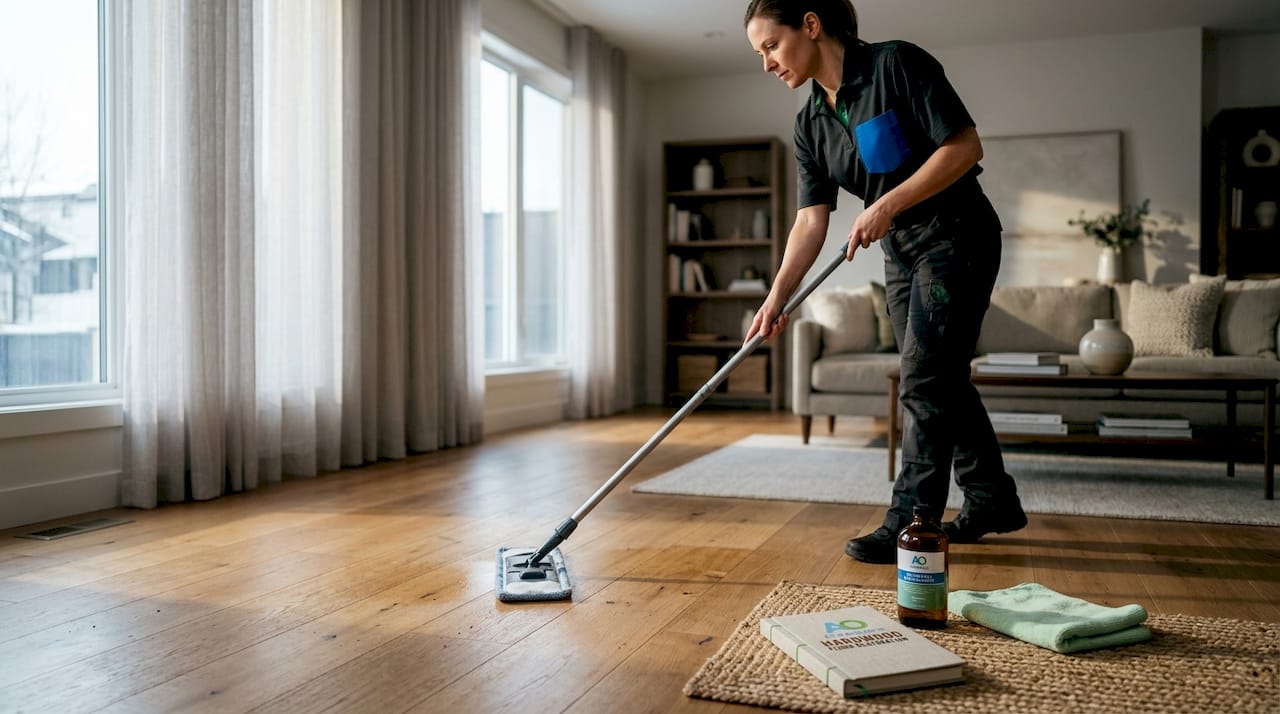
Hardwood floor maintenance after a deep clean is defined as the set of moisture control, drying, product selection, and routine care practices that preserve your floor’s finish and structural integrity immediately following a thorough cleaning. Most homeowners assume the hard work ends when the mop goes away. It doesn’t. The decisions you make in the first 30 minutes after cleaning, and the habits you build in the weeks that follow, determine whether your floors stay beautiful for decades or start showing damage within months. Moisture control is the single most important factor. Get that right, and everything else falls into place.
What are the essential steps right after deep cleaning hardwood floors?
The first 30 minutes after a deep clean are the most critical window for hardwood floor upkeep. Wood is porous, and any moisture sitting on the surface will begin working its way into the grain almost immediately. Follow these steps every time.
Work in small sections. Clean a 4 to 6 foot area at a time using a barely damp microfiber mop. Working in small sections with immediate drying prevents water from pooling between boards.
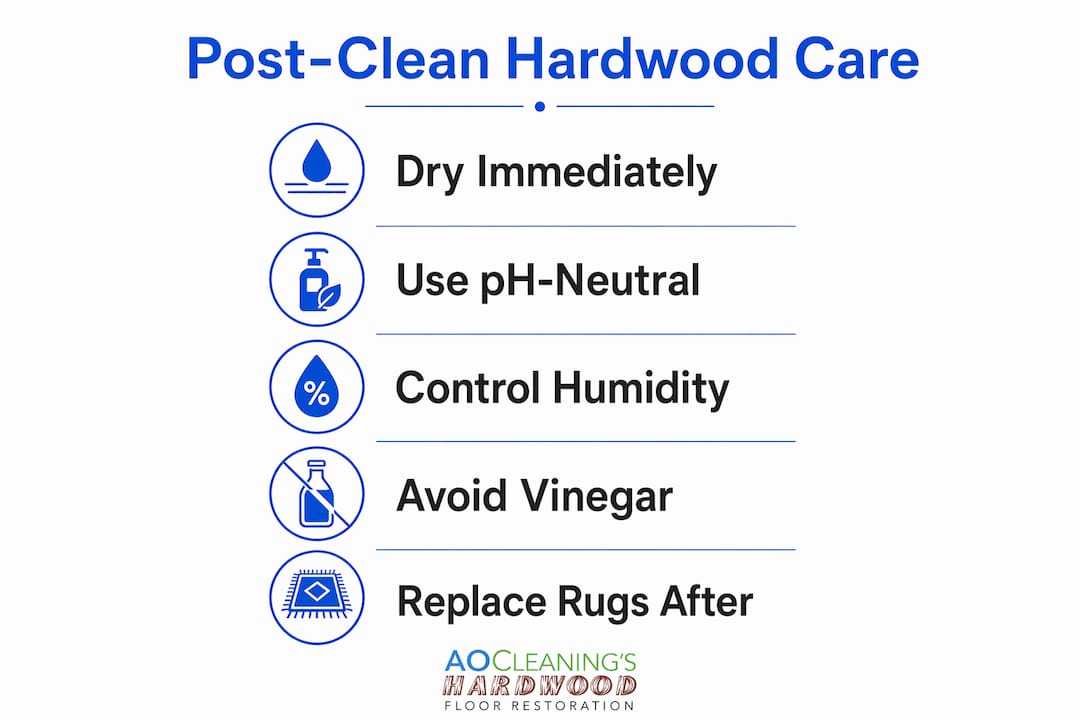
Dry each section immediately. Follow the damp mop with a dry microfiber cloth or a dry mop head. Do not let any section air dry on its own. The goal is zero standing moisture.
Respect dwell time on concentrated cleaners. If you used a concentrated hardwood cleaner, allow 1 to 2 minutes dwell time before wiping up. Exceeding that window leaves a residue film that dulls the finish and complicates your next cleaning.
Wait at least 30 minutes before replacing rugs or furniture. Placing rugs on damp floors traps moisture underneath and creates the exact conditions that cause warping and cupping. Set a timer if you need to.
Ventilate the room. Open windows or run a ceiling fan on low to accelerate drying. Avoid running a humidifier in the same room during this period.
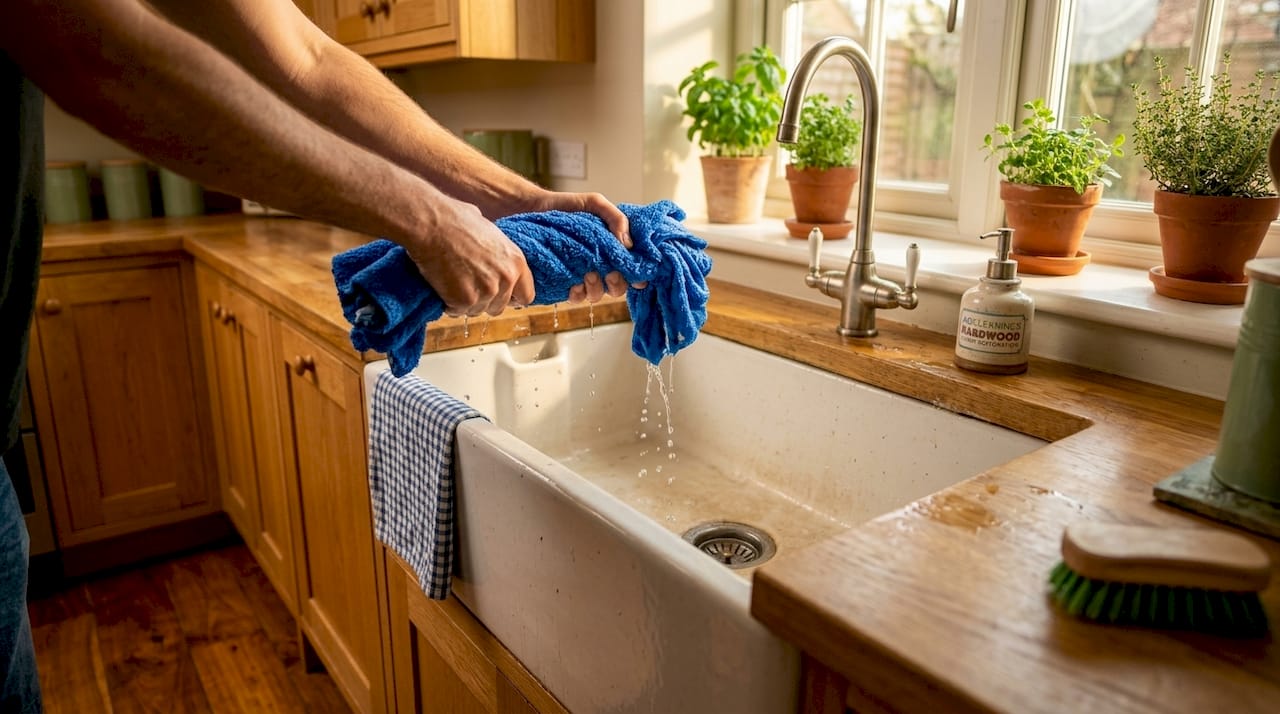
Pro Tip: Wring your microfiber mop head until no water drips when you squeeze it. If water drips, it’s too wet for hardwood.
The finish type on your floor also matters here. Oil-finished floors require different cleaning products than polyurethane floors. Using a polyurethane cleaner on an oil-finished floor can cause clouding or haze that looks like damage but is actually a product mismatch. Check your floor’s finish before you select any cleaner.
How does moisture damage hardwood floors after cleaning?
Moisture is the primary threat to hardwood floors after any cleaning session, and the damage it causes is rarely reversible without professional intervention. Even a thin film of water left between boards creates pressure as the wood fibers absorb it and swell.
The most common moisture-related problems homeowners see after cleaning include:
Cupping: The edges of boards rise higher than the center, creating a concave surface. This happens when the underside of the board absorbs more moisture than the top.
Warping: Boards bow or twist out of their original plane. Severe cases require full board replacement.
Streaking: Mineral deposits from tap water leave white or gray streaks as water evaporates. These are cosmetic but signal that too much water was used.
Finish clouding: Moisture trapped under the finish creates a milky or hazy appearance that does not buff out.
Steam mops are the fastest route to all four of these problems. Steam cleaning causes wood fibers to swell, leads to cupping, and voids most manufacturer warranties. No hardwood floor manufacturer recommends steam mops, and no amount of convenience justifies the risk.
“Moisture control is the decisive factor in preventing hardwood floor damage post-cleaning, more than the specific cleaning product used.” — Realtor.com expert guidance
Beyond the cleaning session itself, ongoing humidity management protects your floors year-round. Maintaining indoor humidity between 35 and 55% reduces wood expansion and contraction, which lowers the risk of finish failure and board movement. A basic hygrometer costs under $20 and gives you real-time readings. In central Illinois and the St. Louis metro area, summer humidity spikes are common. Running a dehumidifier during those months is not optional if you want your floors to last.
Which products and tools are safest for post deep clean care?
Choosing the right products for cleaning hardwood floors after a deep clean is where most homeowners make costly mistakes. The wrong cleaner does not just leave residue. It actively degrades the finish over time.
Here is a direct comparison of what works and what to avoid:
Product / Tool | Safe for Hardwood? | Why |
pH-neutral hardwood cleaner (e.g., Bona, AO Hardwood Neutral Cleaner) | Yes | Designed for finished wood; no residue buildup |
Microfiber mop | Yes | Traps debris without scratching; controls moisture |
Soft-bristled broom | Yes | Safe for daily dust removal without finish abrasion |
Vinegar or vinegar-based cleaners | No | Acidic; degrades polyurethane finish over time |
Murphy’s Oil Soap | No | Leaves oily residue that dulls finish and attracts dirt |
Bleach or ammonia | No | Strips finish and discolors wood |
Two-in-one cleaner/polish products | No | Builds up waxy layers that cloud finish |
Steam mop | No | Heat and moisture cause warping and void warranties |
Metal scraper | No | Scratches finish; use plastic scraper instead |
For sticky residue left after cleaning, a plastic scraper removes tape or adhesive without scratching the finish. Metal blades, no matter how careful you are, will leave marks.
Pro Tip: If you’re unsure which cleaner matches your floor’s finish, check the best products for hardwood maintenance before buying anything. Using the wrong product on an oil-finished floor is one of the most common and expensive mistakes homeowners make.
Bona Hardwood Floor Cleaner is widely available and finish-safe for most polyurethane floors. For homeowners who want a locally trusted option, AO Hardwood Neutral Cleaner is formulated specifically for post-clean maintenance and is pH-balanced to protect both oil and polyurethane finishes.
What ongoing routines protect hardwood floors long-term?
Hardwood floor preservation techniques are most effective when they follow a consistent schedule rather than a reactive one. The goal is to prevent buildup and damage before they become visible.
Here is the maintenance cadence that Dyson recommends for preventive care, adapted for real-world home use:
Daily or every other day in high-traffic areas: Dry dust or vacuum using a soft-bristle attachment. This removes grit and debris that act like sandpaper underfoot and wear down the finish faster than any cleaning product.
Weekly: Damp mop with a pH-neutral cleaner. Use a microfiber mop head wrung nearly dry. This removes the thin layer of oils, foot traffic residue, and cleaning product film that accumulates between deep cleans.
Monthly or quarterly: Perform a targeted deep clean using a concentrated hardwood cleaner with proper dwell time. This is also when you should inspect for early signs of finish wear, scratches, or board movement.
Seasonally: Check humidity levels and adjust your HVAC or dehumidifier settings. Inspect boards near exterior walls and vents where temperature swings are most pronounced. Review the hardwood floor maintenance best practices guide to catch anything you may have missed.
Annually: Assess whether the finish needs a screen and recoat. A screen and recoat adds a fresh layer of finish without sanding down to bare wood. It is far less expensive than a full refinish and extends the life of your floor by years.
The homeowners who get the most life out of their hardwood floors are not the ones who clean the hardest. They are the ones who clean consistently and catch problems early.
How to troubleshoot dullness, stickiness, or damage after deep cleaning
Post-clean problems fall into two categories: residue issues you can fix yourself, and finish or structural damage that requires professional help. Knowing the difference saves you time and money.
Common signs and what they mean:
Dull or hazy appearance: Almost always residue buildup, not damage. Dullness after cleaning signals a thin film of cleaner or oils that a proper deep clean with the right dwell time will remove. Do not apply polish or wax over it. That compounds the problem.
Sticky surface: Caused by cleaner left on too long or a product that was not rinsed properly. Use a barely damp microfiber mop with clean water to remove the residue, then dry immediately.
White spots or streaks: Mineral deposits from tap water. Buff gently with a dry microfiber cloth. Use distilled water for future cleaning if your tap water is hard.
Pro Tip: The water test tells you whether your floor has a surface finish or an oil finish. Place a few drops of water on the floor. If the water beads up, you have a surface finish like polyurethane. If it soaks in within a few minutes, you have an oil or wax finish. Each requires a completely different maintenance approach.
When to call a professional:
Problem | DIY Fix? | Professional Needed? |
Residue buildup or dullness | Yes, with correct cleaner | No |
Sticky surface from cleaner residue | Yes, damp mop and dry | No |
Cupping or warping | No | Yes |
Deep scratches through finish | No | Yes |
Finish peeling or flaking | No | Yes |
If your floors show cupping, warping, or finish failure, no amount of mopping will fix the underlying issue. Those conditions require professional floor restoration to assess whether a screen and recoat, a full sand and refinish, or board replacement is the right path forward.
Key takeaways
Hardwood floor maintenance after a deep clean requires moisture control above all else, combined with finish-appropriate products and a consistent care schedule to prevent residue buildup and structural damage.
Point | Details |
Dry immediately after cleaning | Work in small sections and dry each area before moving on to prevent warping. |
Avoid steam mops and harsh chemicals | Steam, vinegar, bleach, and Murphy’s Oil Soap all damage hardwood finishes over time. |
Match products to your finish type | Oil-finished and polyurethane floors require different cleaners to avoid clouding or haze. |
Follow a tiered cleaning schedule | Daily dusting, weekly damp mopping, and quarterly deep cleaning protect floors between professional services. |
Know when to call a professional | Cupping, warping, and finish failure require professional restoration, not more cleaning. |
What 20 years of floor work taught me about post-clean care
After working with hardwood floors across central Illinois and the St. Louis metro area for over two decades, the pattern I see most often is this: homeowners do everything right during the deep clean and then undo it in the 30 minutes afterward. They put the rug back too soon. They use a mop that’s too wet. They grab whatever cleaner is under the sink without checking the finish type.
The floors that hold up the best belong to homeowners who treat the post-clean period as seriously as the clean itself. They dry thoroughly, they wait before replacing furniture, and they use the same pH-neutral cleaner every time rather than switching products based on what’s on sale.
The other thing I’ve learned is that most homeowners don’t realize how much damage accumulates before it becomes visible. By the time a floor looks dull or starts showing cupping, the underlying cause has usually been building for months. Seasonal humidity checks and annual finish inspections catch those problems when they’re still inexpensive to fix. Waiting until the floor looks bad means you’re already looking at a full sand and refinish instead of a simple screen and recoat.
If your floors are showing signs of wear, get them assessed before you assume replacement is the answer. In most cases, restoration is faster, cheaper, and produces a better result than new flooring. That’s not a sales pitch. It’s just what the data from 20-plus years of jobs shows.
For more detail on maintaining floors between services, the habits described there are the same ones I recommend to every homeowner after a professional cleaning.
— Jim
Protect your investment with the right products and professional support
A deep clean is only as good as the maintenance that follows it. Aosaveswoodfloors has been helping homeowners in St. Louis, Columbia, Belleville, and surrounding communities protect their hardwood floors since 2003. Their AO Hardwood Neutral Cleaner is pH-balanced and safe for both oil and polyurethane finishes, making it the right choice for weekly maintenance after any deep clean. For floors showing cupping, finish failure, or deep wear, Aosaveswoodfloors offers full sand and refinishing using dustless techniques with most jobs completed in a single day. Before you replace your floors, let them restore them.
FAQ
What is the most important step right after deep cleaning hardwood floors?
Drying the floor immediately is the most critical step. Work in small sections with a barely damp microfiber mop and dry each area before moving on to prevent moisture from penetrating the wood grain.
How long should I wait before putting rugs back after cleaning?
Wait at least 30 minutes after cleaning before replacing rugs or furniture. Placing rugs on a slightly damp floor traps moisture underneath and creates conditions that cause warping and cupping.
Can I use vinegar to clean hardwood floors after a deep clean?
Vinegar is not safe for hardwood floors. Its acidity degrades polyurethane and oil finishes over time, leading to dullness and finish failure. Use a pH-neutral cleaner like Bona or AO Hardwood Neutral Cleaner instead.
Why do my hardwood floors look dull after cleaning?
Dullness after cleaning almost always signals residue buildup from cleaner left on too long or an incompatible product. A proper deep clean with a finish-appropriate cleaner and correct dwell time removes the film and restores sheen.
How often should I deep clean hardwood floors?
Deep cleaning monthly or quarterly is the standard recommendation for most homes, with daily dry dusting in high-traffic areas and weekly damp mopping in between. Homes with pets or heavy foot traffic may need more frequent deep cleaning cycles.
Recommended

Comments