


When to Walk on Floors After Water-Based Refinishing

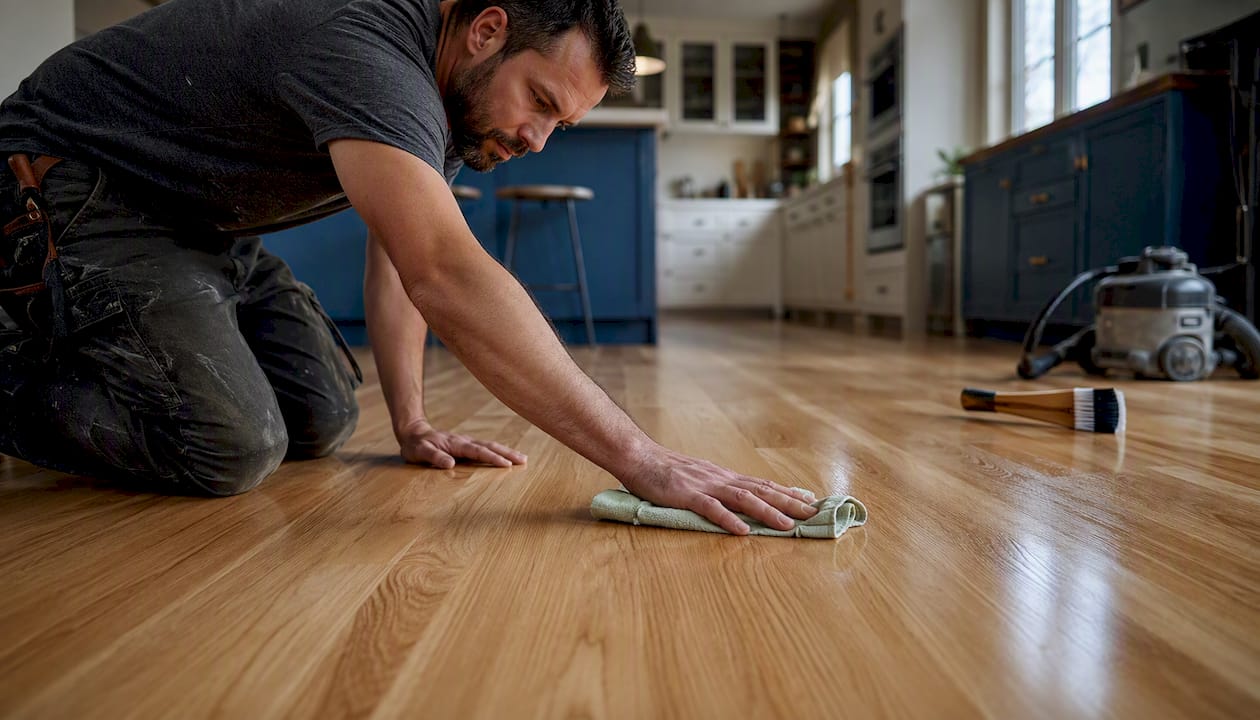
With most water-based polyurethanes, you can walk on floors after refinishing in socks after about 24 hours, but shoes, furniture, and rugs need to wait several more days. That’s the short answer. The longer one depends on your specific product, your home’s temperature and humidity, and the difference between a floor that feels dry and one that’s actually cured.
Here’s what to do right now if your floors were just finished:
Do: Walk in clean socks after 24 hours if the floor feels firm and non-tacky
Don’t: Wear shoes, drag anything across the floor, or lay rugs for at least 3–7 days
Don’t: Move furniture back in until the finish has reached at least 90% cure, which typically takes 48–72 hours minimum
Two manufacturers whose technical data sheets are worth bookmarking: Bona (Traffic HD, Mega One) and Rust-Oleum’s Pro Finisher Water-Base Polyurethane. Both publish specific cure benchmarks, and both should be your first stop before trusting any general timeline, including this one.
Pro Tip: If your contractor used a product you don’t recognize, ask for the TDS (technical data sheet) before they leave. That single document tells you more than any blog post.
Key Takeaways
Water-based polyurethane allows sock-only traffic at 24 hours, but full cure takes several days to a few weeks depending on product, temperature, and humidity.
Point | Details |
Sock-only at 24 hours | Light foot traffic in clean socks is generally safe after 24 hours for most water-based finishes. |
Cure progresses in stages | Pro Finisher TDS shows 75% cure at 24h, 90% at 48h, and 95% at 7 days under standard conditions. |
Rugs and furniture wait | Rugs should stay off for 7–14 days minimum; rubber-backed mats can permanently discolor uncured finish. |
Conditions shift the timeline | Temperature below 60°F or humidity above 60% RH can meaningfully extend both dry time and cure time. |
Aosaveswoodfloors | Professional refinishing with controlled conditions and eco-friendly water-based products; most floors ready in about three hours. |
Table of Contents
Dry time vs. cure time: why the difference matters more than you think
These two terms get used interchangeably, but they describe completely different things, and confusing them is how floors get ruined.
Dry time is how long it takes the surface to stop feeling wet or tacky. Water evaporates, the finish firms up to the touch, and it looks done. For most water-based polyurethanes, surface dry typically occurs within a couple of hours under normal conditions.
Cure time is how long the finish takes to fully harden through its entire thickness, a chemical cross-linking process that continues well after the surface feels solid. According to Ralph’s Hardwood, the finish keeps hardening beneath the surface for days to weeks, even when it feels perfectly firm underfoot.
The practical consequences of mixing these up:
Placing a rug on a “dry” but uncured floor traps moisture and causes clouding or soft spots
Walking in shoes on an uncured finish leaves micro-scratches that show up weeks later
Heavy furniture legs can dent a finish that’s 75% cured but looks completely fine
Pro Tip: Run your fingernail lightly across an inconspicuous spot. If it leaves any mark at all, the finish isn’t ready for shoes or furniture, regardless of how many hours have passed.
What manufacturer timelines actually say about water-based poly
Here are typical ranges from product technical data sheets and pro guides, with specific callouts for two commonly used products.
Stage | Typical Range | Pro Finisher (Rust-Oleum) | Bona (Traffic HD / Mega One) |
Dry to touch | a couple of hours | a short time under controlled conditions | about an hour |
Light foot traffic (socks) | about a day | about a day | roughly a day |
Shoes / normal traffic | two to three days | two or more days | two to three days |
Furniture move-in | several days | a few days (for light pieces) | several days |
Rugs | about one to two weeks | a week or more | about one to two weeks |
Substantial cure | 7–30 days | 95% at 7 days | Product-dependent |
The Rust-Oleum Pro Finisher TDS provides one of the clearest cure-progress breakdowns available: substantial cure progress within the first week with incremental hardening continuing over several days under lab conditions of 70–80°F and 50% relative humidity. Those percentages matter because they tell you the floor is still actively hardening even when it feels solid.
Not all systems are equal. Heffernan Hardwood’s guide notes that two-component waterborne systems like LOBA Supra A.T. 2K can reach normal use in about half a day, while single-component systems like LOBA EasyFinish need about a day for light use and several days for full use. The General Finishes Enduro Clear Poly TDS also notes that application technique, specifically thin, even coats with proper flash time between them, directly affects how predictably those timelines hold.
As Wood Flooring Doctor points out, full curing for some water-based systems can take up to three weeks, even though light walking is often fine much earlier.
What actually changes how fast your floors dry and cure
Manufacturer timelines are lab numbers. Your house is not a lab. Here’s what pushes your project toward the faster or slower end of those ranges.
Temperature: Below 60°F, cure chemistry slows significantly. Above 80°F, surface dry accelerates but through-cure doesn’t necessarily keep pace. The sweet spot is 65–75°F.
Relative humidity: Above 60% RH, water-based finishes take noticeably longer to dry and cure. Below 40% RH, surface dry can happen so fast that coats don’t bond as well. Target 40–60% RH during application and the first 24 hours.
Airflow and ventilation: Moving air helps water evaporate from the surface. Stagnant air in a closed room extends dry time. Open windows on opposite sides of the room, or run a fan on low, pointed away from the wet surface.
Coat thickness: Thick coats trap solvent and moisture underneath, extending cure time and increasing the risk of soft spots. The General Finishes TDS specifically recommends thin, even coats with minimum flash times between applications.
Number of coats: Three to four coats is standard for hardwood. Each additional coat adds to total cure time because the system cures as a whole, not coat by coat.
Wood species and plank width: Wide-plank floors and species like white oak move more with humidity changes. That movement stresses a partially cured finish more than it would stress a fully cured one, so conservative timelines matter more on wide planks.
Pro Tip: If you’re refinishing in summer in a humid climate, run a dehumidifier in the room during the first 48 hours. It can meaningfully shorten dry time without affecting cure quality.
Your day-by-day homeowner schedule after the last coat
This is the practical version of those manufacturer ranges, broken into windows you can actually follow.
0–12 hours: Stay completely off the floor. No exceptions. The finish is still wet or tacky, and any contact leaves permanent marks.
12–24 hours: The surface should be dry to the touch, but the finish is still only partially cured. Continue to stay off it.
24–48 hours: Light sock-only traffic is generally acceptable if the floor passes a tack test (see Section 7). No shoes, no sliding, no pets with claws. Bona’s homeowner guidance and DeArmas Wood Floors both confirm this window for careful, sock-only movement.
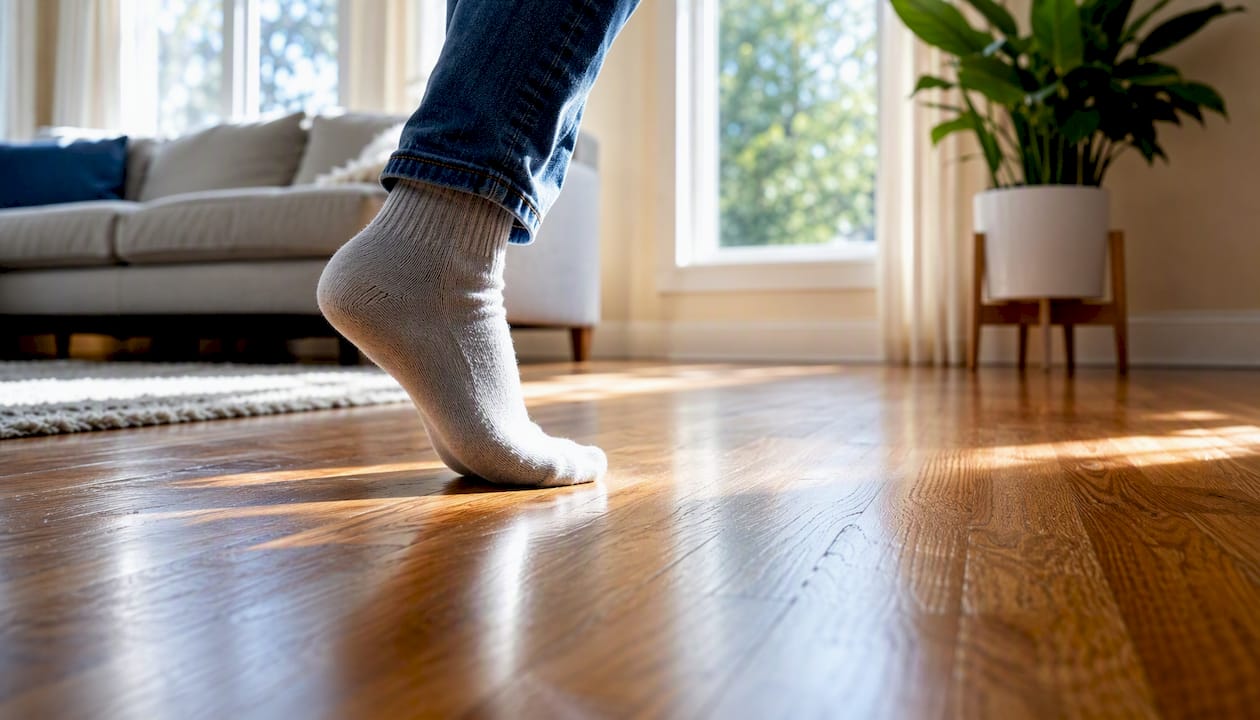
48–72 hours: Normal foot traffic in shoes is usually safe once the finish hits 90% cure. Light furniture with felt pads can go back in carefully. Avoid dragging anything.
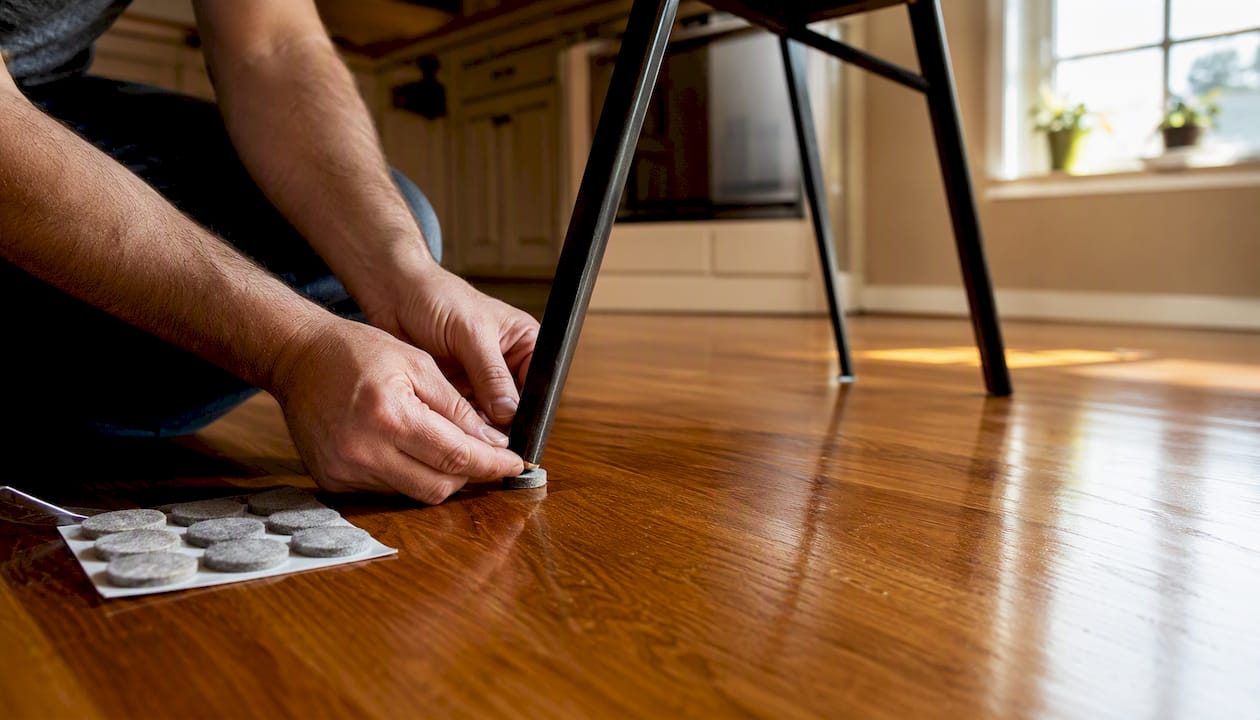
3–7 days: Most furniture can return. Keep rugs off. The finish is still hardening, and rugs trap humidity and prevent the last stages of cure.
7+ days: Rugs can go back down once you’re confident the finish has reached near-full cure. For heavy furniture, area rugs, or rubber-backed mats, waiting the full 14–21 days is the safer call.
What to avoid throughout the entire cure window:
Rubber-backed mats (they trap moisture and can permanently discolor the finish).
Wet mopping or steam cleaning
Cleaning products not approved for freshly finished floors
Pets with untrimmed nails during the first 72 hours
Kids and contractors should follow the same sock-only rule for the first 48 hours. If you’re having other work done in the house, keep trades out of refinished rooms entirely until at least 72 hours have passed.
Health, ventilation, and whether you can sleep in the house
Water-based polyurethanes have a much lower VOC profile than oil-based finishes, which is one of the main reasons pros and homeowners prefer them. You won’t get the sharp solvent smell that clears a house for days. That said, “low VOC” doesn’t mean “no VOC,” and some product chemistries carry specific safety notes worth knowing.
The Minwax SDS for one water-based product flags ingredients that showed reproductive effects in animal data and recommends adequate ventilation and respiratory protection during application and drying. That’s a standard precaution across many coatings, but it’s worth taking seriously.
Practical ventilation checklist:
Open windows on opposite sides of the room to create cross-ventilation
Run a box fan pointed outward from a window to exhaust fumes
Keep the HVAC fan running (not heat/cool, just fan) to circulate air through filters
Avoid recirculating air back into the refinished room for the first 24 hours
Can you sleep in the house? For most modern water-based finishes, sleeping in a different room with good ventilation is generally fine after the first few hours. If the odor is strong or you’re sensitive to chemical smells, spending the first night elsewhere is a reasonable precaution, especially for pregnant people, infants, or anyone with respiratory conditions. If you experience headaches, dizziness, or throat irritation, leave the area and increase ventilation before returning.
For surface restoration aftercare and ventilation strategies, product-neutral guidance from restoration specialists can supplement what the manufacturer SDS provides.
How to test whether your floor is ready for heavier use
These tests work for homeowners and don’t risk damaging the finish if done carefully.
The tack test: Press the pad of your finger lightly on an inconspicuous spot near a wall. If it feels even slightly sticky, the finish isn’t ready for traffic.
The fingernail press: Gently press your thumbnail into a low-traffic corner. Any indentation means the finish is still too soft for shoes or furniture.
The painter’s tape test: Apply a small piece of low-tack painter’s tape to a corner, press it down, and pull it off slowly. If the finish lifts or leaves a mark, it’s not ready.
Visual check: Look across the floor at a low angle in raking light. A fully cured finish has a consistent sheen. Dull patches, slight cloudiness, or uneven gloss can indicate areas that are still off-gassing or soft.
Smell check: A strong chemical odor after 48 hours suggests the finish is still actively curing. Trust your nose.
Pro Tip: These tests are useful, but they’re not infallible. A floor can pass the tack test and still be only 75% cured. When in doubt, default to the product TDS and add a day.
Wood Flooring Doctor notes that home tests can produce false positives, particularly in cooler or more humid conditions where surface cure outpaces through-cure. Don’t sand, use solvents, or apply any product to test the finish yourself. Those are pro-only diagnostics.
What to do if someone walked on the floor too soon
First: don’t panic, and don’t try to fix it immediately. Here’s the right sequence.
Step back. More foot traffic makes it worse. Rope off the area if you need to.
Photograph the damage in good light before doing anything else. You’ll need those photos if a professional recoat is required.
Leave it alone for 24–48 hours. Minor scuffs on a partially cured finish sometimes self-level as the finish continues to cure.
Assess after full cure. Light surface scuffs that don’t penetrate the finish layer can often be addressed with a screen and recoat. Deeper indentations, clouding, or adhesion failures typically need a full sand and refinish.
When to call a professional:
The damage covers more than a small area
You see clouding, whitening, or a milky appearance (moisture trapped under the finish)
The finish is peeling or lifting
You’re not sure whether the damage is cosmetic or structural
Pro Tip: Don’t apply any cleaner, polish, or “floor refresher” to damaged areas before a pro assesses them. Some products interfere with adhesion and make a recoat impossible without full sanding.
For guidance on full sand and refinish options, understanding what that process involves helps you have a more informed conversation with your contractor.
How professionals get floors walkable faster without cutting corners
The gap between a 24-hour DIY timeline and a 12-hour pro timeline comes down to a few specific techniques, not magic.
Two-component (2K) waterborne systems: Products like LOBA Supra A.T. 2K use a chemical hardener mixed at application. The cross-linking reaction is faster and more complete than single-component systems, which is why Heffernan Hardwood cites normal use in as little as 12 hours for 2K products.
Controlled temperature and humidity: Pros often bring in dehumidifiers and monitor conditions throughout the job. Keeping RH at 45–55% and temperature at 68–72°F produces the most predictable cure.
Thin, even coats: Thicker coats feel like they should cure faster, but they don’t. Thin coats dry and cure more uniformly, which is why the General Finishes TDS emphasizes this point.
Screening between coats: Light abrasion between coats improves adhesion and helps each layer cure as part of a unified system rather than separate films.
Staged access: Pros often complete one room at a time, letting the first area reach safe-traffic status while they finish adjacent rooms.
Aosaveswoodfloors’s one-day restoration service is built around exactly this kind of controlled workflow. Dustless equipment, eco-friendly water-based products, and a process refined over 20+ years means floors are typically ready for light traffic in about three hours after the final coat, rather than the 24-hour wait a DIY job usually requires.
Why conservative timelines are almost always the right call
There’s a version of this advice that says: “The manufacturer says 24 hours, so 24 hours is fine.” Technically, that’s true. Practically, it’s the floor equivalent of pulling a cake from the oven the moment the timer goes off.
Manufacturer timelines are minimums measured under ideal lab conditions. Your house in February with the heat running and the humidity at 35% is not that lab. Neither is your house in July in St. Louis with the windows open. Aosaveswoodfloors has been refinishing floors in central Illinois and the St. Louis metro area since 2003, and the pattern is consistent: the callbacks that involve finish problems almost always trace back to someone who moved furniture back in at 48 hours instead of 72, or laid a rug at day five instead of day ten.
Conservative timelines don’t just protect the finish. They protect the investment. A full sand and refinish costs real money and takes the floor out of commission for days. Waiting an extra 48 hours costs nothing.
Floors done right the first time, with faster reentry
If the timing math in this article feels like a lot to manage on your own, that’s because it is. Water-based poly dry time and cure time depend on variables most homeowners can’t fully control: product chemistry, coat thickness, ambient conditions, and application technique all interact in ways that shift your safe-reentry window by hours or days.
Aosaveswoodfloors takes that guesswork off your plate. Their full sand and refinishing service uses dustless equipment and eco-friendly water-based products, with most jobs completed in a single day and floors ready for light traffic in about three hours. For floors that need less than a full refinish, their clean and buff service refreshes the finish without the extended cure window of a full coat system.

Serving St. Louis, Columbia, Belleville, Fairview Heights, Waterloo, O’Fallon, and surrounding communities across Monroe and Madison Counties, Aosaveswoodfloors has 450+ Google reviews and over 20 years of experience backing every job. Request a quote or schedule an in-home consultation at Aosaveswoodfloors.
Manufacturer and pro resources worth bookmarking
These are the primary sources behind the timelines and safety guidance in this article. Match your specific product’s TDS to the ranges in the table above before finalizing your schedule.
Bona homeowner guide: Light traffic timing, product-specific guidance for Bona waterborne finishes, and what to expect during the cure window.
Rust-Oleum Pro Finisher TDS: Dry-to-touch, foot traffic, and cure percentage benchmarks (75% / 90% / 95%) under stated lab conditions.
General Finishes Enduro Clear Poly TDS: Application guidance on coat thickness, flash times, and how technique affects cure behavior.
Heffernan Hardwood pro guide: Real-world timelines for single-component vs. two-component waterborne systems, including LOBA product comparisons.
Ralph’s Hardwood blog: Clear explanation of dry time vs. cure time and why surface feel can mislead homeowners.
Minwax SDS: Safety warnings, ventilation requirements, and PPE recommendations for water-based coating products.
Surface restoration methods for homeowners: Supplementary reading on managing cure windows and drying strategies for water-based finishes.
Sources
Pro Finisher Water-Base Polyurethane technical data (Rust-Oleum)
When can you walk on refinished hardwood floors? (Heffernan Hardwood)
Cure Time vs Dry Time: Understanding the Importance of Waiting When Refinishing Your Hardwood Floors
How Soon Can You Walk on Hardwood Floors? A Complete Guide (Wood Flooring Doctor)
How Long Should You Wait to Walk on Newly Finished Hardwood Floors? - DE ARMAS WOOD FLOORS
Recommended

Comments