


Quartz Countertop Cleaning: The Right Way to Do It Daily

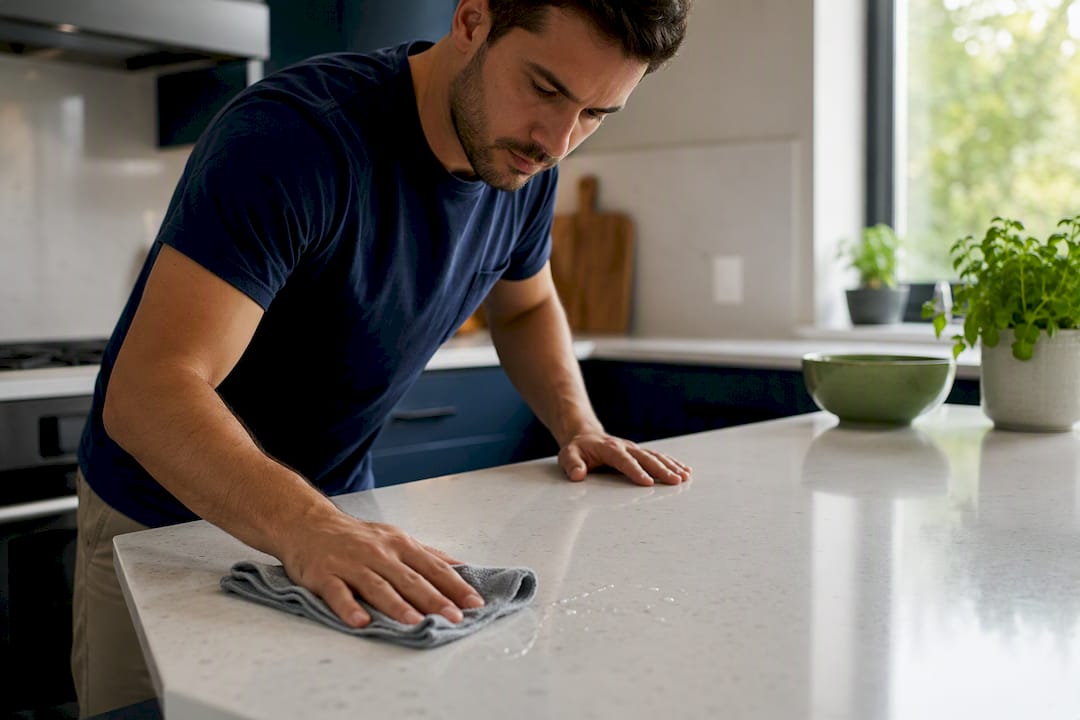
The safest quartz countertop cleaning method is a damp microfiber cloth with a few drops of mild dish soap, wiped in warm water and dried immediately. Quartz resists stains far better than natural stone, but it isn’t invincible: some harsh chemicals and abrasive tools can damage its surface over time. Treat it gently every day and it’ll stay flawless for decades.
TL;DR:
Using a damp microfiber cloth with mild dish soap and immediate drying keeps quartz countertops spotless without risking surface damage.
Avoid strong acids, bleach, abrasive pads, and harsh cleaners like oven and drain cleaners that can degrade or discolor the resin-binding surface.
Most stains respond well to gentle methods such as soap and water, baking soda paste, or diluted alcohol, with escalation only if necessary.
Quartz does not require sealing and resists spills better than natural stone, but heat damage from direct pots or pans can cause cracks.
Professional repair is advisable for persistent stains, chips, or dullness that do not improve with routine cleaning.
Table of Contents
How do you clean quartz countertops every day?
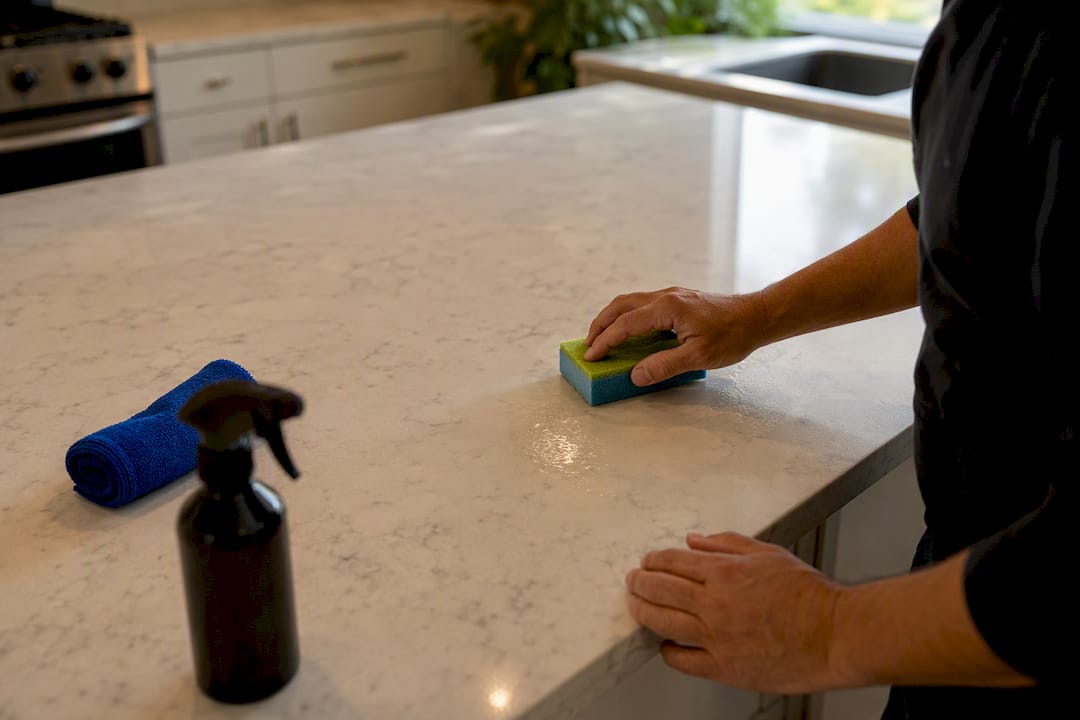
You need almost nothing to keep quartz looking new. Here’s what to have on hand:
Microfiber cloths — they lift grime without scratching the surface the way paper towels or rough sponges can.
Mild dish soap — strong enough to cut grease, gentle enough to leave the resin binder untouched.
Isopropyl alcohol (70% is fine) — for disinfecting and sticky residue, used sparingly.
Baking soda — the base for a paste that lifts stubborn spots without scratching.
The daily routine takes only a few minutes:
Clear crumbs and debris with a dry cloth or your hand.
Wipe the surface with a microfiber cloth dampened in warm water and a few drops of dish soap.
Rinse with a clean, damp cloth to remove soap residue.
Dry and buff with a fresh microfiber towel so no water spots or haze set in.
Once a week, go a step further. Wipe the whole countertop with a mild dish soap and warm water solution, paying attention to areas around the sink and stove where grease tends to build up. For anything greasy or tacky that soap alone won’t budge, dampen a cloth with diluted isopropyl alcohol and wipe in small circles, then rinse.
If you notice a cloudy film after cleaning, that’s almost always dried soap residue, not damage to the quartz itself. Buff the spot with a dry microfiber cloth and a tiny bit of extra water. If the haze persists, you likely used too much soap or didn’t rinse thoroughly enough. Cut back next time and dry more aggressively.
What should you never use on quartz countertops?
Quartz is engineered stone: roughly 90% ground quartz crystal bound with polymer resin. That resin is what gives it shine and stain resistance, and it’s also the part that certain chemicals attack. Avoid these:
Bleach — breaks down the resin over time and can leave dull spots.
Undiluted vinegar or other strong acids — eats into the resin binder, leaving a permanently etched look.
Oven cleaners and drain cleaners — formulated for tough grime, but far too caustic for quartz.
Acetone or nail polish remover — can soften and discolor the surface if left too long.
Abrasive scouring pads or steel wool — scratch the finish, leaving fine lines that trap dirt and dull the shine.
Disinfecting wipes and glass cleaners like Windex deserve a closer look. An occasional wipe won’t hurt anything, but wipes containing citric acid can cause gradual discoloration with repeated use over months. If you want a reliable disinfectant, stick with diluted isopropyl alcohol and rinse it off promptly rather than letting it sit.
How do you remove stains from quartz countertops?
Every stain-removal job on quartz follows the same logic: start gentle, and only escalate if the mild option fails. Architectural Digest recommends beginning with soap and water before moving to isopropyl alcohol or a baking-soda paste, since stronger acids and abrasives risk damaging the resin permanently.
Here’s the escalation ladder for the stains people run into most:
Coffee, tea, and food stains: Soap and warm water first. If the mark lingers, make a paste of baking soda and water, apply it, let it sit for 5 to 10 minutes, then wipe clean with a damp cloth.
Grease and oil: Dish soap is especially effective on oily residue. If a stain persists, cover it with cornstarch or talc powder, let it sit overnight to draw the oil out, then wipe away and rinse.
Ink, marker, or nail polish: Dab (don’t scrub) with isopropyl alcohol on a cloth. Always test on a hidden edge first, since prolonged contact can affect the sheen.
Rust spots and water rings: Try a baking-soda paste with a short dwell time, or a small amount of Bar Keepers Friend applied briefly and rinsed off right away.
Pro Tip: Never let any cleaner sit longer than the label or method suggests. Quartz stains lift with time and gentle repetition, not with brute force. If you’re reaching for a second round of the same treatment, that’s your cue to try the next step up, not to leave the first one on longer.
For truly stubborn marks, a Magic Eraser or Bar Keepers Friend can work as a last resort, but both carry some risk of dulling the finish with repeated use. If a stain shrugs off every method here, or if you notice the sheen changing after you’ve tried to remove it, stop. That’s the line between DIY cleanup and a professional repair.
Does quartz countertop maintenance require sealing?
No. Quartz is nonporous, which means it never needs sealing, unlike granite or marble, which need periodic resealing to stay stain-resistant. That nonporous structure is also why quartz shrugs off spills that would sink into natural stone within minutes.
Two things do threaten quartz over time: heat and impact. Always use a trivet or hot pad under pots, pans, and slow cookers. Direct heat, or a sudden temperature swing (like moving something from the freezer straight onto the counter), can cause thermal shock and crack the surface. Use a cutting board for chopping. Quartz resists scratches better than most surfaces, but knife blades and ceramic cookware set directly on it will eventually leave marks.
A simple habit checklist keeps things easy:
Wipe up spills the moment they happen, especially wine, coffee, and citrus.
Buff the counter dry after every cleaning so water never sits.
Do a full weekly wipe down, even in low-traffic areas.
Keep clutter off the counter so grime doesn’t build up underneath it.
Quick action on acidic spills matters more than reaching for a stronger cleaner. Wiping up wine or citrus juice within a minute or two prevents the kind of gradual discoloration that shows up months later and can’t be scrubbed away.
When should you call a professional for quartz countertop cleaning?
Some problems are past the point of a soft cloth and dish soap. Set-in discoloration that won’t budge after a baking-soda paste, chips or cracks near the sink, a sheen that’s gone patchy after someone tried an abrasive pad, or a stain from an unknown chemical spill are all signs to bring in a professional rather than keep experimenting.
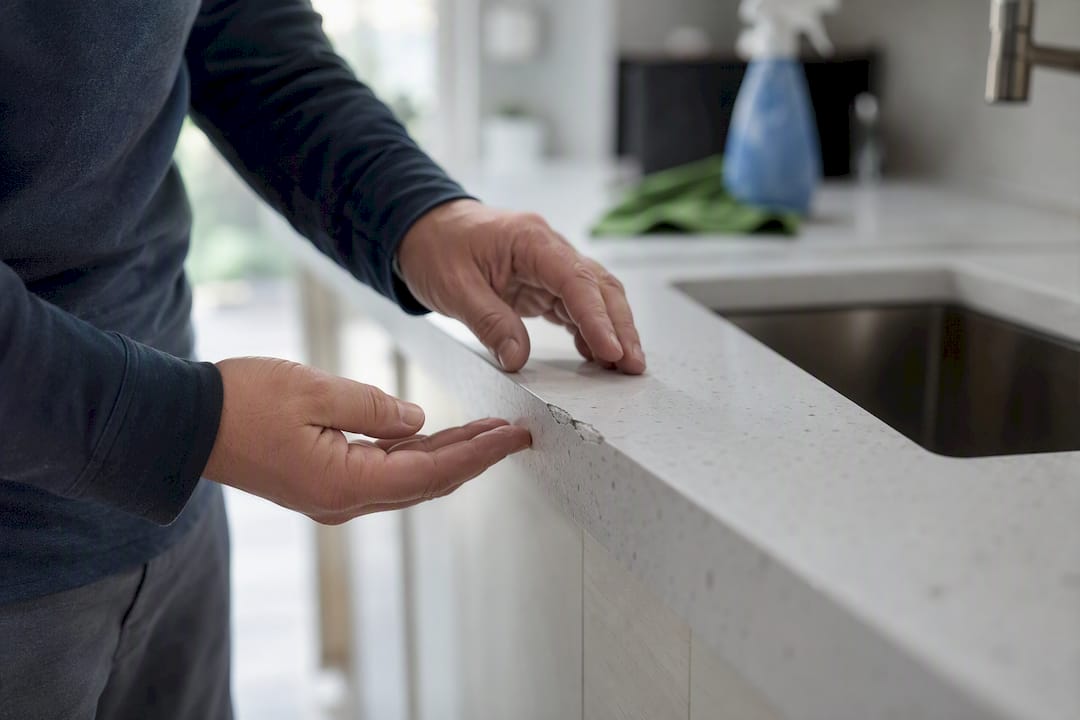
A professional visit typically starts with an assessment of the damage, followed by targeted stain-lift techniques, buffing, and polishing to restore an even sheen, plus minor repairs where needed. Before you call, know roughly when the damage occurred and what products, if any, touched the surface.
AO Cleaning has handled hardwood floor and countertop cleaning, polishing, and sealing for homeowners across central Illinois and the St. Louis metro area since 2003, backed by 450+ Google reviews and dustless, eco-friendly techniques.
What actually matters most in quartz care
Most quartz advice online overcomplicates a genuinely simple job. You don’t need a specialty spray for daily wiping, and you don’t need to panic over sealing schedules, because there aren’t any. The single biggest mistake homeowners make isn’t using the wrong cleaner. It’s letting acidic spills, citrus, wine, coffee, sit for hours because “it’s just quartz, it’ll be fine.” That’s exactly backward. Quartz resists stains better than granite or marble, but resistance isn’t immunity, and the damage that does happen tends to be slow and cumulative, not sudden.
The conventional wisdom on “quartz doesn’t need special care” leads people to skip the one habit that actually protects it: wiping up messes fast. Prioritize speed over strength. A quick wipe with soap and water beats a delayed cleanup with a stronger product every time. And if a stain does outlast your patience, know the difference between a DIY fix and a job for a professional polish. Trying to force a result with escalating abrasives is how good counters get permanently dulled.
— Jim
Get professional countertop cleaning and polishing from AO Cleaning
Some countertop damage won’t respond to soap, baking soda, or patience, and pushing harder with stronger chemicals or abrasives usually makes it worse, not better. If you’ve already tried the gentle escalation and the discoloration, dullness, or sheen loss is still there, that’s your sign to stop experimenting.
AO Cleaning has offered countertop cleaning, polishing, and sealing to homeowners across central Illinois and the St. Louis metro area since 2003, using dustless, eco-friendly techniques with most jobs finished the same day. If your quartz has lost its shine or picked up a stain that won’t lift, or if you’re weighing whether it’s worth restoring versus hiring out cleaning tasks entirely, contact AO Cleaning for an assessment. Have the date the damage occurred and any products used on hand when you reach out, and they can tell you fast whether it’s a quick polish or a deeper fix.
Sources
Recommended

Comments