


Oakville MO Hardwood Floor Care: 2026 Homeowner Guide

Oakville MO hardwood floor care is the practice of maintaining hardwood floors through gentle moisture-controlled cleaning, indoor humidity regulation, protective habits, and periodic professional refinishing to maximize durability and appearance. Oakville’s Missouri climate creates real challenges for wood floors: seasonal humidity swings cause wood to expand and contract, accelerating wear if you’re not actively managing your indoor environment. The good news is that most floor damage is preventable. Tools like Bona hardwood cleaners, microfiber mops, and a basic hygrometer give you everything you need to keep your floors looking sharp year-round without expensive repairs.
What are the best daily and weekly cleaning routines for hardwood floors in Oakville MO?
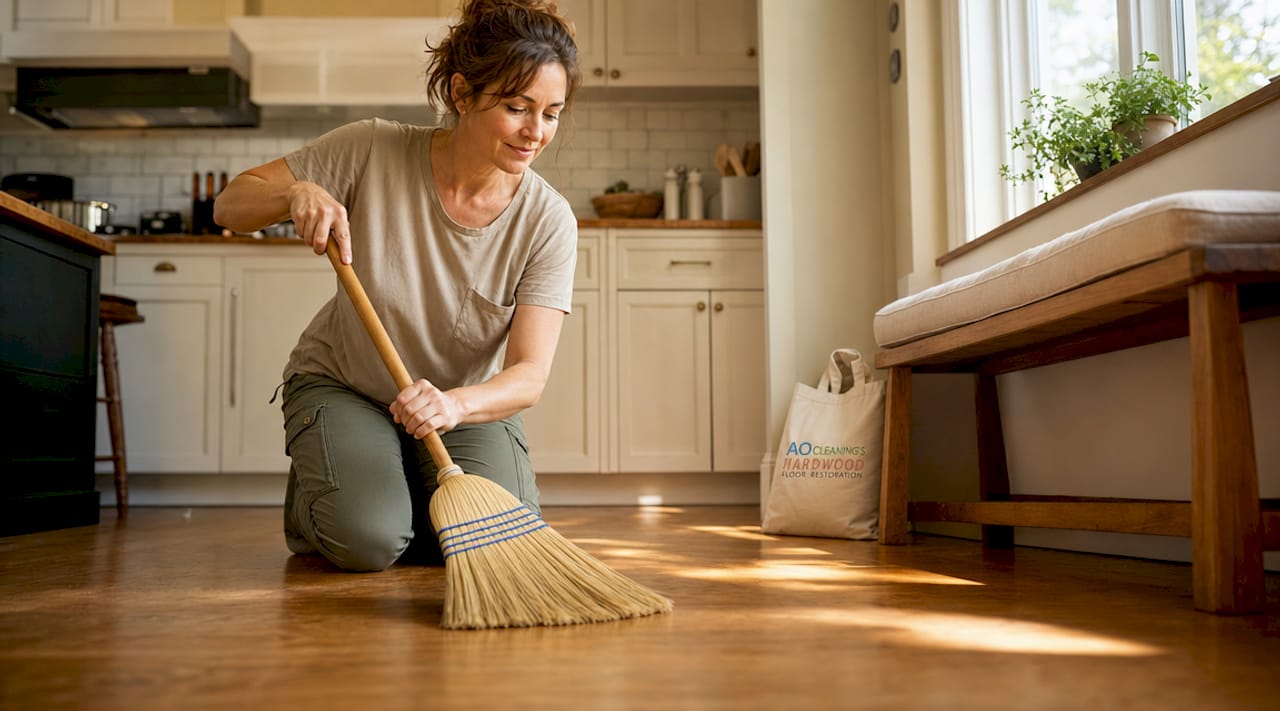
The single most effective thing you can do for your hardwood floors is sweep every 2 to 3 days to remove abrasive grit before it grinds into the finish. Grit acts like sandpaper underfoot. Every step across an unswept floor is a micro-scratch waiting to happen, and those scratches accumulate faster than most homeowners expect.
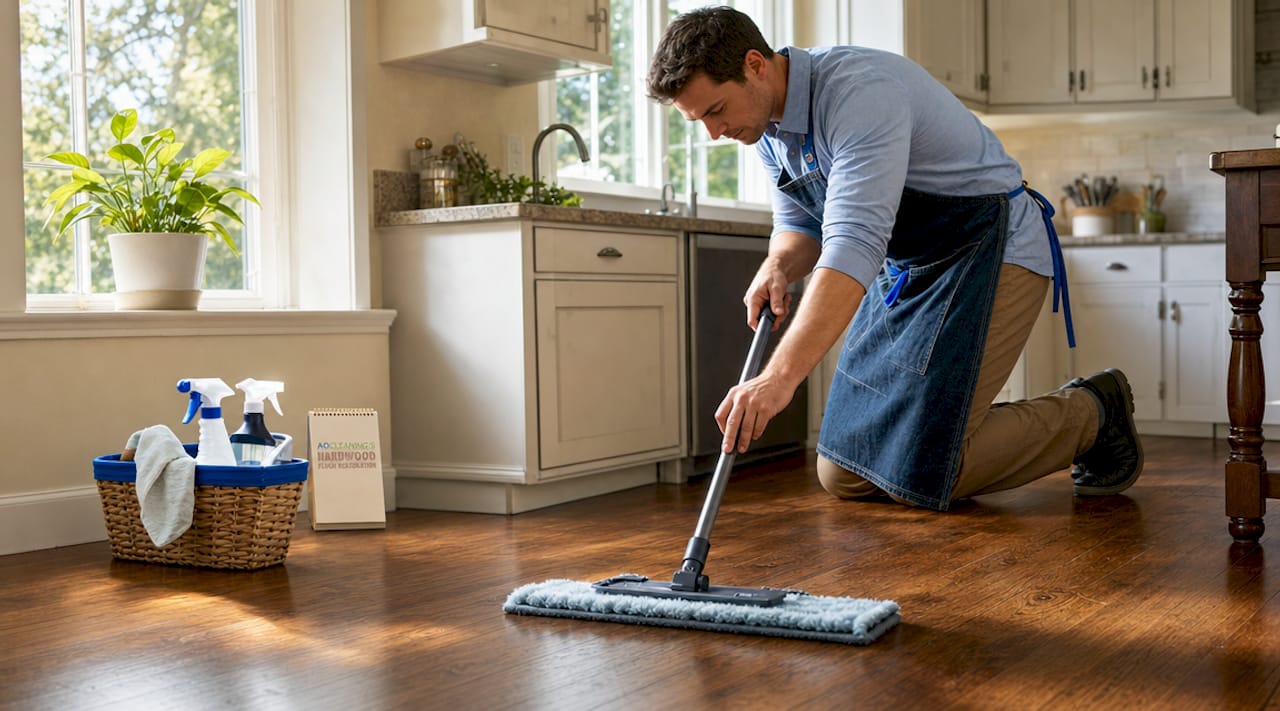
For weekly cleaning, use a damp mop with a pH-neutral cleaner designed specifically for hardwood. Bona Hardwood Floor Cleaner is the most widely recommended option, and Aosaveswoodfloors’ own AO Hardwood Neutral Cleaner is formulated to the same standard. The key word is damp, not wet. Damp mops must be barely wet to avoid water pooling in the seams, which is where real structural damage begins.
Here is what to use and what to avoid:
Use: Microfiber dust mops for daily dry cleaning
Use: pH-neutral hardwood cleaners like Bona or AO Hardwood Neutral Cleaner
Use: Vacuums set to bare-floor mode (no rotating brush)
Avoid: Steam mops, which force moisture directly into wood seams
Avoid: Vinegar or citrus-based cleaners, which damage polyurethane finishes over time
Avoid: Soaking the floor or leaving standing water for any length of time
Water is hardwood’s primary enemy. Even small amounts left in seams can cause warping and structural issues that require professional repair. This is not an exaggeration. A mop that is too wet is one of the most common causes of preventable floor damage in Oakville homes.
Pro Tip: Before you start any new cleaning product, test your floor’s finish by placing a small water drop on the surface. If it beads up, you have a sealed polyurethane finish and can use standard hardwood cleaners. If it absorbs into the wood, your floor may have an oil or wax finish that requires a completely different maintenance approach.
For a deeper look at recommended hardwood cleaners that are safe for different finish types, Aosaveswoodfloors has a current 2026 product guide worth bookmarking.
How does Oakville’s climate influence hardwood floor stability and care practices?
Hardwood floors move. That is not a defect. It is the nature of wood responding to moisture in the air around it. In Oakville, Missouri, summers bring high humidity and winters bring dry indoor air from heating systems. That seasonal swing is exactly the kind of environment that causes cupping, crowning, and gapping if you are not actively managing your home’s humidity.
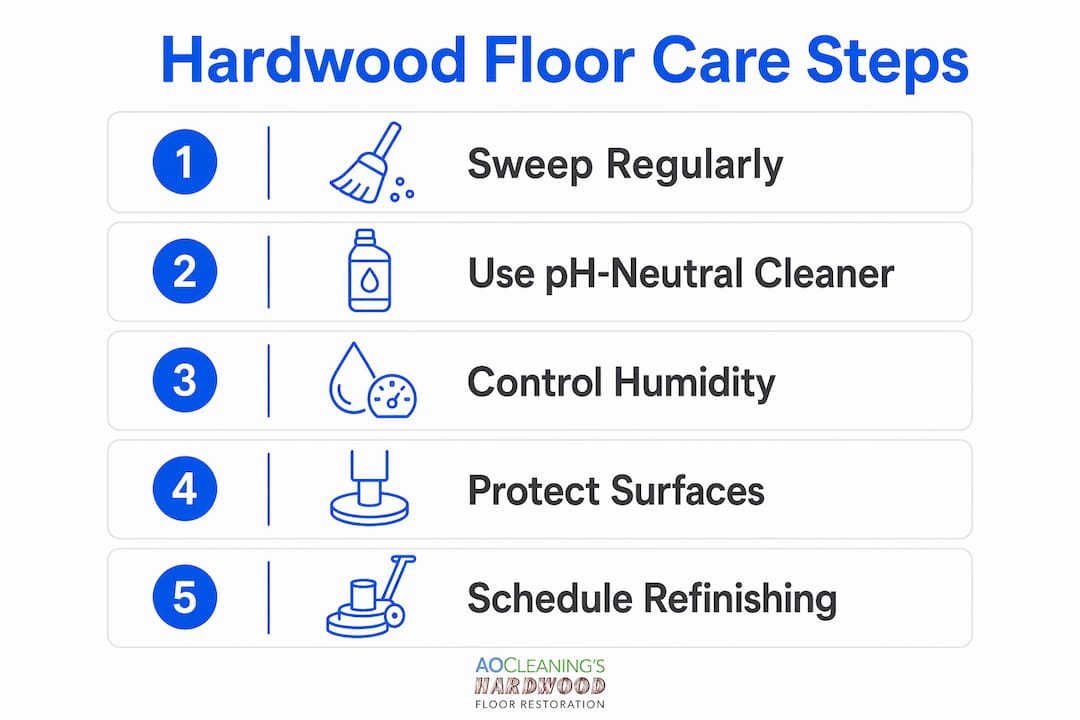
Maintaining indoor relative humidity between 35% and 55% is the standard recommendation for preventing wood swelling or shrinking. That range keeps the wood stable across seasons. A hygrometer costs less than $20 at most hardware stores and tells you exactly where your home sits at any given time.
The three most common climate-related problems Oakville homeowners encounter are:
Cupping: The edges of boards rise higher than the center, caused by excess moisture on the underside or bottom of the floor
Crowning: The center of boards rises above the edges, often from surface moisture or over-wetting during cleaning
Gapping: Spaces open between boards during dry winter months when wood contracts
Rapid humidity swings cause most structural hardwood floor damage. A whole-home humidifier in winter and a dehumidifier or air conditioning in summer are the two most practical tools for keeping your floors stable. If you are seeing seasonal gapping that closes back up in summer, that is normal. If gaps persist year-round, your humidity control needs attention.
What protective habits and maintenance steps extend hardwood floor life in Oakville?
Prevention is cheaper than repair. The habits that protect hardwood floors the most are also the simplest, and most homeowners skip them not out of laziness but because no one explained the actual cost of skipping them.
Follow these steps to protect your floors from the most common damage sources:
Place mats at every entrance. Exterior mats trap grit and moisture before they reach your floors. Interior mats catch what gets through. Felt pads under furniture and mats at entries are two of the highest-return protective measures you can take.
Adopt a no-shoes or shoes-off policy. Hard-soled shoes, especially heels, concentrate enormous pressure on small surface areas and dent even hard wood species like white oak.
Apply felt pads or rubber caps to all furniture legs. Check them every few months. Felt pads compress and fall off over time, and a bare metal furniture leg will scratch a finish in one drag across the room.
Clean up spills immediately. Do not let liquid sit on hardwood for more than a few seconds. Blot with a dry cloth, then follow with a barely damp cloth if needed.
Trim pet nails regularly. Dog nails are one of the most consistent sources of surface scratches in homes with pets. A monthly trim makes a measurable difference.
Inspect your floors every few months. Look for areas where the finish looks dull, scratched, or worn through. Addressing minor scratches promptly extends floor life and prevents small problems from becoming large ones.
Pro Tip: When moving furniture, never drag it across hardwood. Lift it completely or use furniture sliders. One drag across an unpadded leg can leave a scratch that goes through the finish and into the wood itself, requiring spot repair rather than a simple buff.
For a full breakdown of maintenance best practices between professional visits, Aosaveswoodfloors has a dedicated guide that covers everything from seasonal care to spot repair.
When should Oakville homeowners seek professional refinishing or repairs?
Most homeowners wait too long to call a professional, and that delay almost always increases the cost. Knowing the right timing for refinishing and repair is one of the most valuable things you can learn about hardwood floor ownership.
Refinishing every 7 to 10 years is the standard recommendation for restoring the protective finish and preventing deterioration. That timeline assumes normal residential traffic. High-traffic areas like hallways and kitchens may need attention sooner.
Here is a comparison of the most common professional service scenarios:
Situation | Recommended service | Typical outcome |
Dull finish, light surface scratches | Screen and recoat | Restores sheen without full sanding |
Deep scratches reaching bare wood | Spot repair plus recoat | Targeted fix, no full refinish needed |
Water damage, warping, or staining | Full sand and refinish | Removes damage layer, restores surface |
Severe water damage or board replacement | Professional water damage repair | Structural restoration, $1,000 to $5,000 range |
Professional water damage repair in Oakville, MO ranges from $1,000 to $5,000 depending on the extent of damage and restoration required. That cost range underscores why catching moisture problems early matters so much. A $20 hygrometer and consistent humidity control can prevent a four-figure repair bill.
Dustless refinishing techniques minimize disruption while restoring floors efficiently. For Oakville homeowners who cannot afford to be out of their home for days, dustless processes mean the work gets done without coating every surface in fine wood dust. Most professional refinishing services are completed in a single day, with floors ready to walk on within a few hours.
Key takeaways
Proper hardwood floor care in Oakville, MO requires dry daily cleaning, strict moisture control, consistent humidity management between 35% and 55%, and professional refinishing every 7 to 10 years.
Point | Details |
Sweep every 2 to 3 days | Remove abrasive grit before it scratches the finish underfoot. |
Keep humidity between 35% and 55% | Use a hygrometer, humidifier, and dehumidifier to prevent cupping and gapping. |
Avoid water and vinegar | Excess moisture and acidic cleaners degrade polyurethane finishes and cause warping. |
Use protective habits daily | Felt pads, entrance mats, and a no-shoes policy prevent most surface damage. |
Refinish every 7 to 10 years | Timely professional refinishing prevents deterioration and avoids costly water damage repair. |
What 20 years of floor care taught me about Oakville homes
The most common mistake I see is not neglect. It is over-cleaning. Homeowners who care deeply about their floors often do the most damage because they assume more water and more product equals cleaner results. It does not. Dry microfiber dust mopping daily is safer and more effective than frequent wet cleaning, and most people are genuinely surprised to hear that.
The second thing I have learned is that maintenance-first thinking saves more money than any single product or service. A $5 felt pad prevents a $300 scratch repair. A $20 hygrometer prevents a $3,000 water damage job. The homeowners who get decades out of their floors are not the ones with the most expensive products. They are the ones who check their floors regularly and fix small things before they become large ones. That philosophy is worth more than any cleaner on the market.
— Jim
How Aosaveswoodfloors supports your hardwood floor care in Oakville
If your floors need more than a good cleaning, Aosaveswoodfloors has been restoring hardwood floors across the St. Louis metro area since 2003, with over 450 Google reviews backing their work.
For everyday maintenance, the AO Hardwood Neutral Cleaner is a pH-neutral, residue-free formula designed specifically for hardwood finishes. It is the cleaner Aosaveswoodfloors technicians recommend between professional visits. When your floors need professional attention, their clean and buff service restores shine without a full refinish, and their Clayton, MO refinishing service uses dustless techniques with eco-friendly products. Most jobs finish in a single day. Before you replace your floors, let them restore them first.
FAQ
How often should I clean hardwood floors in Oakville?
Sweep or dust mop every 2 to 3 days to remove grit, and damp mop once a week using a pH-neutral hardwood cleaner. High-traffic areas may need dry cleaning more frequently.
What humidity level is safe for hardwood floors in Missouri?
Keep indoor humidity between 35% and 55% year-round. Use a hygrometer to monitor levels, a humidifier in winter, and a dehumidifier or air conditioning in summer to stay within that range.
Can I use vinegar to clean my hardwood floors?
No. Vinegar is acidic and gradually breaks down polyurethane finishes, causing dulling and premature wear. Use a pH-neutral cleaner like Bona or AO Hardwood Neutral Cleaner instead.
How do I know if my hardwood floors need professional refinishing?
Look for deep scratches that reach bare wood, persistent dullness that does not respond to cleaning, or visible water staining. Most floors benefit from professional refinishing every 7 to 10 years.
What does professional water damage repair cost in Oakville, MO?
Professional hardwood floor water damage repair in Oakville typically ranges from $1,000 to $5,000 depending on the extent of damage and the restoration work required.
Recommended

Comments