


12–72 Hour Reentry After Floor Refinishing: Timelines & Questions

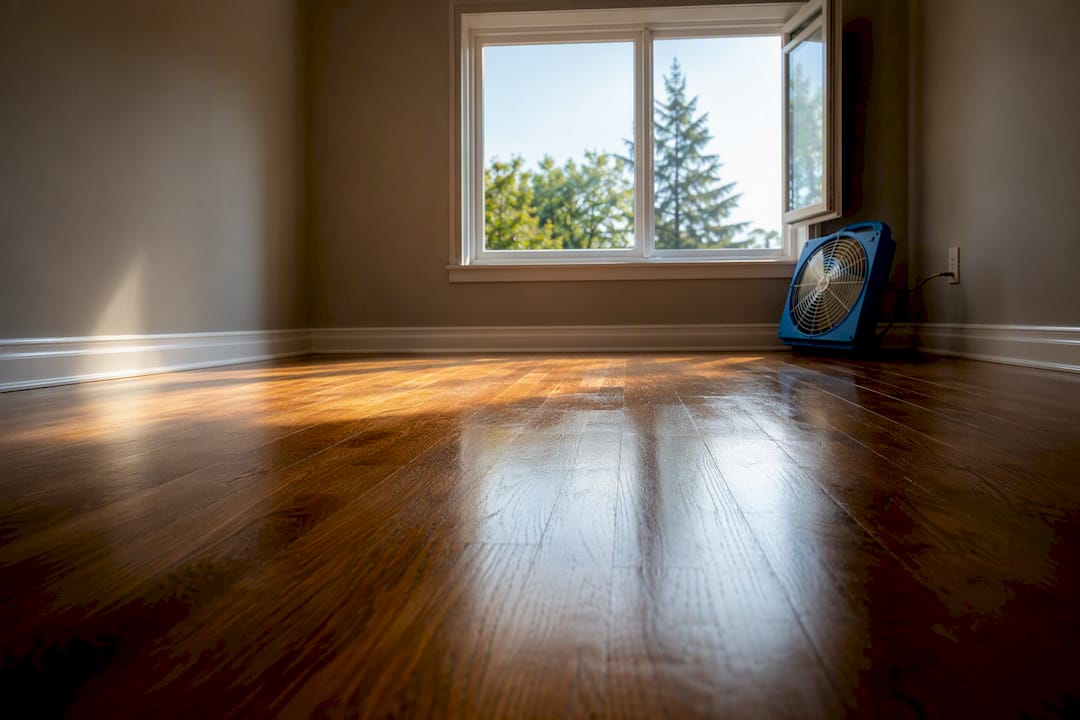
Floor refinishing fumes are usually irritating rather than acutely dangerous for healthy adults, but they’re not something to shrug off. Water-based finishes typically allow re-entry in 12 to 24 hours, oil-based finishes need 24 to 72 hours or more, and moisture-cure urethanes can push past 48 hours. Anyone pregnant, very young, elderly, or asthmatic should leave the house during application and drying, and every household benefits from running fans and opening windows the moment sanding starts.
TL;DR:
Fumes from oil-based finishes can last 24 to 72 hours or more, with lingering odors potentially continuing for days to weeks, especially in low-ventilation areas.
VOCs like toluene and xylene sink and pool in spaces without air circulation, making closed basements and closets higher hazard zones even after work is finished.
Pregnant, elderly, asthmatic, or very young individuals should vacate during application and initial drying, with ventilation and protective equipment essential for all occupants.
Water-based finishes and newer formulations like polyaspartic cures faster and emit fewer fumes, reducing necessary re-entry times to 12–24 hours in typical conditions.
Proper ventilation must be maintained throughout the entire process, starting before sanding, during application, and until all fumes and odors have dissipated to ensure safety.
Table of Contents
What Floor Refinishing Fumes Actually Contain
Floor refinishing fumes come from volatile organic compounds, or VOCs, released as sanding sealers, stains, and topcoats dry. The main offenders are solvents like toluene, xylene, and other benzene-related compounds, plus acetates used as thinning agents in oil-based polyurethanes and lacquers. These aren’t obscure lab chemicals. They’re the same solvent family found in some paints and adhesives, and the NYC Health Department specifically names toluene and xylene when explaining why refinishing crews and residents need ventilation.
Here’s what most homeowners don’t know: these vapors are heavier than air. They don’t just drift up and out an open window. They sink and pool in basements, closets, and anywhere air doesn’t circulate, which is why a bedroom down the hall can smell worse the next morning than the room that got refinished.
VOCs concentrate in low, closed spaces, not just the room where work happened.
Strong odor does not equal high toxicity, and a faint smell does not mean the air is clean.
The EPA treats source control and ventilation as the two primary levers for cutting indoor VOC exposure, ahead of any air freshener or candle trick.
Pro Tip: Don’t trust your nose. Some solvents lose their smell well before they’ve finished off-gassing, so stick to the time windows below rather than sniffing a room to decide it’s safe.
Before hiring anyone, ask to see the product’s safety data sheet (SDS). It lists VOC content, flash point, and recommended protective gear, and any legitimate contractor should hand it over without hesitation.
How Long Do Refinishing Fumes and Odor Really Last?
Timelines vary more by finish chemistry than most product labels suggest, and the type your contractor recommends changes your re-entry window by days, not hours.
Lacquer: Off-gasses quickly, often within a day, but spraying it creates a heavy aerosol cloud that’s more dangerous to breathe in the moment than to live with afterward.
Oil-based polyurethane: The strongest and longest-lasting fumes of the common finishes. Off-gassing peaks in the first 24 to 48 hours, but a faint smell can linger for days to weeks as the coating fully cures.
Water-based polyurethane: Lower VOC content and faster surface drying, typically allowing re-entry within 12 to 24 hours. It still off-gasses, just at a lower concentration and over a shorter window.
Moisture-cure urethanes (MCU) and specialty coatings: Among the toughest finishes available, but they can require 48 or more hours before the air clears, and some jurisdictions cap their VOC content at 275 grams per liter or similar limits, so check local rules before choosing one.
Several conditions stretch these windows further. Heavy or double coats trap solvent longer. Cold rooms slow evaporation. A closed-up HVAC system with no air movement lets vapor sit. And if the stain underneath hasn’t fully dried before the topcoat goes on, you’re sealing solvent into the wood rather than letting it escape.
Health Risks: Who Feels It First and Who Should Worry Most
Most healthy adults notice mild, temporary symptoms and nothing more. The NYC Health Department lists eye, nose, and throat irritation, headaches, dizziness, and nausea as the common short-term reactions to refinishing fumes, and they typically fade once the air clears.
Some people face real risk beyond a headache, though. These groups should treat refinishing days as a reason to leave the house, not just crack a window:
Infants and young children, whose smaller lungs and faster breathing rates mean higher relative exposure.
Pregnant people, given ongoing concern about solvent exposure during pregnancy.
Older adults, especially those with existing heart or lung conditions.
Anyone with asthma, COPD, or chemical sensitivities, who can react to VOC levels that barely register for everyone else.
Persistent symptoms deserve more than a wait-and-see approach. If a headache doesn’t ease after leaving the house, if breathing feels labored, or if anyone develops confusion, slurred speech, or unusual drowsiness, get medical attention and don’t go back into the home until the air has been tested or thoroughly ventilated. Those neurological symptoms point to a higher exposure level than a typical irritation response.
Ventilation, HVAC, and PPE: The Real Safety Playbook
Ventilation isn’t a one-time step you do after the crew leaves. It has to run continuously from the moment sanding starts through the final cure, and the UL study on wood floor finishes treats that continuity as the single biggest factor separating a safe job from a hazardous one.
Set up cross-ventilation before work begins. Open windows on opposite sides of the work area, position box fans to pull air out rather than just stir it, and keep that airflow running through sanding, staining, and every coat.
Handle the HVAC system deliberately. Shut off the central system during sanding and finishing so it doesn’t pull solvent-laden dust into the ductwork, then switch the blower to fan-only afterward to help distribute fresh air once the surface has set. Seal supply and return vents in the work area with plastic sheeting in the meantime.
Rent an activated-carbon air scrubber for larger jobs; it captures solvent vapor that a standard fan just relocates.
Pair it with a HEPA unit if sanding dust is a concern alongside the fumes.
Never rely on a scented candle or air freshener to mask odor. It does nothing to the actual VOC level.
Respirator choice trips up more homeowners than anything else on this list. An N95 mask stops dust particles, but it does nothing against solvent vapor, which is the real inhalation hazard here. The right choice is a NIOSH-rated OV/P100 cartridge respirator, which filters organic vapors and particulates together.
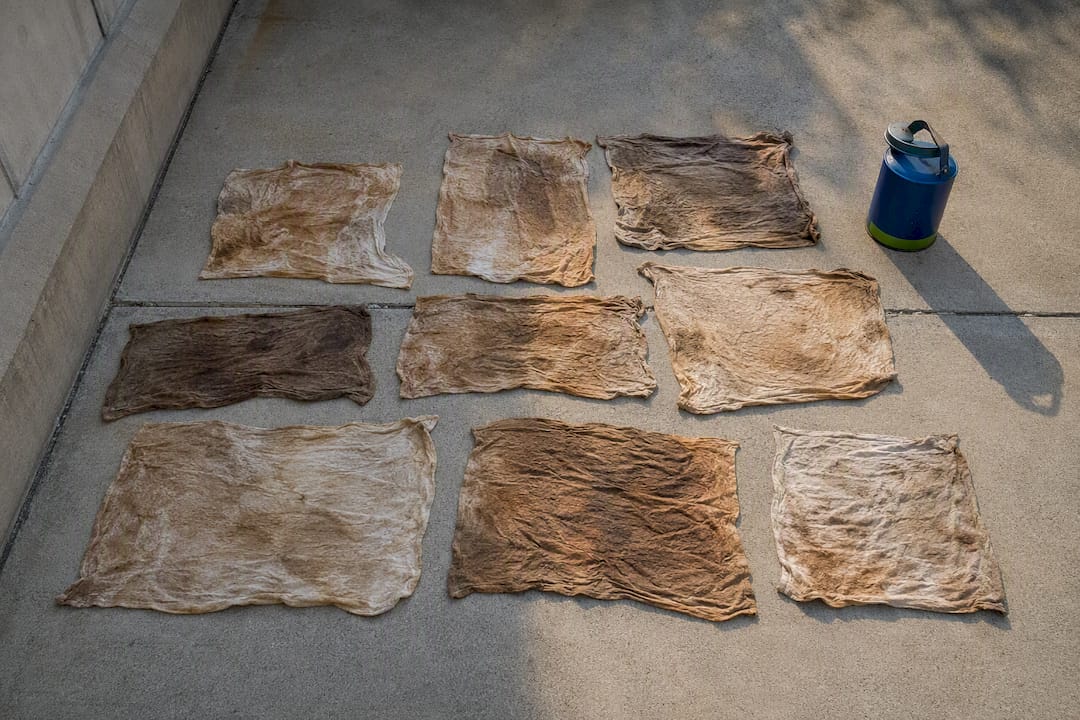
Oil-based finish rags carry a genuine fire risk from spontaneous combustion as they dry. Spread them flat outdoors away from structures until fully dry, then store them in a sealed metal can, never a plastic bag or a pile in the garage.
Should You Stay or Leave? A Homeowner’s Decision Checklist
Deciding whether to vacate during a refinishing job comes down to three factors: who lives in the house, how much of it is being redone, and which product is going on the floor.
Check occupant vulnerability first. If anyone in the home is pregnant, an infant, elderly person, or manages asthma, plan to stay elsewhere during application and the first day of drying, regardless of finish type.
Weigh the scope of the job. A whole-house sand-and-refinish generates far more sustained vapor than a single-room touch-up, and it usually justifies a night or two away.
Factor in the product. Any job using an MCU or heavy oil-based coating pushes the timeline long enough that vacating is the simpler call.
Before you hire anyone, ask a short list of pointed questions: What product and VOC level are you using? What’s your ventilation plan during sanding and coating? Will you shut off or seal the HVAC system? Can I see the SDS? Do you use dustless sanding techniques? A one-day dustless restoration produces less airborne residue and shorter downtime than a traditional full sand and refinish, which is worth factoring into your decision on whether to leave the house at all.
Tracking Indoor Air Quality While the Work Happens
You don’t need a lab to get a reasonable read on air quality during a refinishing job, but guessing by smell alone leaves you guessing wrong. A consumer-grade VOC monitor, the kind that measures total volatile organic compounds in parts per billion, gives you an actual number instead of a hunch. Place one in the work room and a second in an adjoining low area like a hallway or basement landing, since VOCs sink and settle there first.
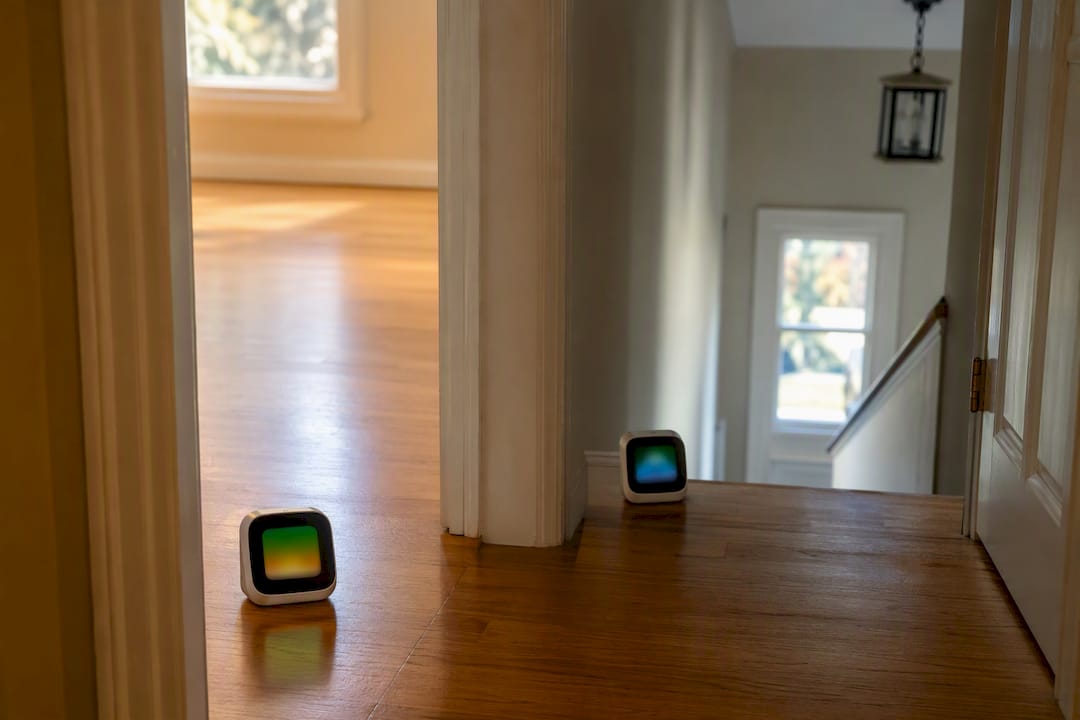
Watch the trend, not just a single reading. A monitor that shows levels climbing during sanding and coating, then gradually dropping over the following day or two, confirms your ventilation setup is working. If readings plateau or spike again after you think the air has cleared, that usually means a closed door, a stalled fan, or leftover product residue somewhere in the room.
Basic combination CO2/VOC monitors work fine for most households and cost far less than professional air-sampling equipment. Save the professional route, third-party indoor air testing, for larger commercial jobs, a household with someone medically vulnerable, or any situation where symptoms persist after the timeline above says the air should be clear.
Whatever method you use, take a baseline reading before work starts. Without it, you have no way to tell whether a given number after the job is actually elevated or just normal for your house.
Cutting Fumes at the Source: Product and Application Choices
The fastest way to reduce fume exposure is choosing a lower-VOC product before work ever starts, not trying to ventilate your way out of a heavy oil-based job after the fact. Water-based polyurethane is the clearest swap: it carries a lower VOC load and a shorter off-gassing window than oil-based poly, which is why it’s often the better call for households with sensitive occupants. Polyaspartic and UV-cured finishes go further still, curing fast enough in some cases to cut off-gassing time substantially, though performance varies by manufacturer.
Application method matters almost as much as the product itself. Spraying any finish, lacquer especially, throws solvent into the air as a fine aerosol that’s far more concentrated and inhalable than a brushed or rolled application. If a contractor offers a choice, brushed or roller-applied coats spread the exposure out and reduce peak concentration in the room.
Thinner, properly timed coats also cut fume load. A single heavy coat traps more solvent and takes longer to cure than two thin ones applied correctly, and it’s one of the most common mistakes behind lingering odor complaints weeks after a job. Letting stain fully dry before the topcoat goes on, rather than rushing the schedule, prevents solvent from getting sealed under the finish where it slowly leaches out for weeks. For a broader comparison of finish types and their effect on odor and VOC emissions, it’s worth reviewing options before committing to a product with your contractor.
The Dustless, Eco-Friendly Approach: What Lower-Fume Refinishing Looks Like
A local hardwood floor restoration company has been working on floors across central Illinois and the St. Louis metro area since the early 2000s, supported by numerous positive reviews. Dustless techniques and eco-friendly products can be used during hardwood floor restoration to reduce mess and environmental impact. Less airborne dust means fewer particulates hanging in the air alongside solvent vapor, and eco-friendly formulations tend to carry a lighter VOC load than harsher traditional alternatives.
Many hardwood floor restoration jobs can be completed in a single day, with floors often ready to walk on within a few hours, reducing the time spent near active fumes. Still, ask any contractor, including this one, for their full sand and refinishing product’s SDS and their specific ventilation plan before work starts.
Why Homeowners Keep Underestimating This Risk
Most people treat refinishing fumes like paint smell: annoying, temporary, gone by the weekend. That mental model is wrong often enough to matter. Paint dries in a thin film on a wall with plenty of surrounding air volume. A refinished floor is a solvent-saturated surface covering hundreds of square feet, curing in a room where the vapor has nowhere to go but up, then down again once it cools and pools near the floor you’re trying to protect it from.
The bigger blind spot is respirator confusion. Homeowners walk into a hardware store, see “N95” on a box, and assume they’re covered. They’re not, and the distinction between particulate and organic vapor protection is not a minor technicality. It’s the difference between a mask that stops sawdust and one that actually keeps solvent out of your bloodstream.
What actually separates a safe refinishing job from a risky one isn’t the brand of polyurethane on the can. It’s whether ventilation started with the first pass of the sander, whether the HVAC got shut off before dust and vapor could hit the ductwork, and whether anyone vulnerable in the house had somewhere else to be for a day or two. Get those three things right and the specific finish matters far less than the marketing on the label suggests.
— Jim
This article is general information, not a substitute for advice from a qualified doctor. Consult a qualified healthcare professional about your own circumstances before acting on anything here.
Sources
Recommended

Comments