


Fast Drying Floor Finish: Homeowner's Guide to Quicker Results

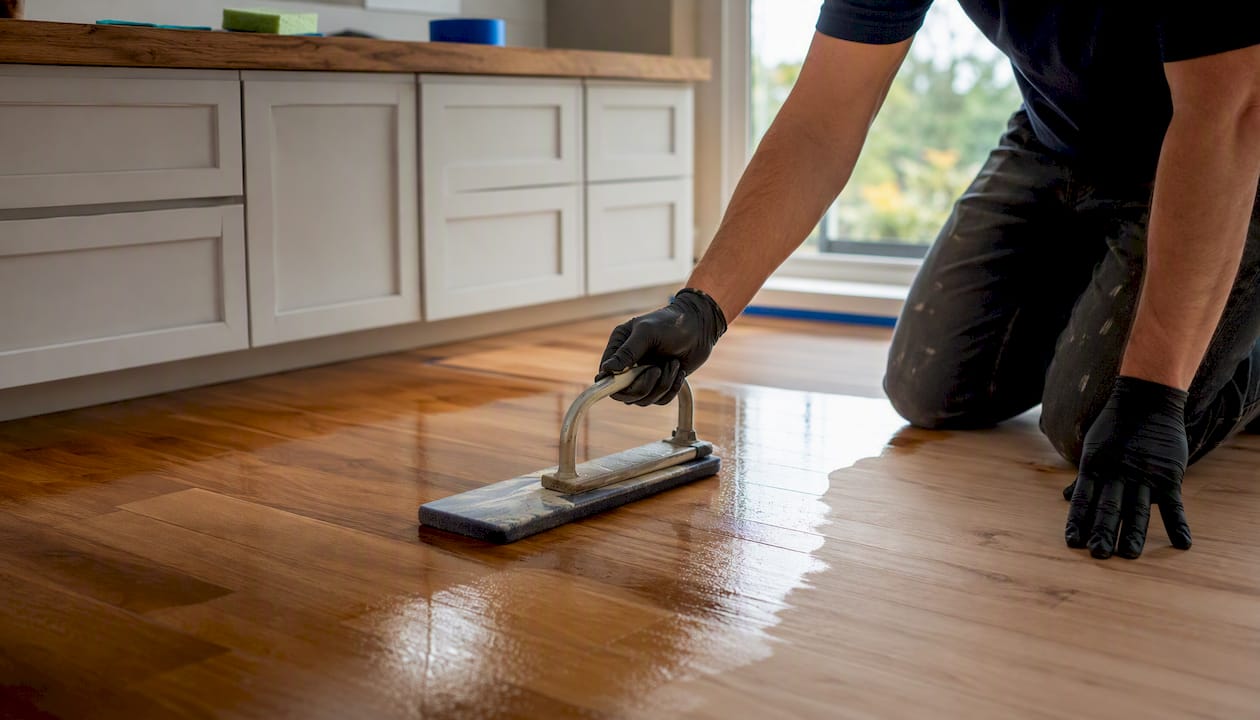
For most hardwood refinishing projects, a water-based fast-drying floor finish is the right call. You get touch-dry times around 1 hour, a recoat window starting at 2 hours, and light foot traffic being possible within 12–24 hours after the final coat. Full cure takes about 72 hours, but you’re not locked out of the room for days. Oil-based fast-drying options are worth considering only if you want that warm amber tone or a slightly harder film on a high-traffic floor.
Here’s what the timeline looks like in practice:
Touch dry: 1 hour (water-based); 2–4 hours (oil/alkyd fast-drying)
Recoat window: 2 hours minimum (water-based); 3–4 hours (oil-based)
Light foot traffic: 12–24 hours after final coat
Full cure: 72 hours (water-based); up to 7 days before replacing rugs or heavy furniture
One thing worth knowing upfront: “fast drying” is a marketing term. Touch-dry happens quickly, but full cure still takes days. Plan furniture and rug placement around the cure timeline, not the touch-dry number.
Key Takeaways
Water-based fast-drying polyurethane is the best choice for most homeowner hardwood refinishing projects, offering 1-hour touch-dry times, 2-hour recoat windows, and full cure in 72 hours under standard conditions.
Point | Details |
Choose water-based for most projects | Lower odor, 1-hour touch-dry, 2-hour recoat, and soap-and-water cleanup make it the practical choice. |
Plan around full cure, not touch-dry | Light foot traffic at 24 hours is fine; rugs and furniture need 72 hours (water-based) or 7 days (oil-based). |
Apply 3 coats minimum | Two coats won’t deliver the durability the product is rated for on residential hardwood. |
Control humidity and temperature | Target 65–77°F and 40–50% RH; run a dehumidifier in humid conditions to hit manufacturer dry times. |
Aosaveswoodfloors for guaranteed results | Their 1-day dustless restoration service covers St. Louis and central Illinois with floors walkable in about 3 hours. |
Manufacturer technical pages to read before you buy
Always read the technical data sheet (TDS) and Safety Data Sheet (SDS) for any product before purchasing or applying. The label gives you the highlights; these documents give you the conditions, limitations, and safety requirements.
BEHR PRO® Fast Drying Water-Based Polyurethane TDS — dry/recoat times, recommended conditions, VOC content, and coat recommendations
BEHR PRO® product page — application notes, coverage, and environmental cautions
Minwax Ultra Fast-Drying Polyurethane product page — recoat window details, light traffic and rug replacement timelines
Minwax Super Fast-Drying TDS — oil-based variant specs, coverage, and humidity/temperature cautions
EPA Indoor Air Quality: Controlling Pollutants and Sources — ventilation and source control guidance for VOC-emitting products
Follow label directions and read the SDS for ventilation and PPE requirements before you open any can.
Table of Contents
What does “fast drying” actually mean for floor finishes?
The phrase covers four distinct stages, and confusing them is how homeowners end up with scratched floors or furniture dents in a finish that looked dry but wasn’t.
Touch dry means the surface won’t transfer wet finish to your finger. For water-based products like the BEHR PRO® Fast Drying Water-Based Polyurethane, that happens at 1 hour under standard conditions (77°F, 50% relative humidity, good ventilation). Oil-based fast-drying variants typically reach touch-dry in 2–4 hours.
Sand/recoat window is the range during which you can apply the next coat without sanding first. Miss the window on the late end and the surface becomes too hard for the new coat to bond without mechanical scuffing. Behr’s water-based formula opens its recoat window at 2 hours. Minwax’s Ultra Fast-Drying Polyurethane for Floors sets that window between 2 and 8 hours — apply after 8 hours and you’ll need to sand.
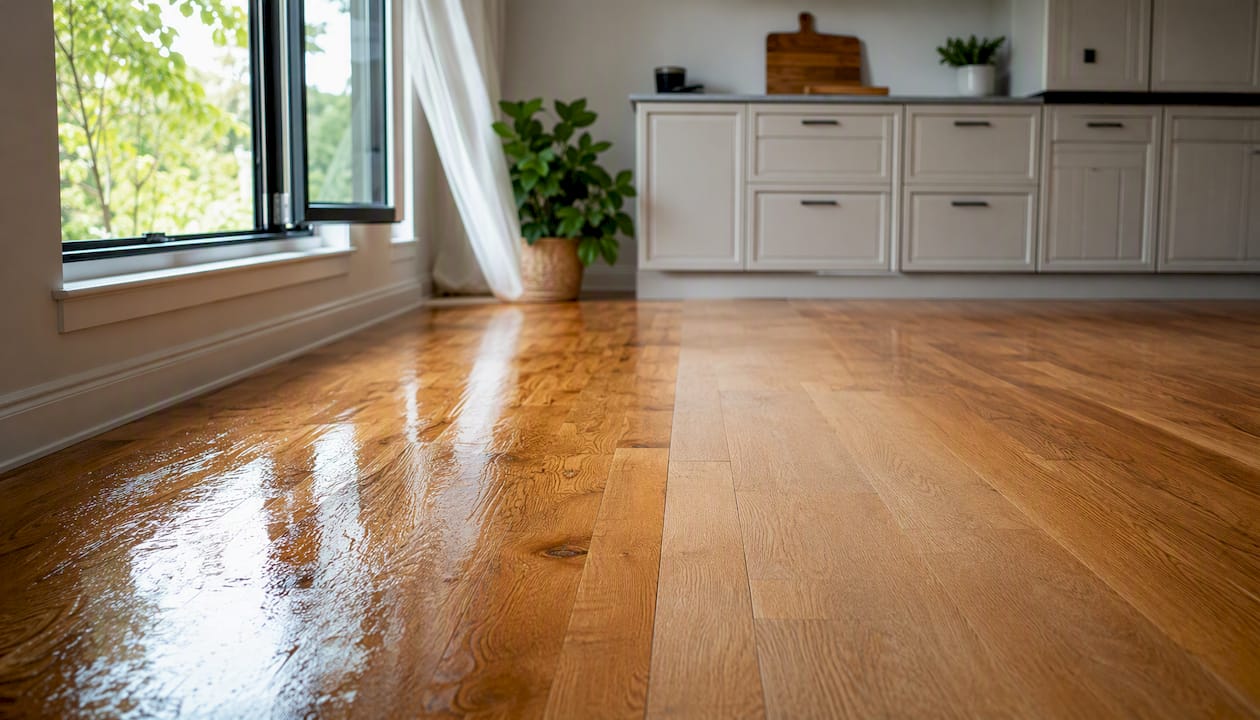
Light foot traffic means socked feet, no shoes, no dragging furniture. Most fast-drying products reach this stage 12–24 hours after the final coat.
Full cure is when the finish has reached its rated hardness and chemical resistance. Water-based products typically hit full cure at 72 hours. Oil-based finishes can take 7 days before you should replace rugs or move furniture back in.
Stage | Water-based (fast-drying) | Oil/alkyd (fast-drying) | What extends the time |
Touch dry | 1 hour | 2–4 hours | High humidity, low temp, thick coats |
Recoat window | 2 hours minimum | 3–4 hours | Cooler temps slow the window opening |
Light foot traffic | 12–24 hours | 12–24 hours | Humidity above 50%, temps below 70°F |
Full cure | 72 hours | 5–7 days | Poor ventilation, thick coats |
All manufacturer times assume typical room temperature and moderate humidity. In more humid or cooler conditions, dry times may lengthen considerably. Using a dehumidifier during application often helps the finish dry properly and prevents milky appearance.
Water-based vs. oil-based fast-drying polyurethane: which suits your project?
Both finish types have fast-drying variants, but they behave differently enough that the choice matters before you open a can.
Water-based fast-drying finishes
Dry faster at every stage, with recoat windows starting at 2 hours
Low odor, which matters in occupied homes or homes with children and pets
Clean up with soap and water
Dry clear with minimal ambering, so they preserve the natural look of lighter woods like maple or ash
Typically lower solids content (around 29% for Behr’s formula) compared to some oil-based products, which can mean more coats for equivalent build
Oil/alkyd fast-drying finishes
Produce a warmer, amber tone that many homeowners prefer on oak or pine
Generally harder film once fully cured, which holds up well on high-traffic floors
Recoat windows of 3–4 hours are slower than water-based, but still faster than traditional oil-based products
Require solvent cleanup (mineral spirits) and generate higher VOCs
Minwax’s oil-based fast-drying TDS notes that lower temperatures and high humidity extend drying times, same as water-based
For most homeowners refinishing residential hardwood, water-based wins on convenience. Lower odor, faster recoat, and easier cleanup make the job more manageable. If you’re working on older oak floors and want that classic warm look, oil-based fast-drying is a legitimate choice — just plan for more ventilation and a longer full-cure window before rugs go back down.
Pro Tip: Regardless of which base type you choose, a light scuff with 220-grit between coats improves adhesion and removes nibs even when the product says sanding isn’t required within the recoat window. It takes five minutes and noticeably improves the final surface.
For a broader look at how these chemistries compare across all finish types, the types of hardwood floor finishes guide covers the full picture.
How to choose the right fast-drying finish before you buy
Reading the label carefully before purchasing saves a lot of frustration. Here’s what to check:
Specification fields that matter on the label or product page:
Base type (water or solvent/oil)
Touch-dry, recoat, and full-cure times
Recommended number of coats (most quality products specify 3)
Coverage rate in sq ft per gallon
Recommended applicator (synthetic pad, brush, roller)
VOC content and SDS availability
The BEHR PRO® product page lists coverage at approximately 500 sq ft per gallon with 3 coats recommended. That’s a useful benchmark: a 200 sq ft room needs roughly 1.2 gallons for three full coats.
Questions worth asking before you commit:
What’s the recoat window, and what happens if you miss it?
Are multiple sheens available (matte, satin, semi-gloss)?
Does the product require a specific prep or sealer coat?
What grit is recommended for scuff-sanding between coats?
Red flags to avoid:
Products that claim “fast drying” without specifying conditions (temperature, humidity)
Labels that list touch-dry time prominently but bury full-cure time in fine print
High-VOC solvent finishes when your workspace has limited ventilation
Cost reality check: Fast-drying water-based polyurethanes typically run $40–$70 per gallon at home improvement stores. At 500 sq ft per gallon and 3 coats, a 300 sq ft living room needs roughly 1.8 gallons, putting product cost around $75–$130. That’s the floor finish alone, before applicators, sandpaper, and prep supplies.
Floor porosity also affects how far a gallon actually goes. More porous wood absorbs more finish on the first coat, which is worth knowing before you buy. The guide on how wood floor porosity affects finishing results explains this in detail.
How to apply floor finish quickly and get the dry times the label promises
The manufacturer’s dry times are achievable, but only if the application is done right. Thick coats, poor ventilation, and wrong tools are the three most common reasons a “fast-drying” product takes twice as long.
Prep the floor completely before opening the can. Vacuum, tack-rag, and confirm the surface is clean and dry. Any dust or debris trapped under the first coat shows through every subsequent one. The hardwood floor prep guide covers this step-by-step.
Control the environment first. Target 65–77°F and 40–50% relative humidity. Run a dehumidifier if your space is humid. Open windows and use a box fan exhausting to the outside for ventilation. The EPA recommends ventilation and source control as the primary strategies for reducing indoor VOC exposure during finish application.
Apply thin, even coats. A thin coat dries faster and bonds better than a thick one. Use a synthetic floor pad applicator for the field and a quality synthetic brush for edges. Work with the grain and maintain a wet edge to avoid lap marks.
Time your recoat precisely. For water-based products, the window typically opens at 2 hours. Don’t rush it, and don’t let it sit past the window’s close without scuff-sanding first.
Scuff between coats. Even if the product says it’s not required, a light pass with 220-grit removes nibs and gives the next coat something to grip.
Apply 3 coats total. One or two coats won’t give you the durability the product is rated for. Three coats is the standard recommendation for residential hardwood.
Wait the full cure time before replacing rugs or furniture. Light foot traffic at 24 hours is fine. Rugs and heavy furniture before 72 hours (water-based) or 7 days (oil-based) will leave impressions.
Pro Tip: Running a dehumidifier during application of water-based finishes in humid conditions is one of the most effective things you can do to keep dry times on schedule and prevent the milky, blushed appearance that happens when moisture gets trapped in the film.
For solvent-based products, wear a respirator rated for organic vapors, not just a dust mask. Keep the space ventilated throughout application and drying, and store leftover product away from heat sources.
Fast-drying floor finish products you’ll find on U.S. store shelves
Two products come up consistently for residential hardwood refinishing, and both have solid technical documentation worth reading before you buy.
BEHR PRO® Fast Drying Water-Based Polyurethane Floor Finish is available at Home Depot and covers approximately 500 sq ft per gallon. Three coats are recommended. Touch-dry at 1 hour, recoat at 2 hours, light use at 12–24 hours, and full cure at 72 hours under standard conditions. VOC content is under 275 g/L. It comes in multiple sheens. The product page includes application notes and the TDS is worth downloading before you start.
Minwax Ultra Fast-Drying Polyurethane for Floors is widely available at Lowe’s and hardware stores. Coverage runs 500–600 sq ft per gallon. The recoat window is 2–8 hours; apply after 8 hours and you’ll need to sand. Light foot traffic at 24 hours, with rugs and furniture held off for 7 days after the final coat. The Minwax product page has full application guidance.
One category worth knowing about but not confusing with these: commercial ultra-high-speed (UHS) acrylic finishes marketed for resilient tile and terrazzo can dry in roughly 25 minutes, but they’re formulated for burnishing programs on commercial floors. They’re not a substitute for wood-floor polyurethane and won’t perform the same way on hardwood.
For dealer-level guidance on water-based options, Quality Hardwoods of Michigan’s finish guide offers practical selection advice worth reading alongside manufacturer specs.
Always pull the technical data sheet and SDS from the manufacturer’s website before buying. The label gives you the highlights; the TDS gives you the conditions and limitations.
When should you hire a professional instead of doing it yourself?
DIY fast-drying finishes work well for straightforward projects. But several situations tip the math toward hiring a pro.
Professional floor refinishers use dustless sanding equipment that captures the vast majority of dust at the source, which matters for air quality and for getting a clean surface before finish goes down. They also control the environment more precisely, which is exactly what determines whether a fast-drying product actually dries fast. A pro applying finish in a climate-controlled environment with professional-grade products will consistently hit the manufacturer’s dry times. A DIYer working in a humid Illinois summer without a dehumidifier often won’t.
Practical triggers to call a professional:
Floors larger than 400–500 sq ft, where maintaining a wet edge and consistent coat thickness gets difficult
High-value wood species (walnut, wide-plank white oak) where a mistake is expensive
Tight timelines, like a rental turnover or a move-in deadline
Allergy or odor sensitivity that makes even low-VOC water-based products a concern
Floors that need sanding before finishing, not just a screen-and-recoat
Aosaveswoodfloors completes most restorations in a single day, with floors ready to walk on in about 3 hours. With over 20 years of service across St. Louis, Monroe, and Madison counties and 450+ Google reviews, they’re the established professional option for homeowners in central Illinois and the St. Louis metro area. If you’re not sure whether your floors need a full refinish or just a screen-and-recoat, the signs your hardwood floors need refinishing guide helps you figure that out before committing to either route.
What does a fast-drying floor finish project actually cost?
Product cost is only part of the picture. Here’s how the numbers typically break down for a DIY project.
Product: Water-based fast-drying polyurethane runs roughly $40–$70 per gallon at major home improvement stores. At 500 sq ft per gallon and 3 coats, a 250 sq ft room needs about 1.5 gallons, putting finish cost at $60–$105.
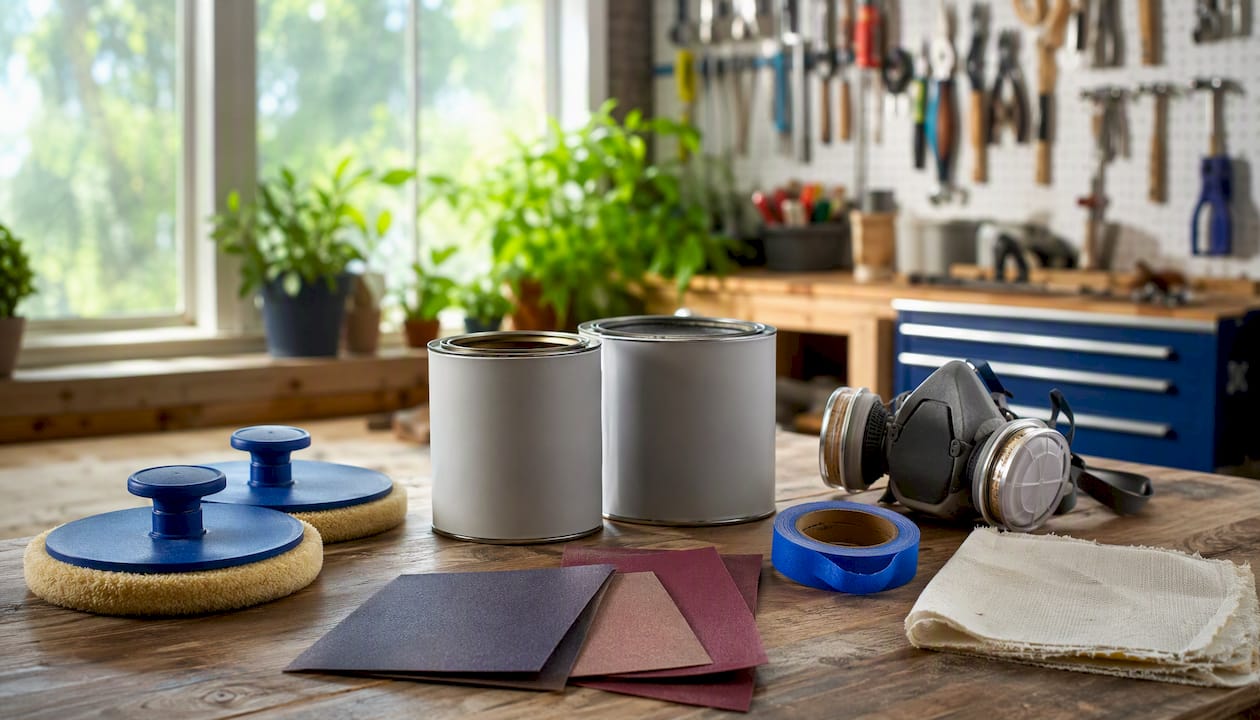
Applicators and supplies: A quality synthetic floor pad applicator runs $15–$30. Add sandpaper (150-grit and 220-grit), a tack cloth, painter’s tape, and a respirator for solvent products, and you’re looking at another $30–$60 in supplies.
Total DIY cost estimate: For a single room, expect $90–$165 in materials, not counting any prep work like sanding or stain.
Professional refinishing: Professional screen-and-recoat services in the St. Louis metro area typically run $1–$3 per square foot, depending on floor condition and scope. A full sand and refinish costs more. The trade-off is a guaranteed result, dustless process, and floors ready faster than most DIYers can manage. For larger projects or floors in rough condition, the professional route often costs less per square foot than a failed DIY attempt that needs correction.
What most homeowners get wrong about fast-drying finishes
The biggest mistake is treating “fast drying” as a single number. Homeowners read “touch dry in 1 hour” and assume the floor is ready for normal use. It isn’t. The finish is still building hardness for 72 hours or more, and a rug laid down at hour 24 will leave an impression that takes weeks to relax out, if it relaxes at all.
The second mistake is skipping the third coat. Two coats looks fine initially, but the durability difference between two and three coats shows up within a year on any floor that sees real foot traffic. Three coats is the recommendation for a reason.
On the water-based vs. oil-based question: most homeowners default to oil-based because it’s what they’ve seen before, or because a store associate recommends it. Water-based fast-drying finishes have improved significantly and hold up well under residential traffic. The lower odor and faster recoat schedule make the job genuinely easier. For floors with a lot of character and grain, oil’s amber warmth is a real aesthetic argument. For lighter woods or floors in rooms where odor is a concern, water-based is the better product.
Expected lifespan with proper application and maintenance: water-based polyurethane on residential hardwood typically lasts 5–10 years before needing a recoat, depending on traffic. Oil-based finishes in the same conditions can run slightly longer between recoats because of the harder film. Either way, a consistent floor maintenance routine extends that timeline considerably.
Aosaveswoodfloors gets your floors done in a day

Buying the right fast-drying finish and applying it correctly takes time, preparation, and the right conditions. Aosaveswoodfloors removes all of that from your plate. Their 1-day hardwood floor restoration service uses dustless equipment and eco-friendly products, so there’s no dust mess and no lingering odors when the crew leaves. Most jobs are complete in a single visit, with floors ready to walk on in about 3 hours.
Serving St. Louis, Columbia, Belleville, Fairview Heights, Waterloo, O’Fallon, and surrounding communities since 2003, Aosaveswoodfloors has 450+ Google reviews and over 20 years of experience on central Illinois and St. Louis metro floors. Whether your floors need a screen-and-recoat or a full sand and refinish, they’ll tell you exactly what the floor needs before any work starts.
Before you replace your floors, request a consultation and find out what a professional restoration can do.
Sources
Recommended

Comments